

Compare models
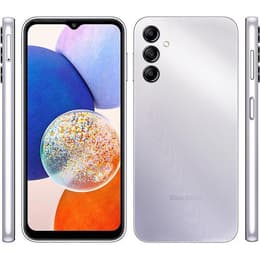
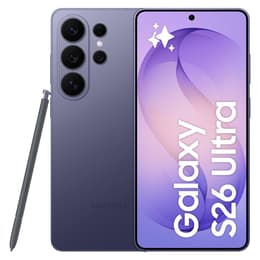
Galaxy A14 Vs Galaxy S26 Ultra
- 1-year minimum warranty
- Free delivery on all orders
- Free 30-day returns
Differences at a glance
The Samsung Galaxy A14 (2023) and the Samsung Galaxy S26 Ultra (2026) represent two entirely different tiers within the smartphone market, serving vastly different consumer needs. While the Galaxy A14 focuses on providing essential daily communication tools at an accessible entry point, the Galaxy S26 Ultra is a premier flagship device equipped with cutting-edge innovations and premium materials. Both run on the Android operating system with Samsung's custom interface overlay, though their hardware capabilities and long-term software support paths differ significantly.
Available Models
Colour
Storage
Scores
Durability
When examining hardware longevity and software support, the two devices occupy different timelines due to their respective release years and market classifications.
- Software Support: The Galaxy S26 Ultra benefits from an extended multi-year update commitment covering numerous major operating system upgrades, whereas the Galaxy A14 features a more concise support window reflecting its release timeframe.
- Build and Repairability: The Galaxy S26 Ultra utilizes high-grade titanium and reinforced glass frames designed for robust physical resilience, while the Galaxy A14 employs a simpler polycarbonate build that requires careful handling against drops and moisture.
- Expected Lifespan: Users seeking long-term hardware relevance and extended security updates will find the Galaxy S26 Ultra better equipped to remain current over many years.
Year of Release
2023
2026
Compatible with latest Update
No
Yes
OS
Android
Android
Foldable
No
No
Performance
Processing power and daily operational capabilities vary widely between these two models, impacting how they handle multitasking, gaming, and battery management.
- Multitasking and Speed: The Galaxy S26 Ultra handles demanding applications, graphic-heavy gaming, and intensive background tasks smoothly, whereas the Galaxy A14 is optimized for standard daily activities like web browsing and messaging.
- Storage and Memory: The Galaxy S26 Ultra offers expansive internal storage configurations paired with high RAM capacity for seamless app switching, while the Galaxy A14 provides basic storage tiers suited for lighter media collections.
- Battery Behavior: Both devices are engineered to manage power efficiently, though the larger battery capacity and optimized processor on the Galaxy S26 Ultra sustain heavy continuous use longer throughout a busy day.
Screen quality
Visual output and display engineering differ significantly, affecting clarity, outdoor visibility, and media consumption experiences.
- Display Technology: The Galaxy S26 Ultra features an advanced dynamic OLED panel with deep contrast and adaptive refresh rates for fluid motion, while the Galaxy A14 utilizes a standard high-definition display suited for basic viewing tasks.
- Brightness Levels: The Galaxy S26 Ultra achieves high peak brightness levels for clear visibility under direct sunlight, whereas the Galaxy A14 performs best in indoor or shaded environments.
- Size and Immersion: The expansive screen estate on the Galaxy S26 Ultra provides an immersive canvas for productivity and video playback, compared to the more compact display format of the Galaxy A14.
Resolution
1080 x 2408
1440 x 3120
Audiovisual
Multimedia capabilities, photography options, and audio outputs reflect the stark contrast between standard daily utility and advanced imaging technology.
- Camera Systems: The Galaxy S26 Ultra incorporates a versatile multi-lens array including high-resolution telephoto and ultra-wide sensors for detailed zoom and low-light photography, while the Galaxy A14 relies on a basic multi-camera setup for everyday snapshots.
- Video and Audio: The Galaxy S26 Ultra supports high-resolution video recording with advanced stabilization features and robust stereo speakers, compared to the simpler recording options and standard speaker output found on the Galaxy A14.
- Media Consumption: Users prioritizing detailed mobile photography and rich sound output will notice distinct advantages when using the Galaxy S26 Ultra for content creation and playback.
Front camera
13 megapixels
12.0
Miscellaneous
Physical dimensions, connectivity standards, and daily handling characteristics establish distinct ergonomic and functional differences.
- Connectivity Features: The Galaxy S26 Ultra includes advanced wireless standards like Wi-Fi 7 and fast 5G connectivity, whereas the Galaxy A14 supports standard 5G and conventional wireless protocols.
- Physical Design: The Galaxy A14 features a lightweight profile that is easy to manage with one hand, while the Galaxy S26 Ultra is a larger, heavier device that incorporates an integrated stylus for productivity tasks.
- Authentication and Ports: Both models utilize secure biometric unlocking methods, with the Galaxy S26 Ultra offering sophisticated facial recognition alongside modern USB-C data transfer standards.
Weight
201 g
214 g
Screen size (in)
6.6
6.9
Network
4G
5G
SIM card
Dual Physical SIM
Physical SIM + eSIM
Carrier compatibility
Unlocked
Unlocked
What the community thinks
User community discussions highlight distinct patterns of praise and criticism for each device. Owners of the Galaxy A14 frequently appreciate its straightforward reliability for basic communication and its dependable day-to-day utility without unnecessary complications. Conversely, users of the Galaxy S26 Ultra commend its exceptional display clarity, expansive zoom capabilities, and smooth multitasking performance, though some note its larger physical footprint and heavier weight require adjustment during one-handed use.
Users prioritizing high-end photography, expansive screen space, and long-term hardware capability may prefer the Galaxy S26 Ultra, while users seeking a straightforward, reliable device for essential communication will find the Galaxy A14 well-suited to their needs. For consumers looking toward sustainable purchasing habits, choosing a quality-assured refurbished option provides an eco-friendly alternative that reduces electronic waste while delivering fully tested functionality. Ultimately, the choice depends entirely on individual workflow requirements and personal preferences for daily mobile technology.