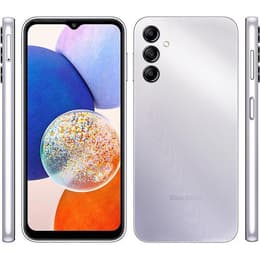
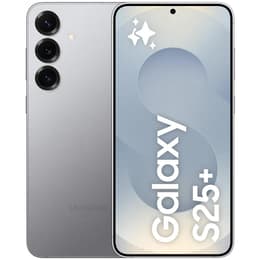


Galaxy A14 Vs Galaxy S25+

Galaxy A14
Galaxy A14
Starting at

Refurbished price:97.00

Versus €269.00 new

See options
Galaxy S25+
Galaxy S25+
Starting at

Refurbished price:624.00

Versus €1,401.57 new

See options

Ratings

The Samsung Galaxy A14, released in early 2023, is an entry-level smartphone designed for essential daily tasks, while the Samsung Galaxy S25 Plus, launched in early 2025, represents a premium flagship device built for advanced performance and features. These two Android smartphones cater to vastly different user needs, primarily differing in their processing power, display technology, and camera capabilities.

Scores

Durability

The longevity of a smartphone is influenced by its build quality, software support, and the demands of evolving applications. The Galaxy A14 and Galaxy S25 Plus offer distinct expectations in these areas.

  • Release Timeline and Age: The Galaxy A14 was released in January 2023, making it a more established device. The Galaxy S25 Plus, launched in January 2025, benefits from newer hardware and software optimizations.
  • OS Support Duration: The Galaxy A14, originally running Android 13, is expected to receive two major Android OS upgrades, extending its software support until Android 15, along with four years of security updates. [18, 27, 32, 41, 42] In contrast, the Galaxy S25 Plus, launching with Android 15, is part of Samsung's commitment to providing seven years of major OS upgrades and security updates for its flagship devices. [17, 20, 21, 24, 25] This extended support means the S25 Plus will receive updates significantly longer, potentially until Android 22.
  • Expected Practical Lifespan: Users prioritizing long-term software updates and future-proofing will find the Galaxy S25 Plus more suitable due to its extended support policy. The Galaxy A14 remains a viable option for users with less demanding software needs and a shorter upgrade cycle.

Year of Release

2023

2025

Compatible with latest Update

No

Yes

OS

Android

Android

Foldable

No

No

Performance

Performance is a key differentiator, with the Galaxy S25 Plus offering a significantly more powerful experience compared to the Galaxy A14, impacting everything from app responsiveness to demanding tasks.

  • Processor Capabilities: The Galaxy A14 is equipped with a processor designed for everyday tasks, handling calls, texts, and basic applications adequately. [1] However, it may exhibit sluggishness and struggle with graphically intensive games or multiple demanding apps running simultaneously. [1, 31] The Galaxy S25 Plus features a current-generation flagship processor, custom-tuned for enhanced performance and efficiency. [16, 19, 23] This allows it to manage complex applications, intensive multitasking, and advanced gaming with smooth and rapid responsiveness. [16]
  • Storage and RAM: The Galaxy A14 typically comes with 4GB or 6GB of RAM and 64GB or 128GB of internal storage, expandable via a microSD card. [1, 4, 7, 8] The Galaxy S25 Plus offers higher base configurations, generally starting with 12GB of RAM and 256GB or 512GB of internal storage, without microSD expansion. [19] The larger RAM in the S25 Plus contributes to more fluid multitasking and app retention in memory.
  • Overall System Responsiveness: Users of the Galaxy A14 may notice occasional delays when opening apps or navigating the interface, particularly with heavier workloads. [15, 31] The Galaxy S25 Plus provides a consistently fast and fluid user experience, with quick app loading times and seamless transitions, even under heavy usage.

Memory (GB)

4 GB

12 GB

Screen quality

The visual experience varies significantly between these two devices, primarily due to differences in display technology, resolution, and refresh rates.

  • Display Technology and Resolution: The Galaxy A14 features a 6.6-inch PLS LCD display with a Full HD+ resolution (1080 x 2408 pixels). [3, 4, 7, 8, 14] This panel provides clear visuals for general use. The Galaxy S25 Plus boasts a 6.7-inch Dynamic AMOLED 2X display with a Quad HD+ resolution (3120 x 1440 pixels). [16, 19, 23, 29] This advanced display technology delivers deeper blacks, higher contrast, and more vibrant colors.
  • Brightness and Outdoor Visibility: The Galaxy A14's LCD screen offers adequate brightness for indoor use, but visibility can be challenging in direct sunlight. [1] The Galaxy S25 Plus features a significantly higher peak brightness, reaching up to 2600 nits, ensuring excellent readability and color accuracy even in bright outdoor conditions. [16, 23, 29]
  • Refresh Rate and Smoothness: The Galaxy A14 5G model offers a 90Hz refresh rate, providing a smoother scrolling experience than standard 60Hz displays. [3, 4, 7, 14] The Galaxy S25 Plus features an adaptive 120Hz refresh rate, which dynamically adjusts based on content, offering exceptionally fluid animations and responsiveness while conserving battery life. [16, 19, 23, 29]

Resolution

1080 x 2408

1440 x 3120 pixels

Audiovisual

The camera systems of the Galaxy A14 and Galaxy S25 Plus are designed for different levels of photographic capability, reflecting their respective market segments.

  • Rear Camera System: The Galaxy A14 includes a triple rear camera setup, typically featuring a 50-megapixel main sensor, a 2-megapixel macro lens, and a 2-megapixel depth sensor. [1, 2, 4, 7, 9, 14, 15] It performs well in bright daylight conditions, capturing decent detail, but struggles with low-light photography and lacks a dedicated night mode. [1, 2, 9, 15] The Galaxy S25 Plus features a more versatile triple-lens system, comprising a 50-megapixel main camera with optical image stabilization (OIS), a 12-megapixel ultrawide lens, and a 10-megapixel telephoto lens with 3x optical zoom and OIS. [12, 26, 28, 33, 34] This setup allows for greater flexibility in various shooting scenarios, including improved low-light performance and detailed zoomed shots.
  • Video Recording and Features: The Galaxy A14 is capable of recording video at 1080p resolution at 30 frames per second. [1, 15] The Galaxy S25 Plus offers advanced video capabilities, including recording in up to 8K resolution at 30 frames per second, and features like Audio Eraser for background noise reduction and log video format for professional-grade color grading. [12, 26, 28]
  • Front Camera and Audio: Both devices feature a front-facing camera, with the Galaxy A14 having a 13-megapixel sensor [1, 4, 7, 15] and the Galaxy S25 Plus featuring a 12-megapixel sensor. [12, 26, 28] The S25 Plus also benefits from enhanced microphone quality and stereo speakers for a more immersive media consumption experience, compared to the A14's single speaker. [31, 38]

Front camera

13 megapixels

12MP

Miscellaneous

Beyond core performance and display, several practical elements contribute to the overall user experience and differentiate these two Samsung smartphones.

  • Connectivity and Ports: The Galaxy A14 supports 5G connectivity (on the 5G model), Wi-Fi 5, Bluetooth 5.2, and includes a 3.5mm headphone jack and a USB-C port. [11, 14, 27] The Galaxy S25 Plus offers more advanced connectivity, including Wi-Fi 7, Bluetooth 5.4, Ultra-Wideband (UWB), and a faster USB-C port, but typically omits the headphone jack. [23, 34]
  • Build Materials and Durability: The Galaxy A14 features a plastic back and frame, providing a solid but less premium feel, and lacks official dust and water resistance. [4, 9, 27] The Galaxy S25 Plus is constructed with premium materials like an Armor Aluminum frame and Gorilla Glass Victus 2 (or newer) on both the front and back, offering enhanced durability and an IP68 rating for significant dust and water resistance. [23]
  • Biometric Security and Ergonomics: Both devices include biometric security, with the Galaxy A14 featuring a side-mounted fingerprint sensor. [11, 27, 36] The Galaxy S25 Plus typically integrates an in-display ultrasonic fingerprint sensor and advanced facial recognition. The A14 is slightly thicker and heavier at around 202g and 9.1mm, [4, 9, 15, 27] while the S25 Plus is slimmer and lighter at approximately 190g and 7.3mm, [23, 26] contributing to a more refined in-hand feel.

Weight

201 g

190 g

Screen size (in)

6.6

6.7

Network

4G

5G

SIM card

Dual Physical SIM

Physical SIM + eSIM

Carrier compatibility

Unlocked

Unlocked

The Samsung Galaxy A14 and Galaxy S25 Plus cater to distinct user profiles, with their differences spanning performance, display, camera, and overall build. User sentiment for the Galaxy A14 often highlights its reliable battery life and adequate performance for basic daily tasks, making it a practical choice for those seeking essential smartphone functionality without advanced features. [5, 6, 15] Common criticisms sometimes point to its less vibrant display and slower performance when handling more demanding applications. [1, 31]

Conversely, the Galaxy S25 Plus receives praise for its powerful processing capabilities, stunning display, and versatile camera system, often noted for its ability to handle any task with ease and capture high-quality photos and videos. [16, 22, 26] User feedback frequently emphasizes its premium feel and long-term software support. Some discussions around the S25 Plus might touch upon its battery life, with users reporting a full day of mixed usage, though individual experiences can vary based on usage patterns. [22, 37, 43, 44, 45]

Users prioritizing a device for everyday communication, web browsing, and social media, coupled with a strong battery life, may find the Galaxy A14 well-suited to their needs. It serves as a dependable option for those who value core functionality and a straightforward user experience. For individuals who require top-tier performance for gaming, advanced photography, extensive multitasking, and a premium viewing experience, the Galaxy S25 Plus is the more appropriate choice. Its extended software support also makes it appealing for users planning to keep their device for many years.

Both models, when considered as quality-assured refurbished options, offer a sustainable choice for consumers looking to make informed purchasing decisions while contributing to a more eco-friendly approach to electronics.


See all articles

Our recent comparisons