
Samsung

Compare models
Differences at a glance
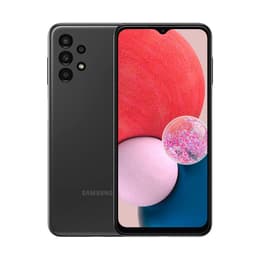
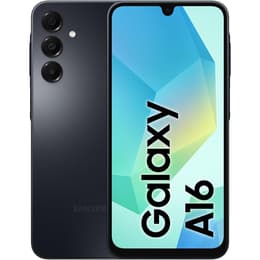
The Samsung Galaxy A13, released in March 2022, and the Samsung Galaxy A16, launched in October 2024, are both smartphones designed for everyday use. While they share the Android operating system and a focus on essential features, the A16 introduces notable advancements in display technology, processing capabilities, and long-term software support. These differences cater to varying user expectations regarding device longevity and daily interaction.
Colour
Storage
When considering the practical lifespan of these devices, their release timelines and software support policies are key factors. The Galaxy A13, launched in early 2022, has already reached the end of its major operating system upgrade cycle, with its last significant update around late 2024 or early 2025. It continues to receive quarterly security updates, extending its usability for a period.
In contrast, the Galaxy A16, released in late 2024, benefits from Samsung's extended software commitment, promising six generations of Android operating system upgrades and six years of security updates, with support expected to continue until October 2030. This significantly longer support period means the A16 will remain current with software features and security patches for a considerably longer duration.
Year of Release
OS
Foldable
The performance of these smartphones impacts how smoothly they handle daily tasks and applications. The Galaxy A13, powered by an octa-core processor, is generally suitable for basic navigation and light applications, though some users have noted occasional lag and stuttering, particularly with more demanding tasks or multitasking.
The Galaxy A16, featuring a more recent octa-core processor (such as the MediaTek Helio G99 or Exynos 1330 depending on the variant), offers a more responsive experience. It handles everyday apps and multitasking with greater fluidity, making it better suited for users who frequently switch between applications or engage in more intensive mobile activities.
The visual experience on a smartphone is largely defined by its display. The Galaxy A13 features a 6.6-inch PLS TFT LCD with a Full HD+ resolution and a standard 60Hz refresh rate. This display offers clear visuals and adequate brightness for indoor use, though its performance in bright outdoor conditions and overall color vibrancy may be less pronounced.
The Galaxy A16 elevates the viewing experience with a larger 6.7-inch Super AMOLED display, also with Full HD+ resolution, but crucially, it includes a 90Hz refresh rate. This combination results in deeper blacks, more vibrant colors, and noticeably smoother scrolling and animations, making for a more engaging visual interaction, even in brighter environments.
Resolution
Screen type
For many users, camera capabilities are a significant consideration. The Galaxy A13 is equipped with a quad-camera system featuring a 50-megapixel main sensor, a 5-megapixel ultrawide, and two 2-megapixel sensors for macro and depth. Its main camera performs well in good lighting conditions, capturing decent detail and colors. However, the secondary lenses and low-light performance are often described as less capable.
The Galaxy A16 also features a triple-camera setup with a 50-megapixel main sensor, a 5-megapixel ultrawide, and a 2-megapixel macro lens, alongside a higher-resolution 13-megapixel front camera. The main camera on the A16 also excels in well-lit environments, producing vibrant and sharp images. Similar to the A13, its ultrawide and macro sensors are considered secondary in performance, and low-light photography remains a challenge without optical image stabilization.
Beyond core specifications, several practical elements contribute to the overall user experience. The Galaxy A13 offers standard connectivity options including 4G LTE (with a 5G variant available) and Wi-Fi. It uses a USB Type-C 2.0 port and includes a side-mounted fingerprint sensor for security. Its build is primarily plastic, contributing to a lighter feel.
The Galaxy A16 steps up connectivity with 5G support (in its 5G variant) and newer Wi-Fi standards, along with Bluetooth 5.3 for more efficient wireless connections. It also features a USB-C port and a side-mounted fingerprint sensor. A notable addition to the A16 is its IP54 rating, providing a degree of protection against dust and splashes, enhancing its resilience in daily use. Both devices maintain a similar physical footprint and weight, making them comparable in handling.
Weight
Screen size (in)
Network
SIM card
Carrier compatibility
User feedback for the Galaxy A13 often praises its robust battery life, which can extend beyond a full day of use, and its main camera's ability to capture satisfactory images in good lighting conditions. However, common criticisms point to its slower performance, particularly during multitasking or with demanding applications, and the limited utility of its secondary camera lenses. The 60Hz LCD display is also frequently mentioned as a basic offering.
For the Galaxy A16, users frequently highlight its vibrant Super AMOLED display with a smoother 90Hz refresh rate as a significant improvement, along with its generally more responsive performance for daily tasks. The extended software support policy is also a major point of praise, offering long-term value. Similar to the A13, the secondary cameras are often seen as less impactful, and some users note that while performance is improved, it's still geared towards budget-conscious usage rather than intensive tasks.
Users prioritizing long-term software support, a more fluid visual experience, and slightly better overall performance for everyday applications may find the Galaxy A16 better suited to their needs. Conversely, those seeking a more budget-friendly option for basic communication and media consumption, where extended software updates are less critical, might consider the Galaxy A13. Both devices offer a reliable foundation for smartphone essentials, and choosing a quality-assured refurbished option for either model can be a sustainable choice for consumers.