

Galaxy A13 Vs iPhone 12

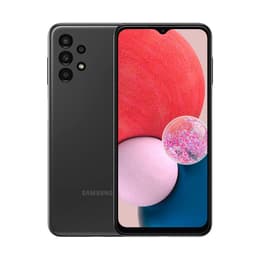
Galaxy A13
Galaxy A13
Starting at

Refurbished price:97.00

Versus €249.00 new

See options
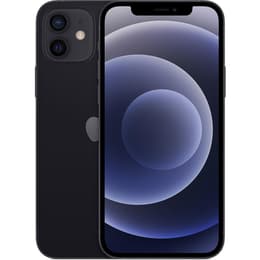
iPhone 12
iPhone 12
Starting at

Refurbished price:174.00

Versus €829.00 new

See options

Ratings

The Samsung Galaxy A13, released in March 2022, and the iPhone 12, launched in October 2020, represent distinct approaches to smartphone design and functionality. While the Galaxy A13 operates on Android with Samsung's One UI, the iPhone 12 runs on Apple's iOS platform. These devices cater to different user priorities, with the iPhone 12 offering a more premium experience and the Galaxy A13 focusing on core smartphone features.

Scores

Durability

When considering the practical lifespan of these devices, several factors come into play, including software support, physical durability, and ease of repair.

  • Software Longevity: The iPhone 12, released in late 2020, typically receives major iOS updates for approximately 5-6 years from its launch, extending its software relevance well into the future. The Galaxy A13, launched in early 2022, has received two major Android OS updates and is expected to continue receiving security updates for a period beyond that.
  • Physical Durability: The iPhone 12 features a Ceramic Shield front cover and an aluminum frame, contributing to its overall robustness and offering IP68 water and dust resistance, allowing submersion up to 6 meters for 30 minutes. The Galaxy A13 utilizes a plastic unibody design and Gorilla Glass 5 for screen protection, but lacks an official IP rating for water and dust resistance.
  • Repairability: The iPhone 12 received an iFixit repairability score of 6 out of 10, indicating that many of its components are replaceable, though some parts may require proprietary Apple software for full functionality after replacement. Specific repairability scores for the Galaxy A13 are not widely available, but budget Android devices often feature more straightforward internal designs.

Year of Release

2022

2020

Compatible with latest Update

No

Yes

OS

Android

iOS

Foldable

No

No

Performance

The performance capabilities of these two smartphones differ significantly, impacting how smoothly they handle various tasks and applications.

  • Processing Power: The iPhone 12 is equipped with a powerful processor that enables smooth operation across demanding applications, complex multitasking, and graphics-intensive gaming. The Galaxy A13 features an octa-core processor that handles everyday tasks, but users may experience occasional delays or sluggishness when navigating menus, opening apps, or engaging in more intensive activities.
  • Multitasking and Storage: The iPhone 12 typically comes with 4GB of RAM, providing a responsive experience for switching between applications. It offers storage options up to 256GB, without expandable storage. The Galaxy A13 is available with various RAM configurations (3GB, 4GB, 6GB) and storage options (32GB, 64GB, 128GB), with the added flexibility of microSD card expansion for additional storage.
  • Battery Behavior: The iPhone 12, with its efficient processor and OLED display, is designed to offer good battery life, often lasting through a full day of typical use. The Galaxy A13 is known for its large battery capacity, which frequently allows it to extend usage beyond a single day for many users.

Memory (GB)

4 GB

4 GB

Screen quality

The visual experience on these devices is shaped by their display technology, resolution, and brightness levels.

  • Display Technology and Clarity: The iPhone 12 features a 6.1-inch Super Retina XDR OLED display, providing deep blacks, high contrast, and vibrant colors with a resolution of 2532x1170 pixels. The Galaxy A13 has a larger 6.6-inch PLS TFT LCD screen with a resolution of 1080x2408 pixels. While the Galaxy A13's screen is clear for its class, the iPhone 12's OLED panel offers a more refined visual experience.
  • Brightness and Refresh Rate: The iPhone 12's display can reach a typical brightness of 625 nits and a peak of 1200 nits for HDR content, ensuring good visibility in various lighting conditions. Both devices feature a standard 60Hz refresh rate, meaning the screen updates 60 times per second. The Galaxy A13's brightness typically peaks around 483-500 nits.
  • Viewing Experience: The iPhone 12's OLED display provides excellent contrast and color accuracy, enhancing media consumption and general viewing. The Galaxy A13 offers a large screen size, which is beneficial for streaming video and browsing, though its LCD technology does not achieve the same level of contrast or color vibrancy as an OLED panel.

Resolution

1080 x 2408

1170 x 2532

Screen type

PLS LCD

Super Retina XDR OLED

Audiovisual

The camera systems on the Galaxy A13 and iPhone 12 offer different capabilities for capturing photos and videos.

  • Rear Camera System: The iPhone 12 features a dual 12MP camera system, including a main wide lens with optical image stabilization (OIS) and an ultrawide lens. This setup excels in various lighting conditions, particularly low light, and supports advanced features like Night mode on all cameras and Smart HDR 3. The Galaxy A13 comes with a quad-camera array, featuring a 50MP main sensor, a 5MP ultrawide, and two 2MP sensors for macro and depth. The 50MP main camera performs well in good lighting, but the ultrawide camera's quality is less detailed.
  • Video Recording: The iPhone 12 supports 4K video recording at up to 60 frames per second and can record HDR video with Dolby Vision. The Galaxy A13 records video at a maximum of 1080p resolution at 30 frames per second and lacks OIS, which can affect video stability.
  • Front Camera and Features: The iPhone 12 has a 12MP front-facing camera that also supports Night mode and Portrait mode. The Galaxy A13 includes an 8MP front camera, which is suitable for basic selfies and video calls.

Main camera

50 megapixels

12 megapixels

Front camera

8 megapixels

12 megapixels

Miscellaneous

Beyond core features, several practical elements differentiate these two smartphones in daily use.

  • Connectivity and Ports: The iPhone 12 supports 5G connectivity, Wi-Fi 6, and Bluetooth 5.0, utilizing a Lightning port for charging and data transfer. The Galaxy A13 supports 4G LTE (in the model reviewed), Wi-Fi 5, and Bluetooth 5.0, featuring a USB-C port and retaining a 3.5mm headphone jack.
  • Biometric Security: The iPhone 12 relies on Face ID for secure facial recognition. The Galaxy A13 incorporates a side-mounted fingerprint sensor for biometric authentication.
  • Design and Handling: The iPhone 12 has a compact and relatively lightweight design, measuring 146.7 x 71.5 x 7.4 mm and weighing 162g, with flat edges. The Galaxy A13 is larger and slightly heavier at 165.1 x 76.4 x 8.8 mm and 195g, with a plastic build.

Weight

195 g

164 g

Screen size (in)

6.6

6.1

Network

4G

5G

SIM card

Dual Physical SIM

Physical SIM + eSIM

Carrier compatibility

Unlocked

Unlocked

User feedback for the iPhone 12 often highlights its robust performance, excellent camera capabilities, and the vibrant OLED display as key strengths. Many appreciate its compact form factor and the consistent software experience provided by iOS. Criticisms sometimes point to the 60Hz refresh rate, which some users find less fluid compared to higher refresh rate displays on other devices, and the reliance on the Lightning port.

For the Samsung Galaxy A13, common praise centers on its large screen, long-lasting battery, and the inclusion of a headphone jack and expandable storage. Users often find the main camera capable in good lighting conditions. However, frequent criticisms include its noticeably slower performance, which can lead to a less responsive user experience, and the lower quality of its ultrawide camera.

Users prioritizing a highly responsive operating system, strong camera performance, and a premium build with extended software support will likely find the iPhone 12 better suited to their needs. Its powerful processor and OLED display offer a refined experience for demanding applications and media consumption. Conversely, individuals who value a larger display, exceptional battery life, and the flexibility of expandable storage and a headphone jack, and who primarily use their device for essential tasks, may lean towards the Galaxy A13. Both devices are available as quality-assured refurbished options, providing an eco-friendly alternative for consumers.

See all articles

Our recent comparisons