

Compare models
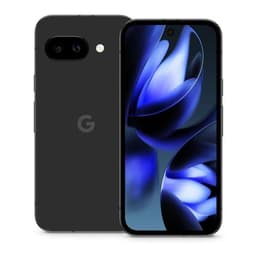
Galaxy Z Fold7 Vs Google Pixel 9a
- 1-year minimum warranty
- Free delivery on all orders
- Free 30-day returns
Differences at a glance
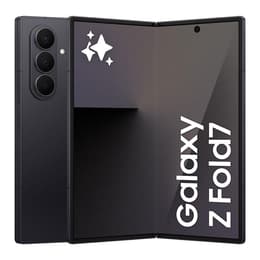
The Samsung Galaxy Z Fold7 (2025) and Google Pixel 9a (2025) represent two distinct approaches to modern mobile technology, offering foldability versus traditional candy-bar efficiency. While the Galaxy Z Fold7 introduces a transforming dual-screen design with multi-window capabilities, the Google Pixel 9a focuses on streamlined daily reliability and software integration. They operate on the Android platform, yet cater to different functional preferences through their physical hardware layout.
Available Models
Colour
Storage
Scores
Durability
When examining hardware longevity and software support, both devices provide robust long-term utility through multi-year update commitments and sturdy construction standards.
- Software longevity: Both manufacturers offer extended operating system update timelines, ensuring current software features and security protections remain active for years following their release.
- Repairability and durability: The Google Pixel 9a utilizes a rigid polycarbonate back and streamlined frame that resists drops well, while the Galaxy Z Fold7 features complex folding hinge mechanics that require careful handling over extended practical lifespans.
Year of Release
2025
2025
Performance
Underneath the surface, each device handles everyday workloads, multitasking demands, and application responsiveness differently based on its internal architecture.
- Multitasking and responsiveness: The Galaxy Z Fold7 leverages ample memory and high-end processing power to run multiple demanding applications side-by-side without stutter, whereas the Google Pixel 9a handles daily tasks, streaming, and moderate gaming smoothly with a focus on power efficiency.
- Storage and battery behavior: The Galaxy Z Fold7 offers higher maximum storage tiers alongside a larger total screen area that draws more power during extended use, while the Google Pixel 9a balances its battery capacity to comfortably reach the end of a typical day under standard usage conditions.
Screen quality
The viewing experience forms a primary point of divergence between these two models, driven entirely by their physical display configurations.
- Display technology and size: The Galaxy Z Fold7 features an expansive inner OLED folding screen that unfolds into a tablet-sized canvas alongside an outer cover screen, while the Google Pixel 9a provides a flat, traditional OLED panel with deep contrast and vibrant color accuracy.
- Brightness and refresh rates: Both devices support high refresh rates for smooth scrolling and feature bright outdoor viewing modes, though the folding mechanism of the Galaxy Z Fold7 introduces a subtle crease along the center of the main display.
Audiovisual
Optics and media consumption hardware vary significantly, affecting how each device captures daily moments and reproduces sound.
- Camera versatility: The Google Pixel 9a relies on advanced computational photography algorithms to deliver reliable everyday and low-light images from a streamlined dual-lens setup, whereas the Galaxy Z Fold7 incorporates a flexible multi-lens array that supports unique shooting angles made possible by its folding form factor.
- Audio output and video: Both models record stable high-definition video with clear microphone input, while their stereo speaker configurations deliver balanced sound reproduction suitable for casual media streaming and hands-free calls.
Miscellaneous
Practical daily usability elements, physical dimensions, and connectivity standards shape how each device fits into travel or work routines.
- Connectivity and ports: Both models support current 5G networks, fast Wi-Fi standards, and Bluetooth pairing, utilizing reversible USB-C ports for charging and data transfer.
- Physical handling: The Google Pixel 9a maintains a lightweight, pocket-friendly profile with a traditional footprint, while the Galaxy Z Fold7 is heavier and thicker when folded, transforming into a wider handheld device when opened for larger viewing areas. Choosing a quality-assured refurbished option provides a sustainable choice for consumers wanting to reduce environmental impact.
Screen size (in)
8.0
6.3
Network
5G
5G
SIM card
Dual Physical SIM + eSIM
Physical SIM + eSIM
Carrier compatibility
Unlocked
Unlocked
Connector
USB-C (USB 3)
USB-C
What the community thinks
User discussions across online communities frequently praise the Google Pixel 9a for its reliable battery longevity, dependable camera output, and comfortable single-handed ergonomics. At the same time, community members highlight the Galaxy Z Fold7 for its innovative multitasking workspace and expansive screen estate, though some note its heavier weight and visible screen crease as practical trade-offs. Choosing between the two depends heavily on individual workflow preferences and daily device habits.
Users who prioritize expansive workspace, multitasking efficiency, and a transforming screen size will find the Galaxy Z Fold7 well-suited to their needs, while users prioritizing lightweight portability, simple ergonomics, and dependable everyday reliability may lean toward the Google Pixel 9a. Opting for a quality-assured refurbished option offers an eco-friendly alternative for acquiring either device sustainably. Ultimately, evaluating how physical form factor impacts daily routines will guide the final decision.