

Galaxy Z Flip6 Vs Xiaomi Redmi 14C

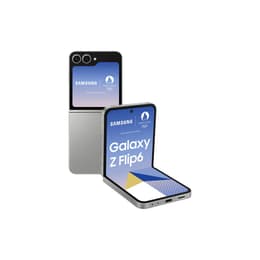
Galaxy Z Flip6
Galaxy Z Flip6
Starting at

Refurbished price:415.00

Versus €1,199.99 new

See options
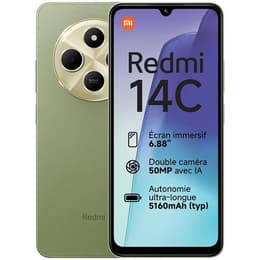
Xiaomi Redmi 14C
Xiaomi Redmi 14C
Starting at

Refurbished price:128.20

Versus €189.00 new

See options

Ratings

The Samsung Galaxy Z Flip6 and the Xiaomi Redmi 14C represent distinct approaches to smartphone design and functionality, catering to different user priorities. The Galaxy Z Flip6, released in July 2024, is a premium foldable smartphone that emphasizes a compact form factor and advanced features. In contrast, the Xiaomi Redmi 14C, launched in August 2024, is a traditional slab-style device designed to offer essential smartphone capabilities. While both run on Android 14, their core hardware and user experiences diverge significantly, with the Z Flip6 focusing on innovation and the Redmi 14C on foundational utility.

Scores

Durability

The expected lifespan and software support differ considerably between these two devices, reflecting their respective market segments.

  • Software Longevity: The Galaxy Z Flip6 offers an extended commitment to software updates, with Samsung promising 7 generations of Android OS updates and 7 years of security patches. This provides a long-term software experience for users. The Redmi 14C, on the other hand, typically receives 2 major Android OS updates and 3 to 4 years of security patches, which is standard for its category but shorter than the Z Flip6's support.
  • Physical Durability: The Galaxy Z Flip6 features a more robust construction, including an IP48 rating for water and dust resistance, making it the first foldable with certified dust protection. It also incorporates Corning Gorilla Glass Victus 2 on its cover screen and back panel, along with an enhanced Armor Aluminum frame and an improved hinge design. The Redmi 14C utilizes a plastic frame and a glass-like or textured polycarbonate back, without an official IP rating for water or dust resistance.
  • Practical Lifespan: Users prioritizing a device that remains current with the latest software features and security for an extended period will find the Z Flip6's support advantageous. The Redmi 14C offers a practical lifespan suitable for users who typically upgrade their devices more frequently or have less demanding software update requirements.

Year of Release

2024

2024

Compatible with latest Update

Yes

Yes

OS

Android

Android

Foldable

Yes

No

Performance

The performance capabilities of the Galaxy Z Flip6 and the Redmi 14C are tailored to different usage scenarios, driven by their internal components.

  • Processing Power: The Galaxy Z Flip6 is equipped with a high-end current-generation processor, enabling it to handle demanding applications, intensive multitasking, and graphic-rich gaming with smooth responsiveness. It also includes a vapor chamber cooling system to maintain performance during extended use. The Redmi 14C features a processor designed for everyday tasks, providing smooth operation for social media, messaging, video streaming, and casual gaming. Users may experience minor stutters during heavy multitasking or with very demanding applications.
  • Memory and Storage: The Z Flip6 comes with 12 GB of RAM and fast UFS 4.0 internal storage options of 256 GB or 512 GB, contributing to quick app loading and efficient multitasking. The Redmi 14C offers various configurations, including 4GB, 6GB, or 8GB of RAM and 128GB or 256GB of eMMC 5.1 storage, with support for virtual RAM expansion and microSD card expansion for additional storage.
  • Battery Behavior: The Galaxy Z Flip6 houses a 4000 mAh battery, supporting 25W wired and 15W wireless charging. Its battery life is designed to last through a typical day of varied usage. The Redmi 14C features a larger 5160 mAh battery, supporting 18W fast charging. While its capacity is substantial, real-world usage reports suggest it provides adequate endurance for casual users, though power users might find themselves charging more frequently than expected for its size.

Memory (GB)

12 GB

4 GB

Screen quality

The visual experience offered by these two smartphones differs significantly due to their display technologies and design philosophies.

  • Display Technology and Clarity: The Galaxy Z Flip6 features a 6.7-inch Foldable Dynamic AMOLED 2X main display with FHD+ resolution, delivering vibrant colors, deep blacks, and sharp visuals. It also has a 3.4-inch Super AMOLED cover display for quick interactions. The Redmi 14C is equipped with a 6.88-inch Dot Drop IPS LCD main display with HD+ resolution. While it offers a large viewing area, the clarity and color reproduction are characteristic of LCD panels in its segment.
  • Brightness and Smoothness: The Z Flip6's main display boasts a high peak brightness of 2600 nits, ensuring excellent visibility even in bright outdoor conditions, and an adaptive refresh rate of 1Hz to 120Hz for smooth scrolling and animations. The Redmi 14C's display offers a typical brightness of 450 nits, with a high brightness mode reaching 600 nits, which is sufficient for indoor use but can be less visible under direct sunlight. It features a 120Hz refresh rate, providing a fluid experience for navigation and content consumption.
  • Screen Size and Viewing Experience: The Z Flip6's foldable design allows for a compact device when closed, expanding to a full-sized smartphone display. The cover screen offers convenient access to notifications and widgets. The Redmi 14C provides a consistently large, immersive screen, which is beneficial for media consumption and browsing, though its physical size is always present.

Resolution

1080 x 2640

720 x 1640

Screen type

Foldable Dynamic LTPO AMOLED 2X

IPS LCD

Audiovisual

The camera systems of the Galaxy Z Flip6 and the Redmi 14C are designed to meet different photographic expectations and user needs.

  • Rear Camera Capabilities: The Galaxy Z Flip6 features a dual-camera setup with a 50 MP wide-angle main sensor with optical image stabilization (OIS) and dual pixel PDAF, alongside a 12 MP ultrawide lens. This system is designed for capturing detailed images with good low-light performance and stable video. The Redmi 14C includes a 50 MP main camera with an f/1.8 aperture, complemented by an auxiliary lens primarily for depth sensing. It performs well in daylight conditions, capturing appealing pictures with decent contrast and sharpness.
  • Front Camera and Video: For selfies and video calls, the Z Flip6 has a 10 MP front-facing camera on its internal display, and its foldable design allows users to utilize the higher-quality main cameras for selfies via the cover screen. It supports video recording up to 4K at 60fps. The Redmi 14C is equipped with a 13 MP front camera, capable of producing decent selfies, especially with features like a soft light ring for low-light conditions. Both front and rear cameras on the Redmi 14C support 1080p video recording at 30fps.
  • Photography Features: The Z Flip6 benefits from advanced image processing and Galaxy AI features, enhancing photo quality and offering creative options. The Redmi 14C includes features like filmCamera modes and a powerful Xiaomi Imaging Engine to optimize picture quality and speed, providing various creative filters for photos and videos.

Main camera

50 megapixels

50 megapixels

Front camera

10 megapixels

13 megapixels

Miscellaneous

Beyond core specifications, several practical elements contribute to the overall user experience of these devices.

  • Connectivity and Ports: The Galaxy Z Flip6 supports 5G connectivity, Wi-Fi 6E, and Bluetooth 5.3, offering high-speed wireless communication. It features a USB-C port for charging and data transfer. The Redmi 14C supports 4G LTE, Wi-Fi 5, and Bluetooth 5.4. It also includes a USB Type-C port and retains a 3.5mm headphone jack, which is a notable inclusion for users who prefer wired audio.
  • Security and Sensors: Both devices offer modern security features. The Z Flip6 incorporates a side-mounted fingerprint sensor and face recognition. The Redmi 14C also features a side-mounted fingerprint sensor and AI face unlock for convenient access.
  • Design and Handling: The Z Flip6's clamshell design allows it to fold into a compact size, making it highly portable. It features a refined build with enhanced Armor Aluminum and Gorilla Glass Victus 2. The Redmi 14C has a larger, traditional slab design with a plastic frame, offering a comfortable grip despite its size. Its weight varies slightly by color variant, ranging from 204g to 211g, while the Z Flip6 weighs 187g.

Weight

187 g

207 g

Screen size (in)

6.7

6.88

Network

5G

4G

SIM card

Physical SIM + eSIM

Dual Physical SIM

Carrier compatibility

Unlocked

Unlocked

The Samsung Galaxy Z Flip6 and the Xiaomi Redmi 14C cater to distinct user needs and preferences. The Galaxy Z Flip6 is often praised for its innovative foldable design, offering a compact form factor without compromising on a large display when unfolded. Users appreciate its premium build quality, extended software support, and advanced camera capabilities, particularly the flexibility of using the main cameras for high-quality selfies via the cover screen. Some common considerations for foldable phones, such as the visible crease on the inner display, are often noted, though improvements are continuously made.

The Xiaomi Redmi 14C is frequently lauded for providing a solid, feature-rich smartphone experience. Users often highlight its large display with a smooth refresh rate, capable camera performance in good lighting, and a substantial battery capacity. Its inclusion of a 3.5mm headphone jack and expandable storage are also points of appreciation for many. Criticisms sometimes point to its performance for very demanding tasks and its display brightness in direct sunlight.

Users prioritizing a compact, innovative design with long-term software support, advanced camera features, and a premium build will find the Samsung Galaxy Z Flip6 well-suited to their needs. Its foldable nature and flagship performance make it ideal for those who value cutting-edge technology and a unique user experience. Conversely, users seeking a reliable, straightforward smartphone for everyday tasks, media consumption, and casual photography, without the need for a foldable form factor, may lean towards the Xiaomi Redmi 14C. Its larger battery and traditional design offer a dependable experience for those who value practicality and essential features.

For those considering either device, exploring quality-assured refurbished options can provide a sustainable choice, offering access to these technologies while extending product lifecycles.


See all articles

Our recent comparisons