

Galaxy A13 Vs Galaxy S25 Ultra

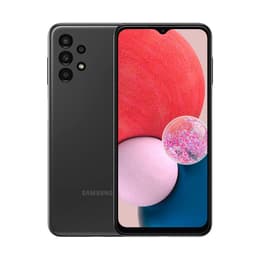
Galaxy A13
Galaxy A13
Starting at

Refurbished price:97.00

Versus €249.00 new

See options
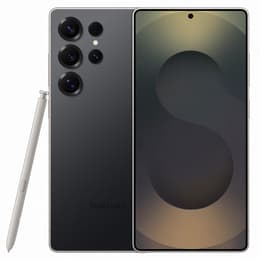
Galaxy S25 Ultra
Galaxy S25 Ultra
Starting at

Refurbished price:735.00

Versus €1,408.78 new

See options

Ratings

The Samsung Galaxy A13 (2022) and the Samsung Galaxy S25 Ultra (2025) represent distinct tiers within Samsung's smartphone lineup, catering to vastly different user expectations and needs. While both devices operate on the Android platform, the S25 Ultra, released three years later, embodies flagship innovation with advanced features and premium construction, contrasting sharply with the A13's focus on essential functionality and accessibility.

Scores

Durability

The longevity of a smartphone is influenced by its release timeline, software support, and physical durability. These two Samsung devices offer different propositions in terms of their expected practical lifespan.

  • Release Timeline: The Galaxy A13 was released in March 2022, making it a device that has been on the market for a few years. In contrast, the Galaxy S25 Ultra was announced in January 2025 and released in February 2025, positioning it as a current-generation flagship.
  • Software Support: The Galaxy A13 launched with Android 12 and is upgradable to Android 14. While Samsung typically provides several years of security updates for its A-series, major OS updates are more limited. The Galaxy S25 Ultra, launching with Android 15, benefits from Samsung's commitment to 7 years of OS and security updates, ensuring a significantly longer period of software relevance and security.
  • Physical Durability: The Galaxy A13 features a glass front with Gorilla Glass 5 protection, a plastic back, and a plastic frame. The Galaxy S25 Ultra boasts a more robust construction with a titanium frame and Gorilla Glass Armor 2 on both the front and back, along with an IP68 rating for water and dust resistance, offering enhanced protection against daily wear and tear.

Year of Release

2022

2025

Compatible with latest Update

No

Yes

OS

Android

Android

Foldable

No

No

Performance

Performance is a key differentiator, with the Galaxy S25 Ultra designed for demanding tasks and the Galaxy A13 for everyday essentials.

  • Processing Power: The Galaxy A13 handles typical smartphone functions, but users may experience slower speeds and less fluid app transitions, particularly with more intensive applications. The Galaxy S25 Ultra, equipped with a current-generation, high-performance processor, delivers smooth operation for demanding apps, multitasking, and graphics-intensive gaming.
  • Memory and Storage: The Galaxy A13 offers RAM options up to 6GB and storage up to 128GB, with microSD card expansion. Some users have noted that 4GB RAM configurations can lead to poor RAM management. The Galaxy S25 Ultra comes with a minimum of 12GB of RAM and storage options up to 1TB, providing ample capacity for extensive app usage and large media libraries without expansion slots.
  • Battery Behavior: Both devices feature a 5000 mAh battery. The Galaxy A13 is noted for its ability to last a full day, and potentially two days for light users, partly due to its less power-hungry components. The Galaxy S25 Ultra also offers strong battery life, reliably lasting a full day even with heavy use, with some reports indicating it can extend into a second day for moderate usage.

Memory (GB)

4 GB

12 GB

Screen quality

The visual experience varies significantly between these two devices, reflecting their different market positions.

  • Display Technology and Resolution: The Galaxy A13 features a 6.6-inch PLS TFT LCD with a Full HD+ resolution (1080 x 2408 pixels). This display provides clear visuals for everyday content. The Galaxy S25 Ultra sports a larger 6.9-inch Dynamic AMOLED 2X display with a QHD+ resolution (3120 x 1440 pixels), offering superior clarity, deeper blacks, and more vibrant colors.
  • Brightness and Refresh Rate: The A13's display operates at a standard 60Hz refresh rate and offers suitable brightness for indoor use. The S25 Ultra, however, features an adaptive 120Hz refresh rate, providing smoother scrolling and more fluid animations, and boasts a high peak brightness of up to 2600 nits, making it highly visible even in bright outdoor conditions.
  • Viewing Experience: The Galaxy A13's display is protected by Corning Gorilla Glass 5 and has a teardrop notch for the front camera. The Galaxy S25 Ultra's display is protected by Gorilla Glass Armor 2 and includes an anti-reflective coating, enhancing the viewing experience by reducing glare and improving durability.

Resolution

1080 x 2408

1080 x 2340 pixels

Audiovisual

The camera systems on the Galaxy A13 and S25 Ultra are designed for different levels of photographic capability and user demands.

  • Rear Camera System: The Galaxy A13 includes a quad-camera setup with a 50MP main sensor, a 5MP ultrawide, and two 2MP sensors for macro and depth. The 50MP main camera can capture decent images in good lighting, but the ultrawide camera's quality is less impressive. The Galaxy S25 Ultra features a sophisticated quad-camera system, including a 200MP main sensor with optical image stabilization (OIS), a 50MP ultrawide, a 50MP telephoto with 5x optical zoom and OIS, and a 10MP telephoto with 3x optical zoom and OIS. This setup delivers excellent detail, natural colors, and strong zoom performance across various lighting conditions.
  • Low-Light and Video Capabilities: The A13 lacks a dedicated night mode and slow-motion video, and its video recording is limited to 1080p at 30 frames per second (fps). The S25 Ultra excels in low-light photography, producing images with minimal noise and preserved details. It supports video recording up to 8K at 30fps and 4K at up to 120fps, with features like LOG recording for advanced users.
  • Front Camera and Overall Experience: The Galaxy A13 has an 8MP front camera, which is suitable for basic selfies and video calls, though some users find it produces soft images. The Galaxy S25 Ultra features a 12MP front camera that performs well in most conditions, offering good detail and autofocus. While the S25 Ultra's camera system is highly capable, some reviews suggest that its processing can be overly vibrant in auto mode, and its selfie camera, while good, is competitive rather than class-leading in low light.

Front camera

8 megapixels

8K@24/30fps

Miscellaneous

Beyond core specifications, several practical elements contribute to the overall user experience of these smartphones.

  • Connectivity and Ports: The Galaxy A13 supports 4G LTE networks and includes a 3.5mm headphone jack, a feature less common in newer devices. It charges via USB-C. The Galaxy S25 Ultra offers advanced connectivity, including 5G and the latest Wi-Fi standards, but omits the headphone jack, relying solely on its USB-C port for charging and data transfer.
  • Biometrics and Sensors: The A13 features a side-mounted fingerprint scanner, which some users have found to be slow. The S25 Ultra incorporates an ultrasonic in-screen fingerprint sensor for quick and secure unlocking, alongside advanced facial recognition.
  • Design and Handling: The Galaxy A13 has a minimalist design with a plastic back and frame, weighing 195g. The S25 Ultra features a premium design with a titanium frame and glass construction, weighing 218g. It also integrates the S Pen stylus, offering enhanced productivity and creative input.

Weight

195 g

2 g

Screen size (in)

6.6

6.9

Network

4G

5G

SIM card

Dual Physical SIM

Physical SIM + eSIM

Carrier compatibility

Unlocked

Unlocked

The Samsung Galaxy A13 and Galaxy S25 Ultra cater to distinct user demographics, with their features and performance reflecting their respective market positions. User feedback for the Galaxy A13 often praises its long battery life and accessible price point, making it a practical choice for basic smartphone needs. However, common criticisms include its slower performance, less vibrant display, and limited camera capabilities, particularly in challenging conditions.

Conversely, the Galaxy S25 Ultra receives widespread acclaim for its exceptional display quality, powerful performance, and versatile camera system, which delivers reliable results across various scenarios. Users appreciate its premium build and the integrated S Pen for productivity. Some common concerns, however, include the battery capacity, which some users feel could be larger compared to rivals, and charging speeds that are not the fastest in its class.

Users prioritizing a long-lasting battery and essential smartphone functions for everyday communication and light media consumption may find the Galaxy A13 well-suited to their needs. For those who demand top-tier performance, a stunning visual experience, advanced photography and videography features, and a premium build for intensive tasks and creative work, the Galaxy S25 Ultra is a strong contender. Evaluating quality-assured refurbished options for either model can provide an eco-friendly alternative, allowing consumers to make informed and sustainable choices that align with their budget and environmental values.


See all articles

Our recent comparisons