

Compare models
Galaxy S25 Ultra Vs iPhone 17 Pro Max
- 1-year minimum warranty
- Free delivery on all orders
- Free 30-day returns
Differences at a glance
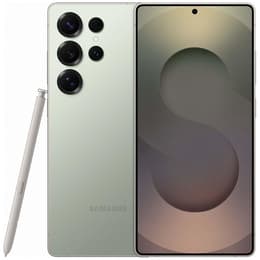
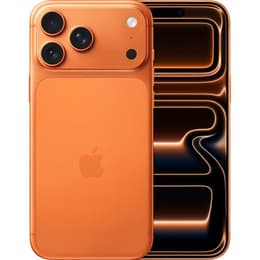
The Samsung Galaxy S25 Ultra (2025) and the Apple iPhone 17 Pro Max (2025) represent the pinnacle of current mobile technology, competing at the highest tier of the smartphone market. Both flagship devices cater to users seeking maximum performance, expansive displays, and versatile camera capabilities, yet they operate on entirely different software ecosystems. While the Galaxy S25 Ultra runs on Android with Samsung's custom interface, the iPhone 17 Pro Max utilizes Apple's proprietary iOS platform. These two devices diverge primarily in their handling of software multitasking, camera zoom mechanics, and physical styling, offering distinct experiences for power users.
Available Models
Colour
Storage (GB)
Scores
Durability
When evaluating the longevity of these two current-generation flagships, both manufacturers provide robust hardware construction and extended software support timelines that ensure multi-year reliability.
- Software update timeline: Both models receive extended software and security maintenance spanning up to seven years from their release dates, matching industry-leading standards for device longevity.
- Repairability and durability: The Galaxy S25 Ultra and iPhone 17 Pro Max both utilize titanium framing and high-strength glass protection, though third-party repair access and modular component availability vary between the Android and iOS ecosystems.
- Expected practical lifespan: Backing up their strong build quality, both devices maintain peak operational speed and battery health management features well past standard upgrade cycles, making a quality-assured refurbished option a sustainable choice for long-term ownership.
Year of Release
2025
2025
Compatible with latest Update
Yes
Yes
OS
Android
iOS
Foldable
No
No
Performance
Performance capabilities in daily tasks, heavy gaming, and intensive multitasking remain exceptional across both devices, though they manage memory and system resources differently.
- Storage and memory configurations: Both flagships offer expansive internal storage capacities starting at high baseline tiers, paired with generous random access memory configurations that keep numerous background applications active simultaneously without stuttering.
- Everyday responsiveness and gaming: Applications open instantly, high-end graphics-heavy games run smoothly at maximum settings, and thermal management systems maintain stable performance during prolonged usage sessions.
- Battery behavior and endurance: Both devices easily navigate a full day of mixed usage under heavy screen-on conditions, supported by efficient power management within their respective operating systems.
Screen quality
Display technology on both devices delivers exceptionally sharp, bright, and fluid viewing experiences suitable for media consumption, creative work, and outdoor readability.
- Display panel technology: Both models employ advanced light-emitting organic panels that yield deep black levels, high contrast ratios, and vivid color accuracy across various lighting environments.
- Brightness and outdoor visibility: Peak outdoor brightness levels ensure that text and imagery remain clearly legible even under direct sunlight, while adaptive refresh rates scale smoothly down during static viewing to conserve battery power.
- Screen dimensions and viewing space: Generous screen real estate with minimal bezels provides an immersive canvas for productivity tasks, video playback, and split-screen multitasking.
Resolution
1440x3120
2868x1320
Audiovisual
The imaging and video recording suites on the Galaxy S25 Ultra and iPhone 17 Pro Max stand among the most sophisticated available in mobile hardware, serving both casual photographers and mobile content creators.
- Multi-lens versatility: Both systems feature ultra-wide lenses and advanced primary sensors, while differing in telephoto architecture with the Galaxy emphasizing extended optical zoom reach and the iPhone focusing on seamless focal length transitions.
- Low-light and everyday capture: Advanced image processing pipelines automatically balance high-contrast scenes and reduce noise in dim environments, producing crisp details without excessive artificial sharpening.
- Video recording and audio capture: Both devices deliver professional-grade video stabilization, high-resolution capture formats, and clear multi-microphone audio recording suitable for interviews or vlogs.
Front camera
12
18 megapixels
Miscellaneous
Practical daily usability elements, physical dimensions, and connectivity standards round out the feature sets of these two competing flagship smartphones.
- Connectivity and ports: Both models support the latest wireless communication standards including Wi-Fi 7 and 5G networks, utilizing a universal reversible charging and data port format.
- Biometrics and physical security: Security authentication differs fundamentally as the Galaxy S25 Ultra offers both secure facial recognition and an in-display fingerprint sensor, whereas the iPhone 17 Pro Max relies exclusively on advanced facial mapping technology.
- Ergonomics and handling: The Galaxy S25 Ultra features a flatter, squarer chassis profile that accommodates an integrated stylus, while the iPhone 17 Pro Max opts for contoured edges and a slightly more rounded in-hand feel.
Weight
218 g
233 g
Screen size (in)
6.9
6.9
Network
5G
5G
SIM card
Dual Physical SIM
eSIM
Carrier compatibility
Unlocked
Unlocked
Connector
USB-C
USB-C
What the community thinks
User discussions and community feedback regarding the Galaxy S25 Ultra frequently highlight praise for its integrated stylus functionality, flexible file management system, and impressive long-range zoom capabilities. At the same time, some users note that its larger physical footprint and angular corners can feel cumbersome during one-handed operation. Conversely, owners of the iPhone 17 Pro Max often commend its seamless ecosystem integration, intuitive video editing workflows, and reliable facial recognition performance, though some express a desire for more customizable home screen layouts and faster file transfer options via traditional wired connections.
Users who prioritize versatile camera zoom, stylus-based note-taking, and open file organization will find the Galaxy S25 Ultra well-suited to their workflow. Meanwhile, users who favor fluid ecosystem synergy, straightforward video production tools, and streamlined application handling may lean toward the iPhone 17 Pro Max. Selecting between these two devices ultimately depends on software preference and daily functional priorities rather than raw capability gaps. Choosing a quality-assured refurbished model provides an eco-friendly path to accessing these advanced technologies without compromise.