

Dell Latitude 5400 14" Vs Dell Latitude 5410 14"

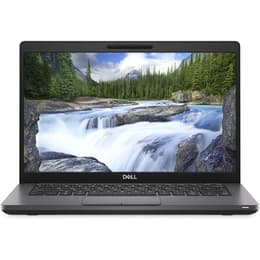
Dell Latitude 5400 14"
Starting at

Refurbished price:260.00

Versus €859.00 new

See options
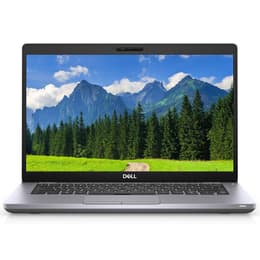
Dell Latitude 5410 14"
Starting at

Refurbished price:312.12

Versus €1,167.40 new

See options

Ratings

The Dell Latitude 5400, released in 2019, and the Dell Latitude 5410, launched in 2020, are 14-inch business-oriented laptops designed for productivity and reliability. While they share a similar design philosophy, the Latitude 5410 introduces updated internal components and enhanced wireless connectivity, building upon the solid foundation of its predecessor. Both models operate on the Windows platform, offering a consistent software experience for business users.

Scores

Durability

The Dell Latitude 5400 and 5410, being consecutive releases, offer comparable expectations for longevity, though the newer model holds a slight advantage in terms of ongoing support.

  • Release Timeline: The Latitude 5400 was released in 2019, with the Latitude 5410 following in 2020. This one-year difference means the 5410 may receive official software and security updates for a slightly longer period.
  • Software Longevity: Both models are compatible with Windows 10 and Windows 11, ensuring a consistent operating system experience. Dell typically provides extensive driver and firmware support for its Latitude series, contributing to a practical lifespan that extends beyond initial purchase.
  • Repairability: Both laptops are designed with repairability in mind, featuring accessible internal components such as RAM, SSD, and battery, which can be replaced or upgraded. This design choice supports a longer practical lifespan by allowing for maintenance and component refreshes.

Year of Release

2019

2020

Last Os Compatibility

Yes

Yes

OS

Windows 11

Windows 11

Performance

The performance of these laptops is primarily influenced by their internal processing units and memory configurations, impacting how smoothly they handle everyday tasks and multitasking.

  • Processor Capabilities: The Latitude 5400 is equipped with a previous generation of internal processing, while the Latitude 5410 features a newer generation. This results in the 5410 offering slightly faster execution of demanding applications and more responsive multitasking.
  • Memory and Storage: Both models support DDR4 RAM, with the Latitude 5410 often supporting slightly faster memory speeds compared to the 5400. Both offer configurations with NVMe PCIe SSDs, ensuring quick boot times and rapid application loading.
  • Battery Behavior: Both laptops are known for their robust battery life, with configurations offering up to 68 Wh batteries. Users can expect solid endurance for typical workdays, though actual runtime varies based on usage and configuration.

Memory (GB)

16 GB

16 GB

Processor

Core i5 - Gen 8 (U)

Core i5 - Gen 10 (U)

Graphic card

Integrated Graphics

Integrated Graphics

Screen quality

The display quality on both Latitude models provides a functional viewing experience suitable for business applications, with some variations in available options.

  • Display Technology: Both the Latitude 5400 and 5410 offer 14-inch displays with options for HD (1366x768) or Full HD (1920x1080) IPS panels. Full HD options provide a clearer and more detailed visual experience.
  • Brightness Levels: Typical brightness levels for both models are around 220 nits, which is adequate for indoor use. The Latitude 5410 can also be found with optional panels up to 300 nits, including low-power or privacy screens, which can improve visibility in varied lighting conditions.
  • Viewing Experience: Both models generally feature anti-glare properties, which help reduce reflections and improve usability in brightly lit environments. Optional touchscreen displays were available for both, providing an alternative input method.

Resolution

1920 x 1080

1920 x 1080

Screen type

IPS

LCD

Audiovisual

The audio and visual components of these laptops are designed to meet the needs of typical business communication and media consumption.

  • Camera System: Both the Latitude 5400 and 5410 are equipped with standard HD webcams, suitable for video conferencing and online meetings. Some configurations of the 5410 include a privacy shutter for the webcam.
  • Microphone Quality: Integrated microphones on both devices are designed to capture clear audio for calls and voice commands, providing a functional experience for communication.
  • Speaker Output: Both laptops feature integrated speakers, typically positioned to provide adequate sound for voice calls, presentations, and casual media consumption. The audio is often tuned with software enhancements for clarity.

Miscellaneous

Beyond core performance and display, several practical features contribute to the overall user experience and connectivity of these Dell Latitude laptops.

  • Connectivity Options: The Latitude 5400 typically supports Wi-Fi 5 (802.11ac) and Bluetooth 5.0. The Latitude 5410 offers an upgrade to Wi-Fi 6 (AX201) and Bluetooth 5.1, providing faster wireless speeds and improved performance in congested network environments. Both include an RJ-45 Ethernet port for wired network connections.
  • Port Selection: Both models offer a comprehensive array of ports, including multiple USB Type-A ports, an HDMI port, and a microSD card reader. They also feature a USB Type-C port, with optional Thunderbolt 3 support available in certain configurations for versatile connectivity.
  • Physical Characteristics: The Latitude 5400 has a starting weight of approximately 1.48 kg, while the 5410 starts at around 1.47 kg, making both relatively portable for their class. Both maintain a similar physical footprint, designed for ease of handling and transport, and are built with durable chassis incorporating carbon fiber and recycled materials.

Weight

1520 g

1520 g

Screen size

14

14

User feedback for both the Dell Latitude 5400 and 5410 generally highlights their reliability and suitability for business environments. Users often praise the Latitude 5400 for its durable build, comfortable keyboard, and solid battery life, making it a dependable workhorse. Common criticisms for the 5400 include its display, which can be dim in certain configurations, and a design that some users find uninspired. The Latitude 5410 builds on this foundation, with users appreciating its improved processing power, extended battery endurance, and the inclusion of Wi-Fi 6 for faster wireless connectivity. However, some users note that the display quality on certain 5410 configurations can be a drawback.

Users prioritizing a reliable, robust laptop for general office tasks, web browsing, and light multitasking may find the Latitude 5400 well-suited to their needs. For those requiring slightly more processing power for demanding applications, faster wireless connectivity, and a slightly longer window of official software support, the Latitude 5410 presents a compelling option. Both models offer a solid foundation for productivity, and considering a quality-assured refurbished option can be an eco-friendly alternative for acquiring either of these capable business laptops.
See all articles

Our recent comparisons