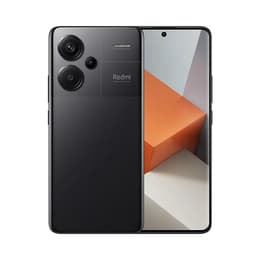

Xiaomi Redmi Note 13 Pro+ Vs Xiaomi Redmi Note 14 Pro

Xiaomi Redmi Note 13 Pro+
Starting at

Refurbished price:198.00

Versus €449.00 new

See options
Xiaomi Redmi Note 14 Pro
Starting at

Refurbished price:260.77

Versus €349.99 new

See options

Ratings

The Xiaomi Redmi Note 13 Proplus, released in January 2024, and the Xiaomi Redmi Note 14 Pro, launched globally in January 2025, represent successive generations within Xiaomi's popular mid-range smartphone series. While both devices operate on the Android platform, the Note 14 Pro introduces an updated operating system and several hardware refinements. The primary distinctions between these two models lie in their generational processor upgrades, enhanced display capabilities, and subtle improvements to their camera systems, aiming to offer a more refined user experience.

Scores

Durability

Evaluating the practical lifespan of these devices involves considering their release timelines, software support, and physical resilience.

  • Release Timeline: The Redmi Note 13 Proplus was introduced in January 2024, while the Redmi Note 14 Pro followed approximately a year later, with a global release in January 2025. This generational difference means the Note 14 Pro benefits from a more recent starting point for software updates.
  • Software Longevity: Both models are expected to receive a similar duration of software support, typically including three major Android OS updates and four years of security updates from their respective launch dates. The Redmi Note 13 Proplus launched with Android 13 and MIUI 14, with an upgrade path to Android 14. The Redmi Note 14 Pro ships with Android 14 and HyperOS, ensuring it will receive future updates for a longer period.
  • Physical Durability: Both devices feature robust build quality. The Redmi Note 13 Proplus boasts an IP68 rating for dust and water resistance and is protected by Corning Gorilla Glass Victus. The Redmi Note 14 Pro elevates this with an IP68 rating and Corning Gorilla Glass Victus 2, offering enhanced protection against drops and scratches.

Year of Release

2023

2025

OS

Android

Android

Foldable

No

No

Performance

The performance of these smartphones is largely driven by their internal components, impacting how smoothly they handle daily tasks and demanding applications.

  • Processing Power: The Redmi Note 13 Proplus is equipped with a MediaTek Dimensity 7200 Ultra processor, which capably handles multitasking and most applications. The Redmi Note 14 Pro features the MediaTek Dimensity 7300 Ultra, offering a generational improvement that translates to slightly faster app loading times and more fluid performance in graphically intensive games.
  • Multitasking and Storage: Both devices offer configurations with up to 12GB of RAM, ensuring efficient multitasking. The Redmi Note 13 Proplus utilizes UFS 3.1 storage, providing quick data access speeds. The Redmi Note 14 Pro typically comes with UFS 2.2 storage, which, while still capable, may offer slightly slower read/write speeds compared to its predecessor's higher standard. Neither model supports expandable storage via a microSD card.
  • Battery Behavior: The Redmi Note 13 Proplus houses a 5000 mAh battery, generally providing a full day of use for most users. The Redmi Note 14 Pro features a larger 5500 mAh battery, which, combined with its efficient processor, often extends usage beyond a single day for moderate users.

Memory (GB)

12 GB

8 GB

Screen quality

The visual experience on both devices is a key consideration, with differences in display technology and brightness affecting clarity and outdoor visibility.

  • Display Technology and Resolution: Both smartphones feature a 6.67-inch AMOLED display with a 1.5K resolution (2712 x 1220 pixels or similar), delivering sharp images and vibrant colors. The AMOLED technology ensures deep blacks and excellent contrast.
  • Brightness and Outdoor Visibility: The Redmi Note 13 Proplus offers a peak brightness of up to 1800 nits, providing good visibility even in bright outdoor conditions. The Redmi Note 14 Pro enhances this with a peak brightness of up to 3000 nits, making it even more comfortable to view content under direct sunlight. Both displays support HDR10+ and Dolby Vision for an immersive viewing experience.
  • Smoothness and Responsiveness: Both models feature a 120Hz refresh rate, contributing to smooth scrolling and fluid animations. The Redmi Note 13 Proplus has a curved display, offering a more premium feel and edge-to-edge viewing. The Redmi Note 14 Pro also features curved edges and panels, maintaining a modern aesthetic.

Resolution

1220 x 2712

1080x2400

Audiovisual

The camera systems on these devices are designed to capture a variety of moments, with specific strengths in different scenarios.

  • Main Camera Performance: Both the Redmi Note 13 Proplus and the Redmi Note 14 Pro feature a 200MP main camera with Optical Image Stabilization (OIS), capable of capturing highly detailed photos. This high-resolution sensor performs well in good lighting, producing images with strong detail and dynamic range.
  • Versatility and Low-Light: Both phones include an 8MP ultrawide camera and a 2MP macro camera. While the ultrawide is useful for broader scenes, user feedback often points to the 2MP macro lens offering limited utility. In low-light conditions, the large main sensor on both devices helps gather more light, though overall video quality can see a reduction in very dim environments.
  • Video and Front Camera: Both models support 4K video recording at 30 frames per second, with OIS contributing to stable footage. For selfies and video calls, the Redmi Note 13 Proplus has a 16MP front camera, while the Redmi Note 14 Pro upgrades to a 20MP front camera, offering slightly more detail for self-portraits.

Front camera

16 megapixels

32 MP

Miscellaneous

Beyond the core specifications, several practical elements contribute to the overall user experience of these smartphones.

  • Connectivity and Ports: Both devices offer 5G connectivity, ensuring fast mobile data speeds. The Redmi Note 13 Proplus supports Wi-Fi 6 and Bluetooth 5.3. The Redmi Note 14 Pro also supports Wi-Fi 6 and features Bluetooth 5.4, offering a minor upgrade in wireless connectivity. Both utilize a USB-C port for charging and data transfer. The Redmi Note 13 Proplus lacks a 3.5mm headphone jack, while some variants of the Redmi Note 14 Pro include one.
  • Security and Additional Features: Both phones incorporate an in-screen fingerprint sensor for secure unlocking. They also feature an IR blaster, allowing them to function as a universal remote control. NFC for mobile payments is present on the Redmi Note 13 Proplus.
  • Design and Handling: The Redmi Note 13 Proplus measures 161.4 x 74.2 x 8.9 mm and weighs 204.5g. The Redmi Note 14 Pro is slightly different at 162.33 x 74.42 x 8.24 mm and weighs 190g, making it marginally thinner and lighter, which can contribute to a more comfortable grip during extended use.

Weight

204 g

180 g

Screen size (in)

6.67

6.67

Network

5G

4G

SIM card

Dual Physical SIM

Dual Physical SIM

Carrier compatibility

Unlocked

Unlocked

User sentiment for the Redmi Note 13 Proplus often highlights its impressive display, robust build quality with IP68 rating, and rapid 120W charging as significant advantages. The 200MP main camera is generally praised for its detail in good lighting, though the secondary cameras (ultrawide and macro) receive less enthusiastic feedback. Common criticisms include the presence of bloatware in the software and the absence of a 3.5mm headphone jack or expandable storage.

For the Redmi Note 14 Pro, users appreciate the enhanced display brightness, the slightly improved generational processor, and the larger battery capacity. The continued inclusion of a 200MP main camera is a strong point, and the improved durability with Gorilla Glass Victus 2 is also noted. Some reviews mention that while performance is solid for everyday use, it might not be the absolute fastest in its segment for demanding gaming, and the charging speed, while still fast, is a step down from the previous generation's Proplus model.

Users prioritizing a device with a slightly more recent software foundation and a brighter display for outdoor use may find the Redmi Note 14 Pro well-suited to their needs. Those who value extremely fast charging and a slightly more premium feel in terms of storage speed might lean towards the Redmi Note 13 Proplus. Both devices offer a strong balance of features for their category, making them suitable for students, professionals, and travelers seeking reliable performance and a capable camera system. For those considering either model, exploring quality-assured refurbished options can provide an eco-friendly alternative.


See all articles

Our recent comparisons