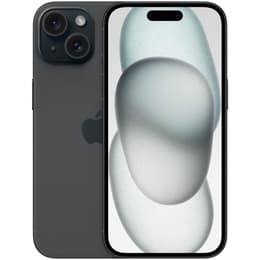
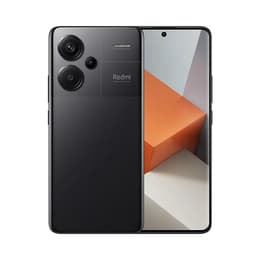


iPhone 15 Vs Xiaomi Redmi Note 13 Pro+

iPhone 15
iPhone 15
Starting at

Refurbished price:397.00

Versus €879.00 new

See options
Xiaomi Redmi Note 13 Pro+
Starting at

Refurbished price:198.00

Versus €449.00 new

See options

Ratings

The iPhone 15, released in September 2023, and the Xiaomi Redmi Note 13 Pro+, launched globally in January 2024, represent distinct approaches to smartphone design and functionality. While both are modern devices, they cater to different user expectations, primarily differing in their operating systems and core hardware philosophies. The iPhone 15 runs on Apple's iOS, known for its integrated ecosystem, while the Redmi Note 13 Pro+ operates on Android, offering a more open and customizable experience.

Scores

Durability

When considering the long-term usability of these devices, several factors contribute to their expected practical lifespan.

  • Release Timeline and Age: The iPhone 15 was released in September 2023, making it slightly older than the Redmi Note 13 Pro+, which saw its global launch in January 2024. This difference in release dates can influence the duration of future software support.
  • OS Support Duration: Apple typically provides iOS updates for its devices for approximately 5-6 years from their release, suggesting the iPhone 15 will receive updates well into the future. Xiaomi's Redmi Note series generally receives around 3 major Android OS updates and 4 years of security updates, which means the Redmi Note 13 Pro+ will also have a substantial period of software support.
  • Repairability and Durability: Both devices feature an IP68 rating for dust and water resistance, indicating a similar level of protection against environmental elements. The iPhone 15 incorporates Ceramic Shield on its front for enhanced durability.

Year of Release

2023

2023

Compatible with latest Update

Yes

Yes

OS

iOS

Android

Foldable

No

No

Performance

The performance of a smartphone is crucial for daily tasks, from browsing to demanding applications and gaming.

  • Processor Capabilities: The iPhone 15 is equipped with a processor that handles demanding applications and multitasking smoothly, ensuring a responsive user experience. The Redmi Note 13 Pro+ features a processor designed for efficient performance, capable of managing various applications and gaming with fluidity.
  • Memory and Storage: The iPhone 15 comes with 6GB of RAM and offers storage options of 128GB, 256GB, and 512GB. The Redmi Note 13 Pro+ provides more generous RAM options, with configurations up to 12GB or even 16GB in some variants, and storage options of 256GB and 512GB, utilizing faster UFS 3.1 storage. This larger RAM capacity on the Redmi Note 13 Pro+ can be beneficial for extensive multitasking and keeping many applications open simultaneously.
  • Battery Behavior: The iPhone 15 is designed to offer all-day battery life for typical usage. The Redmi Note 13 Pro+ houses a 5000mAh battery, which, combined with its efficient processor, generally provides extended usage times.

Memory (GB)

6 GB

12 GB

Screen quality

The display is a primary interface for users, and both devices offer high-quality viewing experiences with distinct characteristics.

  • Display Technology and Resolution: The iPhone 15 features a 6.1-inch Super Retina XDR OLED display with a resolution of 2556x1179 pixels, resulting in a pixel density of approximately 460 PPI. The Redmi Note 13 Pro+ boasts a larger 6.67-inch AMOLED display with a resolution of 2712x1220 pixels and a pixel density of 446 PPI. Both displays offer vibrant colors and deep blacks characteristic of OLED technology.
  • Brightness and Refresh Rate: The iPhone 15's display can reach a peak outdoor brightness of up to 2000 nits, making it highly visible in bright conditions, but it has a standard 60Hz refresh rate. The Redmi Note 13 Pro+ offers a peak brightness of 1800 nits and features a smoother 120Hz refresh rate, which enhances the fluidity of scrolling and animations.
  • Screen Protection and Features: The iPhone 15 uses Ceramic Shield for display protection. The Redmi Note 13 Pro+ is protected by Corning Gorilla Glass Victus. The iPhone 15 also includes the Dynamic Island feature, which integrates alerts and activities into a dynamic notification area.

Resolution

1179 x 2556

1220 x 2712

Screen type

Super Retina XDR OLED

AMOLED

Audiovisual

Camera capabilities are a significant consideration for many smartphone users, and both devices offer advanced imaging systems.

  • Main Camera System: The iPhone 15 features an advanced dual-camera system with a 48MP main sensor that uses pixel binning to produce detailed 24MP photos by default, alongside a 12MP ultrawide camera. It also offers a 2x telephoto option enabled by the main sensor. The Redmi Note 13 Pro+ stands out with a 200MP main camera, equipped with optical image stabilization (OIS), an 8MP ultrawide lens, and a 2MP macro lens.
  • Photography Performance: The iPhone 15 benefits from Apple's Photonic Engine and Smart HDR 5 for improved image processing, especially in challenging lighting conditions and for portraits. The Redmi Note 13 Pro+'s high-resolution sensor allows for significant cropping flexibility and detailed images.
  • Video Recording: Both devices are capable of recording 4K video at 60 frames per second. The iPhone 15 includes Cinematic Mode for depth-of-field effects and Action Mode for stabilized video.
  • Front Camera: The iPhone 15 has a 12MP TrueDepth front camera with autofocus. The Redmi Note 13 Pro+ features a 16MP front camera.

Main camera

48 megapixels

200 megapixels

Front camera

12 megapixels

16 megapixels

Miscellaneous

Beyond core features, several other aspects contribute to the overall user experience and practicality of these smartphones.

  • Connectivity and Ports: Both devices support 5G connectivity for fast mobile data. The iPhone 15 has transitioned to a USB-C port, offering broader compatibility with accessories. The Redmi Note 13 Pro+ also uses a USB-C port. The iPhone 15 supports Wi-Fi 6, while the Redmi Note 13 Pro+ supports Wi-Fi 6.
  • Biometric Security: The iPhone 15 relies on Face ID for secure facial recognition. The Redmi Note 13 Pro+ features an in-screen fingerprint sensor for biometric authentication.
  • Design and Build: The iPhone 15 features an aluminum design with a color-infused glass back and Ceramic Shield front. It weighs 171 grams and has dimensions of 147.6 x 71.6 x 7.8 mm. The Redmi Note 13 Pro+ has a glass front and back (Gorilla Glass Victus) with a plastic frame, and some variants offer a vegan leather back. It weighs 204.5 grams and measures 161.4 x 74.2 x 8.9 mm.
  • Additional Features: The iPhone 15 includes the Dynamic Island for interactive notifications. The Redmi Note 13 Pro+ offers dual SIM support and an IR blaster.

Weight

171 g

204 g

Screen size (in)

6.1

6.67

Network

5G

5G

SIM card

Physical SIM + eSIM

Dual Physical SIM

Carrier compatibility

Unlocked

Unlocked

User feedback for the iPhone 15 often highlights its refined design, the integration of the Dynamic Island across the standard models, and the significant camera improvements, particularly the 48MP main sensor. Users appreciate the switch to USB-C for increased compatibility. Some common criticisms revolve around the 60Hz refresh rate, which some find less fluid compared to devices with higher refresh rates.

For the Xiaomi Redmi Note 13 Pro+, users frequently praise its large, high-refresh-rate AMOLED display, the impressive 200MP main camera, and its fast charging capabilities. The generous RAM and storage options are also often noted as positive aspects. Some users might find the software experience, with Xiaomi's custom Android skin, to be a matter of personal preference.

Users prioritizing a compact device with a highly integrated ecosystem, consistent software updates, and advanced computational photography may find the iPhone 15 well-suited to their needs. Its robust build and Ceramic Shield front offer a sense of durability. Conversely, users who value a larger, smoother display with a higher refresh rate, a versatile high-megapixel camera system, and more customizable Android experience, along with ample RAM and fast charging, might lean towards the Xiaomi Redmi Note 13 Pro+. Both devices offer compelling features, and choosing between them often comes down to individual preferences for operating system, display characteristics, and camera priorities. Exploring quality-assured refurbished options for either model can provide an eco-friendly alternative for consumers.

See all articles

Our recent comparisons