

Galaxy S22 5G Vs Xiaomi Redmi Note 13 Pro+

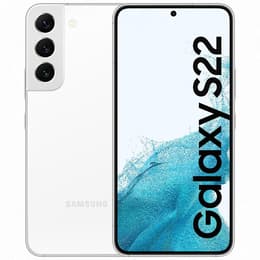
Galaxy S22 5G
Galaxy S22 5G
Starting at

Refurbished price:174.00

Versus €851.00 new

See options
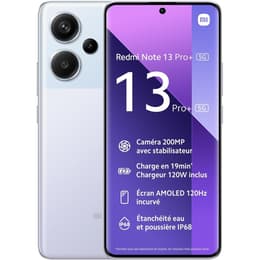
Xiaomi Redmi Note 13 Pro+
Starting at

Refurbished price:198.00

Versus €449.00 new

See options

Ratings

The Samsung Galaxy S22 5G (released in 2022) and the Xiaomi Redmi Note 13 Pro+ (released in 2024) are both Android smartphones, but they target different user experiences. The Galaxy S22 offers a more compact design with a focus on a refined flagship experience, while the Redmi Note 13 Pro+ emphasizes a larger display, a high-megapixel camera, and rapid charging capabilities. Both devices run on the Android operating system, though with different manufacturer-specific interfaces and update timelines.

Scores

Durability

The expected lifespan of a smartphone is influenced by its release timeline, software support, and physical durability features.

  • Release Timeline: The Samsung Galaxy S22 5G was released in February 2022, making it an older device compared to the Xiaomi Redmi Note 13 Pro+, which launched globally in January 2024. This age difference directly impacts the remaining software support.
  • Software Longevity: The Galaxy S22 was promised 4 Android OS upgrades and 5 years of security updates, with support ending around 2027. The Redmi Note 13 Pro+ is expected to receive 3 major Android OS updates (up to Android 16) and 4 years of security updates, extending its support until January 2028. This means the Redmi Note 13 Pro+ will likely receive software updates for a longer period from the current date.
  • Physical Durability: Both devices feature an IP68 rating for dust and water resistance, indicating protection against immersion in up to 1.5 meters of water for 30 minutes. The Galaxy S22 uses Corning Gorilla Glass Victus+ for screen protection, while the Redmi Note 13 Pro+ also features Corning Gorilla Glass Victus. The Redmi Note 13 Pro+ also incorporates internal reinforcements and multi-layer shock absorption for enhanced drop resistance. Repairability for the Redmi Note 13 Pro+ is considered average, with a score of 6.5/10, noting that adhesive for the back cover and battery can make repairs challenging, though battery removal is aided by pull tabs.

Year of Release

2022

2023

Compatible with latest Update

Yes

Yes

OS

Android

Android

Foldable

No

No

Performance

Performance in daily use is a key factor for many users, impacting app responsiveness, multitasking, and gaming experiences.

  • Processor Capabilities: The Galaxy S22 5G is powered by a processor designed for flagship performance at its release, capable of handling demanding applications and multitasking smoothly. The Redmi Note 13 Pro+ features a newer generation processor, which also delivers high-speed output for a smooth mobile gaming experience and efficient handling of tasks.
  • System Responsiveness and Multitasking: Both devices offer configurations with ample RAM (8GB for S22, and up to 12GB or 16GB for Redmi Note 13 Pro+) to support fluid multitasking and quick app loading. The Redmi Note 13 Pro+ utilizes LPDDR5 RAM and UFS 3.1 storage, contributing to faster app launches and data transfer speeds.
  • Storage Options: The Galaxy S22 5G is available with 128GB or 256GB of internal storage. The Redmi Note 13 Pro+ offers larger storage options, including 256GB and 512GB, providing more space for applications, photos, and videos.

Memory (GB)

8 GB

12 GB

Screen quality

The display is a primary interface for smartphone interaction, and differences in technology, resolution, and brightness can significantly affect the viewing experience.

  • Display Technology and Resolution: The Galaxy S22 5G features a 6.1-inch Dynamic AMOLED 2X display with a 1080 x 2340 pixel resolution, offering vibrant colors and deep blacks. The Redmi Note 13 Pro+ has a larger 6.67-inch AMOLED display with a higher 1.5K resolution (1220 x 2712 pixels), providing a sharper and more expansive viewing area.
  • Brightness and Refresh Rate: Both devices offer a 120Hz adaptive refresh rate for smooth scrolling and animations. The Galaxy S22 can reach a peak brightness of 1300 nits, ensuring good visibility in various lighting conditions. The Redmi Note 13 Pro+ boasts a higher peak brightness of 1800 nits, which can be beneficial for outdoor use.
  • Screen Protection: Both phones are equipped with robust screen protection. The Galaxy S22 uses Corning Gorilla Glass Victus+, while the Redmi Note 13 Pro+ features Corning Gorilla Glass Victus.

Resolution

1080 x 2340

1220 x 2712

Screen type

Dynamic AMOLED 2X

AMOLED

Audiovisual

Camera capabilities are a significant consideration for many users, influencing the quality of photos and videos captured in various scenarios.

  • Rear Camera System: The Galaxy S22 5G features a versatile triple-camera setup, including a 50MP main sensor, a 12MP ultrawide lens, and a 10MP telephoto lens with 3x optical zoom, allowing for detailed shots at a distance. The Redmi Note 13 Pro+ also has a triple-camera system, highlighted by a 200MP main sensor with optical image stabilization (OIS), an 8MP ultrawide, and a 2MP macro lens. The 200MP sensor on the Redmi Note 13 Pro+ can capture highly detailed images and offers up to 4X lossless zoom.
  • Photography Performance: The Galaxy S22 is known for its consistent image quality across its lenses and strong low-light performance, including a Night Portrait mode. The Redmi Note 13 Pro+ also aims for clear and dynamic nighttime imaging with its large pixel size and advanced lens technology.
  • Video Recording: The Galaxy S22 5G supports video recording up to 8K resolution at 24fps, and 4K at 30/60fps. The Redmi Note 13 Pro+ can record video up to 4K resolution.

Main camera

50 megapixels

200 megapixels

Front camera

10 megapixels

16 megapixels

Miscellaneous

Beyond core specifications, several practical elements contribute to the overall user experience and device utility.

  • Connectivity and Ports: Both devices support 5G connectivity, Wi-Fi 6, and Bluetooth 5.2 (S22) or 5.3 (Redmi Note 13 Pro+). Both utilize a USB-C port for charging and data transfer and neither includes a traditional 3.5mm headphone jack.
  • Biometric Security: Both smartphones feature an in-screen fingerprint sensor for secure unlocking. The Galaxy S22 also includes 2D face recognition.
  • Physical Characteristics: The Galaxy S22 5G is a more compact device, weighing 167g and measuring 146 x 70.6 x 7.6 mm. The Redmi Note 13 Pro+ is larger and slightly heavier at 204.5g and dimensions of 161.4 x 74.2 x 8.9 mm. The Galaxy S22 features an Armor Aluminum frame and Gorilla Glass Victus+ on both front and back. The Redmi Note 13 Pro+ has a glass back (or silicone polymer) and a plastic middle bezel, with metal buttons.

Weight

195 g

204 g

Screen size (in)

6.1

6.67

Network

5G

5G

SIM card

Physical SIM + eSIM

Dual Physical SIM

Carrier compatibility

Unlocked

Unlocked

The Samsung Galaxy S22 5G and the Xiaomi Redmi Note 13 Pro+ offer distinct advantages, catering to different user preferences. Users often praise the Galaxy S22 for its compact size, premium build quality, and consistent camera performance, particularly its telephoto capabilities. Some common criticisms of the S22 include its relatively smaller battery capacity, which can lead to more frequent charging for heavy users, and its shorter remaining software support compared to newer devices.

On the other hand, the Redmi Note 13 Pro+ is frequently lauded for its large, high-resolution display, impressive 200MP main camera, and exceptionally fast charging speeds. Users appreciate the longer software update commitment and the larger battery, though some reports indicate that its battery efficiency might be lower during power-intensive tasks, leading to similar real-world battery life as devices with smaller capacities. The curved display design, while aesthetically pleasing, has been noted by some as potentially making the phone feel less grippy.

Users prioritizing a compact form factor, a dedicated telephoto camera, and a refined user experience may find the Galaxy S22 5G well-suited to their needs. Those who value a larger, sharper display, a high-megapixel main camera, and rapid charging, along with extended software support, might lean towards the Redmi Note 13 Pro+. Both devices offer robust durability with IP68 ratings. For those considering an eco-friendly alternative, quality-assured refurbished options for both models are available, providing a sustainable choice for acquiring these devices.


See all articles

Our recent comparisons