

iPhone 12 Vs Xiaomi Redmi Note 13 Pro+

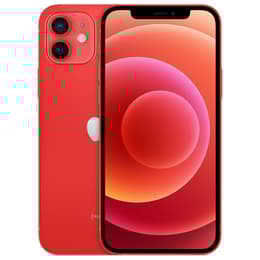
iPhone 12
iPhone 12
Starting at

Refurbished price:174.00

Versus €829.00 new

See options
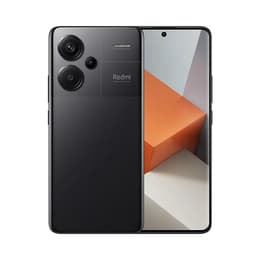
Xiaomi Redmi Note 13 Pro+
Starting at

Refurbished price:198.00

Versus €449.00 new

See options

Ratings

The iPhone 12, released in October 2020, operates on Apple's iOS platform, offering a streamlined user experience. In contrast, the Xiaomi Redmi Note 13 Pro+, launched in January 2024, runs on Android with Xiaomi's MIUI overlay, providing a more customizable interface. These devices cater to different preferences, with the iPhone 12 emphasizing a cohesive ecosystem and the Redmi Note 13 Pro+ focusing on modern hardware advancements and a versatile camera system.

Scores

Durability

The longevity of a smartphone is influenced by its physical resilience and ongoing software support. Both devices offer robust protection against environmental elements, though their software lifespans differ.

  • Physical Durability: The iPhone 12 features a Ceramic Shield front cover and an IP68 rating for water and dust resistance, allowing submersion up to 6 meters for 30 minutes. The Redmi Note 13 Pro+ also boasts an IP68 rating and utilizes Corning Gorilla Glass Victus for its display, offering enhanced scratch and drop resistance.
  • Software Longevity: Apple typically provides iOS updates for its devices for approximately five to six years from their release date, suggesting extended support for the iPhone 12. The Redmi Note 13 Pro+, being an Android device, generally receives three to four years of operating system updates and four to five years of security updates, which is standard for its category.
  • Expected Lifespan: Users prioritizing the longest possible software support and ecosystem integration may find the iPhone 12's update policy more appealing. Those who prefer newer hardware and are comfortable with a slightly shorter, though still substantial, software support window will find the Redmi Note 13 Pro+ a suitable option.

Year of Release

2020

2023

Compatible with latest Update

Yes

Yes

OS

iOS

Android

Foldable

No

No

Performance

Performance in smartphones is crucial for daily tasks, from browsing to demanding applications and gaming. Both devices deliver capable performance, but with different underlying architectures and capacities.

  • Processing Power: The iPhone 12 handles everyday applications and multitasking smoothly, providing a responsive experience for general use and mobile gaming. Its processor efficiently manages system resources, ensuring consistent performance over time. The Redmi Note 13 Pro+ features a more recent processor designed for efficiency and power, allowing for very smooth operation with demanding applications, intensive multitasking, and graphics-heavy games.
  • Memory and Storage: The iPhone 12 comes with 4GB of RAM and storage options of 64GB, 128GB, or 256GB, which is sufficient for most users. The Redmi Note 13 Pro+ offers more generous configurations, with 8GB or 12GB of RAM and storage options of 256GB or 512GB, utilizing faster UFS 3.1 storage technology. This larger memory and faster storage can benefit users who frequently switch between many applications or store large files.
  • Overall Responsiveness: While the iPhone 12 maintains a fluid user interface, the Redmi Note 13 Pro+'s newer hardware and higher RAM capacity contribute to a perceptibly snappier feel, especially when pushing the device with multiple heavy tasks simultaneously.

Memory (GB)

4 GB

12 GB

Screen quality

The display is a primary interface for smartphone interaction, and both models offer high-quality viewing experiences with distinct characteristics.

  • Display Technology and Size: The iPhone 12 features a 6.1-inch Super Retina XDR OLED display, known for its deep blacks and accurate color reproduction. The Redmi Note 13 Pro+ sports a larger 6.67-inch AMOLED display, also delivering vibrant colors and excellent contrast.
  • Resolution and Brightness: The iPhone 12 has a resolution of 2532 x 1170 pixels at 460 ppi, with a typical brightness of 625 nits and a peak HDR brightness of 1200 nits. The Redmi Note 13 Pro+ offers a resolution of 2712 x 1220 pixels at 446 ppi and a significantly higher peak brightness of 1800 nits, which can improve visibility in bright outdoor conditions.
  • Refresh Rate and Smoothness: The iPhone 12 has a standard 60Hz refresh rate. The Redmi Note 13 Pro+ features a smoother 120Hz refresh rate, which makes scrolling and animations appear more fluid.

Resolution

1170 x 2532

1220 x 2712

Screen type

Super Retina XDR OLED

AMOLED

Audiovisual

Camera capabilities are a significant factor for many users, and these two smartphones approach photography with different strengths.

  • Rear Camera Systems: The iPhone 12 is equipped with a dual 12MP camera system, comprising a wide and an ultra-wide lens. It excels in computational photography, offering features like Night mode, Deep Fusion, and Smart HDR 3 for balanced and detailed images across various lighting conditions. The Redmi Note 13 Pro+ features a triple camera setup, highlighted by a 200MP main sensor with optical image stabilization (OIS), an 8MP ultrawide, and a 2MP macro lens. This high-megapixel main sensor allows for significant cropping and detailed shots.
  • Photography Performance: The iPhone 12 delivers consistent and reliable image quality, particularly praised for its color accuracy and performance in challenging lighting. The Redmi Note 13 Pro+'s 200MP sensor can capture highly detailed photos, especially in good lighting, and its OIS helps in reducing blur. However, user reports suggest that the auxiliary lenses (ultrawide and macro) may not match the main sensor's quality.
  • Video Recording: Both devices support 4K video recording. The iPhone 12 offers HDR video recording with Dolby Vision up to 4K at 30 frames per second, providing enhanced dynamic range in videos. The Redmi Note 13 Pro+ also records 4K video, with its main sensor offering strong stabilization.

Main camera

12 megapixels

200 megapixels

Front camera

12 megapixels

16 megapixels

Miscellaneous

Beyond core features, several practical elements contribute to the overall user experience and daily convenience.

  • Connectivity and Ports: Both the iPhone 12 and Redmi Note 13 Pro+ support 5G connectivity and Wi-Fi 6 for fast wireless speeds. The iPhone 12 uses Apple's proprietary Lightning port, while the Redmi Note 13 Pro+ features a more universal USB-C port. For Bluetooth, the iPhone 12 has Bluetooth 5.0, and the Redmi Note 13 Pro+ comes with the slightly newer Bluetooth 5.3.
  • Biometric Security: The iPhone 12 relies on Face ID for secure facial recognition. The Redmi Note 13 Pro+ incorporates an in-display fingerprint sensor for biometric authentication.
  • Design and Handling: The iPhone 12 has a compact design, weighing 164 grams, with flat edges and an aluminum frame. The Redmi Note 13 Pro+ is a larger device, weighing between 198.5g and 204.5g depending on the finish, and features a curved display and back for a comfortable grip.

Weight

164 g

204 g

Width

7.15 cm

7,42 cm

Height

14.67 cm

16,14 cm

Depth

0.74 cm

0,89 cm

Screen size (in)

6.1

6.67

Network

5G

5G

SIM card

Physical SIM + eSIM

Dual Physical SIM

Carrier compatibility

Unlocked

Unlocked

The iPhone 12 and Xiaomi Redmi Note 13 Pro+ offer distinct advantages, appealing to different user priorities. User feedback for the iPhone 12 often highlights its consistent performance, robust software ecosystem, and reliable camera system, even several years after its release. Some users appreciate its more compact form factor and the long-term software support from Apple. Criticisms sometimes point to its 60Hz display and the Lightning port as areas where it lags behind newer Android counterparts.

For the Redmi Note 13 Pro+, users frequently praise its vibrant, high-refresh-rate AMOLED display, the impressive detail captured by its 200MP main camera, and its rapid charging capabilities. Its modern design and competitive hardware specifications are also commonly noted as strong points. Some users might find the software experience, with MIUI on Android, to be more feature-rich but potentially less streamlined than iOS.

Users prioritizing a device with a proven track record of long-term software updates, a highly integrated ecosystem, and a compact design may find the iPhone 12 to be a suitable choice. Conversely, those who value a larger, smoother display, a high-resolution main camera, faster charging technology, and a more recent hardware platform might lean towards the Redmi Note 13 Pro+. Both devices, whether new or as a quality-assured refurbished option, provide reliable smartphone experiences tailored to different needs.


See all articles

Our recent comparisons