
Xiaomi 14T Pro Vs Xiaomi Redmi Note 14 Pro

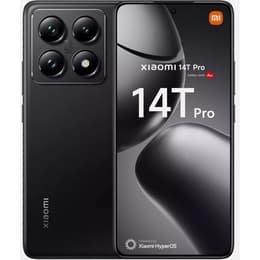
Xiaomi 14T Pro
Xiaomi 14T Pro
Starting at

Refurbished price:394.00

Versus €900.00 new

See options
Xiaomi Redmi Note 14 Pro
Starting at

Refurbished price:260.77

Versus €349.99 new

See options

Ratings

The Xiaomi 14T Pro and the Xiaomi Redmi Note 14 Pro are both Android smartphones released in September 2024, offering distinct experiences within Xiaomi's diverse product lineup. While both devices operate on the Android 14-based HyperOS, they cater to different user priorities through variations in their core specifications and feature sets. The 14T Pro emphasizes high-end performance and advanced camera capabilities, whereas the Redmi Note 14 Pro focuses on a balanced user experience with a strong display and robust battery life.

Scores

Durability

When considering the long-term usability of these devices, several factors contribute to their expected lifespan, including software support and physical durability.

  • Software Longevity: Both the Xiaomi 14T Pro and the Xiaomi Redmi Note 14 Pro launched with Android 14 and Xiaomi's HyperOS, with an expected upgrade path to Android 15 and HyperOS 2. Given their release in late 2024, users can anticipate several years of major Android updates and security patches, ensuring continued access to new features and protection against vulnerabilities. The 14T Pro, being a higher-tier device, might receive slightly longer or more frequent updates, though both are well-positioned for extended software support. [4]
  • Physical Durability: Both smartphones feature an IP68 rating for dust and water resistance, providing protection against immersion in water and dust ingress. The Redmi Note 14 Pro incorporates Corning Gorilla Glass Victus 2 for enhanced screen protection against drops and scratches. [5, 18, 19, 20] The Xiaomi 14T Pro is constructed with a high-strength 6M13 aluminium alloy frame, contributing to its overall structural integrity. [15]
  • Repairability: While specific repairability scores can vary by region and component availability, both devices, as modern smartphones, are designed with integrated components. The availability of parts and service expertise through official channels or certified repair centers will influence the practical ease and cost of repairs over their lifespan.

Year of Release

2024

2025

OS

Android

Android

Foldable

No

No

Performance

The performance of a smartphone is largely determined by its internal components, impacting everything from app responsiveness to gaming and multitasking capabilities.

  • Processing Power: The Xiaomi 14T Pro is equipped with a more advanced processor, designed to handle demanding applications and intensive multitasking with greater efficiency. This translates to smoother operation for complex tasks, high-fidelity gaming, and faster processing of large files. [1, 4, 6, 15] The Xiaomi Redmi Note 14 Pro features a capable processor that provides a responsive experience for everyday use, social media, web browsing, and moderate gaming. [7, 18]
  • Memory and Storage: The 14T Pro offers higher RAM configurations, up to 16GB, and utilizes UFS 4.0 storage, which contributes to quicker app loading times and seamless transitions between applications. [3, 4, 24] The Redmi Note 14 Pro typically comes with up to 12GB of RAM and uses LPDDR4X technology, alongside internal storage options that are suitable for most users' needs. [7, 9, 18] Neither device supports expandable storage via a microSD card. [2, 7]
  • Battery Behavior: The Xiaomi 14T Pro includes a 5000mAh battery with support for 120W wired fast charging and 50W wireless charging, allowing for rapid power replenishment. [3, 6, 24] The Redmi Note 14 Pro features a larger 5500mAh battery, which generally translates to extended usage times between charges, and supports 45W wired fast charging. [7, 18]

Memory (GB)

16 GB

8 GB

Screen quality

The display is a primary interface for smartphone interaction, and both devices offer vibrant viewing experiences with some key differences.

  • Display Technology and Clarity: Both the Xiaomi 14T Pro and the Xiaomi Redmi Note 14 Pro feature 6.67-inch AMOLED displays, known for their deep blacks and high contrast ratios. The 14T Pro offers a resolution of 2712x1220 pixels, providing sharp and detailed visuals. [2, 24] The Redmi Note 14 Pro also has a 1.5K resolution (1220x2712 pixels), ensuring clear and crisp imagery. [7, 11, 18]
  • Brightness and Refresh Rate: The Xiaomi 14T Pro boasts a peak brightness of 4000 nits, making it exceptionally visible even in bright outdoor conditions. It also supports a 144Hz refresh rate for very fluid scrolling and animations. [6, 24] The Redmi Note 14 Pro offers a peak brightness of 3000 nits, which is still very bright for outdoor use, and features a 120Hz refresh rate, providing a smooth visual experience. [18]
  • Viewing Experience: The Redmi Note 14 Pro's display is curved, which can offer a more immersive feel and a comfortable grip. [13, 18, 20] Both displays incorporate features like PWM dimming (1920Hz on Redmi Note 14 Pro) to reduce eye strain, especially in low-light environments. [11, 14]

Resolution

1220 x 2712

1080x2400

Audiovisual

Photography capabilities are a significant consideration for many users, and these two Xiaomi phones approach imaging with different strengths.

  • Rear Camera Systems: The Xiaomi 14T Pro features a Leica-tuned triple camera system, including a 50MP main sensor with optical image stabilization (OIS), a 50MP telephoto lens, and a 12MP ultrawide lens. This setup is designed for versatility and professional-grade image quality, particularly excelling in detail and color reproduction. [2, 6, 15, 23, 24] The Redmi Note 14 Pro offers a main camera that can be either 50MP (Sony LYT-600) or 200MP (Samsung ISOCELL HP3) depending on the region, also with OIS, complemented by an 8MP ultrawide and a 2MP macro lens. This configuration prioritizes high-resolution main shots and broader perspectives. [1, 7, 13, 14, 18, 20]
  • Low-Light and Video Performance: The 14T Pro's Leica optics and advanced image processing contribute to strong low-light performance, capturing detailed and well-exposed images in challenging conditions. It supports 4K video recording at 60 frames per second with advanced controls. [15, 23] The Redmi Note 14 Pro also offers good low-light capabilities, especially with its OIS-equipped main sensor, and includes features like AI Erase Pro for photo editing. [14, 20]
  • Front Camera: The Xiaomi 14T Pro is equipped with a 32MP front camera for high-resolution selfies and video calls. [2, 24] The Redmi Note 14 Pro features a 20MP front camera, suitable for clear self-portraits. [7, 18]

Front camera

32 megapixels

32 MP

Miscellaneous

Beyond the core specifications, several practical elements contribute to the overall user experience and device functionality.

  • Connectivity: Both devices support 5G connectivity for fast mobile data speeds and Wi-Fi 6 for efficient wireless networking. [2, 7, 18] The 14T Pro also includes an IR blaster, allowing it to function as a universal remote control for various home appliances. [2]
  • Ports and Sensors: Both smartphones utilize a USB-C port for charging and data transfer, and neither includes a 3.5mm headphone jack. [2] For security, both feature in-display fingerprint sensors. The 14T Pro also has NFC for contactless payments. [2, 10, 24]
  • Design and Handling: The Xiaomi 14T Pro has dimensions of 160.4 x 75.1 x 8.4mm and weighs 209g. [2, 24] The Redmi Note 14 Pro is slightly larger and lighter at 162.33 x 74.42 x 8.24mm and 190g, with a curved design that may enhance grip. [18] Both offer dual SIM capabilities. [2, 7]
  • Audio: Both phones are equipped with stereo speakers, providing a more immersive audio experience for media consumption. [24]

Weight

209 g

180 g

Screen size (in)

6.67

6.67

Network

5G

4G

SIM card

Dual Physical SIM

Dual Physical SIM

Carrier compatibility

Unlocked

Unlocked

User feedback often highlights the Xiaomi 14T Pro for its robust performance and advanced camera system, particularly praising its ability to handle demanding tasks and capture high-quality images with its Leica-tuned optics. Some users appreciate its fast charging capabilities, both wired and wireless. Conversely, common discussions around the Redmi Note 14 Pro often commend its impressive battery life and vibrant display, noting its strong value for everyday use. Criticisms, if any, tend to be relative to the higher-tier models, such as the 14T Pro's superior processing power or more versatile camera array.

Users prioritizing raw performance, advanced photography features, and the fastest charging speeds will likely find the Xiaomi 14T Pro to be a more suitable choice. Its powerful processor and dedicated telephoto lens make it well-suited for mobile gamers, content creators, and professionals who require a highly responsive device. On the other hand, users who value extended battery life, a bright and smooth display for media consumption, and a solid overall smartphone experience without needing the absolute top-tier performance may lean towards the Xiaomi Redmi Note 14 Pro. It offers a compelling package for students, daily communicators, and those seeking a reliable device for general use. Both models are available as quality-assured refurbished options, providing an eco-friendly alternative for consumers.


See all articles

Our recent comparisons