
iPhone

Compare models
Differences at a glance
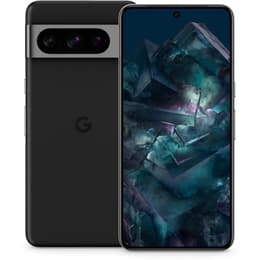
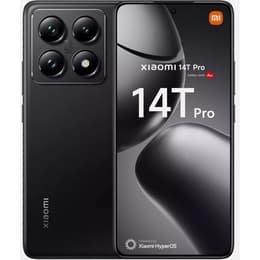
The Google Pixel 8 Pro, released in October 2023, and the Xiaomi 14T Pro, announced in September 2024, represent distinct approaches to high-end smartphone design and functionality. Both devices operate on the Android platform. The Pixel 8 Pro emphasizes advanced computational photography and long-term software support, while the Xiaomi 14T Pro focuses on rapid charging capabilities and a powerful processor for demanding tasks.
Colour
Storage
The longevity of a smartphone is influenced by its physical resilience and software support. The Google Pixel 8 Pro, launched in October 2023, is notable for Google's commitment to providing seven years of operating system and security updates, offering an extended practical lifespan. It features Corning Gorilla Glass Victus 2 and an IP68 rating for dust and water resistance. The Xiaomi 14T Pro, released in September 2024, also boasts an IP68 rating, indicating similar protection. While specific long-term software support for the 14T Pro is not as extensively detailed as the Pixel, it launched with HyperOS based on Android 14 and was later updated to Android 15.
Year of Release
Compatible with latest Update
Foldable
Both smartphones are equipped with powerful processors designed to handle demanding applications and multitasking. The Google Pixel 8 Pro features Google's Tensor G3 chip, optimized for on-device artificial intelligence tasks, contributing to smooth performance in computational photography and voice processing. It comes with 12GB of RAM, facilitating efficient multitasking. The Xiaomi 14T Pro is powered by the MediaTek Dimensity 9300+ chipset, known for its strong performance in gaming and heavy applications. It offers configurations with up to 16GB of LPDDR5X RAM and UFS 4.0 storage, which contribute to rapid app loading and data transfer speeds.
The display is a primary interaction point, and both devices offer high-quality viewing experiences. The Google Pixel 8 Pro features a 6.7-inch LTPO OLED display with a resolution of 1344 x 2992 pixels, offering sharp visuals and deep blacks. Its refresh rate dynamically adjusts between 1Hz and 120Hz, optimizing for smoothness and power efficiency, and it can reach a peak brightness of 2400 nits for clear outdoor visibility. The Xiaomi 14T Pro comes with a 6.67-inch AMOLED display, providing a resolution of 1220 x 2712 pixels. It boasts a higher fixed refresh rate of 144Hz for exceptionally fluid motion and an impressive peak brightness of 4000 nits, enhancing visibility in bright conditions.
Resolution
Screen type
Both smartphones offer advanced camera systems and multimedia capabilities. The Google Pixel 8 Pro features a versatile triple rear camera setup, including a 50MP main sensor, a 48MP ultrawide, and a 48MP telephoto lens with 5x optical zoom. It is renowned for its computational photography, delivering consistent image quality across various lighting conditions and offering advanced AI-powered editing tools. Video recording is supported up to 4K at 60 frames per second. The Xiaomi 14T Pro also sports a triple rear camera system, co-engineered with Leica, featuring a 50MP main sensor, a 50MP telephoto lens with 2.6x optical zoom, and a 12MP ultrawide lens. This collaboration aims for authentic color reproduction and detailed imagery. It supports video recording up to 8K at 30 frames per second and includes a Director Mode.
Main camera
Front camera
Beyond core specifications, several practical elements differentiate these devices. Both phones support 5G connectivity. The Google Pixel 8 Pro includes Wi-Fi 7 and Bluetooth 5.3, along with a USB-C 3.2 port. It features an in-display fingerprint sensor and Face Unlock for security, and notably includes a temperature sensor on its rear camera bar. The device measures 162.6 x 76.5 x 8.8 mm and weighs 213g. The Xiaomi 14T Pro also supports Wi-Fi 7 and features Bluetooth 5.4, alongside a USB-C port. It incorporates an in-display fingerprint sensor for biometric authentication. The Xiaomi 14T Pro has dimensions of 160.4 x 75.1 x 8.39 mm and weighs 209g, making it slightly more compact and lighter.
Weight
Screen size (in)
Network
SIM card
Carrier compatibility
User sentiment for the Google Pixel 8 Pro often highlights its exceptional camera performance, particularly its computational photography and AI capabilities, praised for consistent, high-quality images. Users also appreciate its clean Android experience and extended software support from Google. Criticisms sometimes point to the Tensor G3 processor's raw performance compared to some competitors in highly demanding tasks, or its battery efficiency. For the Xiaomi 14T Pro, users frequently commend its rapid charging speeds, vibrant display with a high refresh rate, and the powerful MediaTek Dimensity 9300+ chipset for smooth gaming and multitasking. The Leica-tuned cameras are also a frequent point of praise for their color science and detail. Some users might note the HyperOS software experience as a differentiator from stock Android.
Users prioritizing long-term software commitment, a pure Android experience, and advanced computational photography with AI-driven features may find the Google Pixel 8 Pro aligns well. Conversely, individuals who value cutting-edge display fluidity, extremely fast charging, and robust performance for gaming and heavy applications, coupled with a Leica-tuned camera system, might lean towards the Xiaomi 14T Pro. Both devices offer compelling features for different user profiles. For those considering either of these powerful smartphones, exploring quality-assured refurbished options can provide an eco-friendly alternative.