

Xiaomi 14 Vs Xiaomi Redmi Note 14 4G

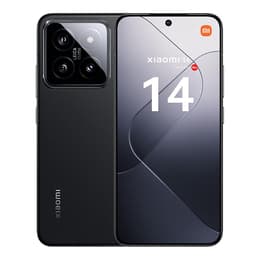
Xiaomi 14
Xiaomi 14
Starting at

Refurbished price:386.00

Versus €1,099.00 new

See options
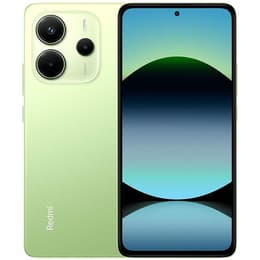
Xiaomi Redmi Note 14 4G
Starting at

Refurbished price:155.00

Versus €259.00 new

See options

Ratings

The Xiaomi 14, released globally in early 2024, stands as a compact flagship device, while the Xiaomi Redmi Note 14 4G, launched in late 2024/early 2025, positions itself as a feature-rich mid-range option. Both devices operate on Android 14 with Xiaomi's HyperOS, but they cater to different user priorities, primarily differing in their processing power, camera capabilities, and overall build quality.

Scores

Durability

When considering the long-term usability of these devices, their release timelines and software support policies are key differentiators.

  • Release and Software Support: The Xiaomi 14, a 2024 release, is expected to receive four major Android updates and five years of security patches, extending its software longevity until approximately 2028 for OS updates and 2029 for security. In contrast, the Redmi Note 14 4G, a newer 2025 model, boasts an impressive commitment of four major Android upgrades and six years of security updates, with support extending until 2031. This makes the Redmi Note 14 4G a strong contender for users prioritizing extended software support.
  • Durability and Repairability: The Xiaomi 14 features an IP68 rating for dust and water resistance and Gorilla Glass Victus for screen protection, indicating a higher level of resilience against environmental factors. Its repairability is rated as moderate, with a score of 8.0 out of 10, noting accessible components like the battery with pull tabs. The Redmi Note 14 4G offers IP54 dust and splash resistance and Gorilla Glass 5, providing everyday protection. While a specific repairability score isn't widely available, disassembly guides suggest a manageable repair process for common issues.
  • Expected Lifespan: Both devices are designed for several years of use, with the Xiaomi 14 offering robust physical protection and the Redmi Note 14 4G providing exceptional software longevity. Users seeking a device that remains updated for the longest possible period might lean towards the Redmi Note 14 4G, while those prioritizing premium build and higher water resistance might prefer the Xiaomi 14.

Year of Release

2023

2025

OS

Android

Android

Foldable

No

No

Performance

The performance of these two smartphones varies significantly, reflecting their different hardware foundations and target user experiences.

  • Processing Power: The Xiaomi 14 is equipped with a current-generation flagship processor, enabling it to handle demanding applications, intensive multitasking, and graphically rich games with ease and efficiency. Users report smooth and snappy daily operation without noticeable lag or stutter. The Redmi Note 14 4G utilizes a capable mid-range processor, which provides smooth performance for everyday tasks, general app usage, and moderate gaming. However, some users have noted occasional stutters or app crashes, particularly after software updates.
  • Multitasking and Storage: The Xiaomi 14 offers generous RAM configurations, up to 16GB, paired with fast internal storage options up to 1TB, ensuring seamless app switching and ample space for large files and applications. The Redmi Note 14 4G comes with up to 8GB of RAM and up to 256GB of internal storage, with the added flexibility of expandable storage via a microSD card, which is beneficial for users who need more space for media and documents.
  • Battery Behavior: The Xiaomi 14 features a 4610 mAh battery with very fast 90W wired and 50W wireless charging, allowing for quick recharges. The Redmi Note 14 4G includes a larger 5500 mAh battery and supports 33W wired fast charging, designed to provide extended usage throughout the day. Its smart battery management system is designed to maintain over 80% of its original capacity even after four years of use.

Memory (GB)

16 GB

6 GB

Screen quality

Both devices offer vibrant displays, but there are distinctions in their technology, clarity, and brightness that impact the viewing experience.

  • Display Technology and Clarity: The Xiaomi 14 features a 6.36-inch LTPO OLED display with a high resolution of 1200x2670 pixels, resulting in a sharp pixel density of approximately 460 ppi. This provides exceptional detail and clarity, suitable for intricate content. The Redmi Note 14 4G sports a larger 6.67-inch AMOLED display with a resolution of 1080x2400 pixels, offering a clear viewing experience with about 395 ppi.
  • Brightness and Refresh Rate: The Xiaomi 14's display can reach an impressive peak brightness of 3000 nits, ensuring excellent visibility even in direct sunlight, and features an adaptive refresh rate from 1Hz to 120Hz for smooth scrolling and power efficiency. The Redmi Note 14 4G also offers a bright display with a peak brightness of 1800 nits and a smooth 120Hz refresh rate, providing good outdoor readability and fluid visuals.
  • Viewing Experience: Both displays support HDR10+ and Dolby Vision, offering rich colors and contrast for media consumption. The Xiaomi 14's higher resolution and adaptive refresh rate contribute to a slightly more refined visual experience, while the Redmi Note 14 4G's larger screen size might be preferred by users who prioritize immersive viewing for videos and games.

Resolution

1200 x 2670

1080x2400

Screen type

LTPO OLED

AMOLED

Audiovisual

The camera systems on the Xiaomi 14 and Redmi Note 14 4G are designed for different levels of photographic versatility and quality.

  • Rear Camera System: The Xiaomi 14 boasts a versatile triple-camera setup, all featuring 50MP sensors for the main, ultrawide, and telephoto lenses, with the telephoto offering 3.2x optical zoom. This system, co-engineered with Leica, is praised for producing high-quality, detailed images with good color reproduction across various scenarios, including low light. The Redmi Note 14 4G primarily relies on a 108MP main sensor with optical image stabilization (OIS), which captures sharp and detailed photos in good lighting conditions. It also includes 2MP macro and depth sensors, but notably lacks an ultrawide camera.
  • Front Camera and Video: For selfies, the Xiaomi 14 features a 32MP front camera that delivers detailed self-portraits. It supports video recording up to 8K at 24fps, with high-quality and smooth footage. The Redmi Note 14 4G comes with a 20MP front camera. Its video recording capabilities are generally considered less impressive than its still photography, and it does not support 4K video recording.
  • Audio for Media: Both devices offer stereo speakers, with the Redmi Note 14 4G featuring Dolby Atmos for an immersive audio experience. The Xiaomi 14 also provides good audio quality from its stereo speakers.

Miscellaneous

Beyond core specifications, several practical elements contribute to the overall user experience and daily convenience of these devices.

  • Connectivity and Ports: The Xiaomi 14 supports 5G connectivity, Wi-Fi 6 (802.11ax), and Bluetooth 5.4, offering faster network speeds and more advanced wireless connections. It features a USB-C port. The Redmi Note 14 4G is limited to 4G connectivity, Wi-Fi 5 (dual-band), and Bluetooth 5.3. It includes a USB-C port and, notably, retains a 3.5mm headphone jack, which is a practical advantage for users with wired audio accessories. Both devices include NFC for contactless payments and an IR Blaster for controlling home appliances.
  • Biometric Security: The Xiaomi 14 incorporates an in-display optical fingerprint sensor and supports face recognition for secure unlocking. The Redmi Note 14 4G also features an in-display fingerprint sensor and AI Face Unlock.
  • Design and Handling: The Xiaomi 14 has a compact form factor, measuring 152.8 x 71.5 x 8.2 mm and weighing around 188g (glass back), making it comfortable for one-handed use. It features a premium build with an aluminum alloy frame and a glass back. The Redmi Note 14 4G is slightly larger and heavier at 163.25 x 76.55 x 8.16 mm and 196.5g, with a plastic back and flat frame design.

Weight

188 g

196 g

Screen size (in)

6.36

6.67

Network

5G

4G

SIM card

Dual Physical SIM

Physical SIM + eSIM

Carrier compatibility

Unlocked

Unlocked

User feedback for the Xiaomi 14 frequently highlights its compact size, powerful performance, and the quality of its Leica-tuned camera system as major strengths. Many appreciate its bright display and fast charging capabilities. Some common criticisms revolve around the presence of pre-installed software (bloatware) in HyperOS, though this can often be managed or is region-dependent.

For the Redmi Note 14 4G, users often praise its excellent battery life, vibrant AMOLED display, and the inclusion of a 3.5mm headphone jack. The extended software support policy is also a significant positive point. However, some users have expressed concerns about the absence of an ultrawide camera, less impressive video recording, and occasional performance stutters or bugs, particularly with software updates.

Users prioritizing a premium, compact device with top-tier processing power and a versatile camera system for photography and high-quality video recording will find the Xiaomi 14 well-suited to their needs. Its robust build and higher water resistance also appeal to those seeking durability. Conversely, users who value extended software longevity, a larger display, a long-lasting battery, and the convenience of a headphone jack may lean towards the Redmi Note 14 4G. This device is also a strong choice for those who appreciate expandable storage and a capable main camera for everyday photos.

Both models offer a quality-assured refurbished option, providing an eco-friendly alternative for consumers looking to make informed and sustainable choices.
See all articles

Our recent comparisons