


Compare models

Galaxy Z Fold7 Vs Google Pixel 7

  • 1-year minimum warranty
  • Free delivery on all orders
  • Free 30-day returns
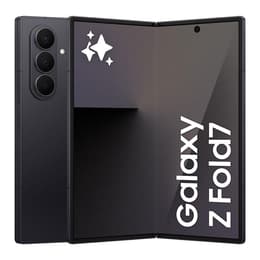
Galaxy Z Fold7
Starting at

Refurbished price:923.00

Versus €2,236.37 new

See options
Google Pixel 7
Starting at

Refurbished price:206.00

Versus €756.00 new

See options

Differences at a glance

The Samsung Galaxy Z Fold7 (2025) and the Google Pixel 7 (2022) represent entirely different approaches to mobile device engineering, contrasting a cutting-edge book-style foldable smartphone with a traditional slate form factor. While they differ significantly in design, capability, and release timeline, both cater to users seeking capable Android ecosystems. The Galaxy Z Fold7 operates on Android with customizable multi-window capabilities, whereas the Google Pixel 7 delivers a streamlined software experience powered by clean interface design.

Available Models

Colour

Storage (GB)

Scores

Durability

When examining longevity and durability, these two devices reflect different generations of hardware development and software support lifecycles.

  • Software Longevity: The Galaxy Z Fold7 features an extended multi-year update commitment running deep into the decade, while the Google Pixel 7 relies on a standard multi-year security and operating system support schedule set to conclude in coming years.
  • Hardware Resilience: The Pixel 7 utilizes a traditional rigid glass and aluminum slate construction with solid drop resistance, whereas the Z Fold7 incorporates complex folding hinge architecture and flexible inner display layers requiring careful handling.
  • Expected Lifespan: Users can anticipate prolonged software relevance from both models, though traditional slate designs like the Pixel generally experience fewer mechanical vulnerabilities over years of daily pocket use.

Year of Release

2025

2022

Compatible with latest Update

Yes

Yes

OS

Android

Android

Foldable

Yes

No

Performance

Underneath the exterior, these devices handle everyday multitasking, storage demands, and power efficiency through vastly different internal architectures.

  • System Responsiveness: The Galaxy Z Fold7 handles demanding apps, heavy multi-window layouts, and high-end gaming smoothly with top-tier processing power, while the Pixel 7 manages daily tasks, web browsing, and casual apps reliably using its custom-designed processor.
  • Memory and Storage: Samsung's foldable starts with ample RAM configuration options paired with spacious storage tiers, whereas the Pixel 7 offers balanced memory pairings suited for standard everyday workflows and cloud storage integration.
  • Battery Behavior: The Pixel 7's single compact display manages energy efficiently to last through a typical daily routine, while the Z Fold7's larger inner screen draws more power under heavy media use, requiring consideration for long days away from a charger.

Screen quality

Display technology forms the primary point of divergence, altering how media, text, and productivity apps are consumed on each device.

  • Display Technology: The Galaxy Z Fold7 deploys a dual-screen setup featuring an expansive internal foldable panel and a usable outer cover display, both utilizing vibrant OLED technology with smooth high refresh rates.
  • Visual Clarity: The Google Pixel 7 provides a traditional flat OLED display with sharp resolution and crisp text rendering, well-suited for single-handed reading and standard video playback.
  • Outdoor Usability: Both models deliver high peak brightness levels to maintain visibility under direct sunlight, ensuring outdoor navigation and photo framing remain clear.

Resolution

1968x2184

1080 x 2400

Audiovisual

Imaging hardware and media output capabilities shape how each smartphone captures memories and reproduces audio content.

  • Camera Systems: The Galaxy Z Fold7 incorporates a versatile multi-lens rear array including high-resolution primary sensors, whereas the Pixel 7 relies on dual rear lenses enhanced by computational photography algorithms for balanced daylight and low-light snapshots.
  • Video and Audio: Both devices record stable high-definition video with clear internal microphone arrays, while stereo speaker setups on each model deliver adequate volume for casual media listening without external headphones.
  • Real-World Photography: Users report that the Pixel 7 excels at capturing natural skin tones and swift point-and-shoot clarity, while the Z Fold7 offers flexible framing options enabled by its folding angles and multiple vantage points.

Miscellaneous

Practical physical characteristics, connectivity standards, and daily usability features round out the core utility of both smartphones.

  • Build and Handling: The Pixel 7 presents a familiar, comfortable slate footprint that fits easily into standard pockets, whereas the Z Fold7 folds closed into a taller, narrow profile and unfolds into a tablet-sized form factor that adds weight and pocket presence.
  • Connectivity and Ports: Both devices support modern 5G cellular networks, Wi-Fi standards, Bluetooth accessories, and secure biometric authentication through fast under-display fingerprint sensors and facial recognition.
  • Sustainable Choices: Selecting a quality-assured refurbished option through platforms like Back Market offers an eco-friendly alternative for consumers looking to reduce electronic waste without sacrificing modern device utility.

Weight

215 g

197 g

Screen size (in)

8.0

6.3

Network

5G

5G

SIM card

Dual Physical SIM + eSIM

Physical SIM + eSIM

Carrier compatibility

Unlocked

Unlocked

What the community thinks

Choosing between the Samsung Galaxy Z Fold7 and the Google Pixel 7 depends heavily on individual workflow preferences and hardware priorities. Users prioritizing expansive multi-app productivity, tablet-sized viewing, and cutting-edge folding hardware will find the Galaxy Z Fold7 well-suited to their daily routines. Conversely, users prioritizing a straightforward, comfortable single-screen smartphone experience with reliable point-and-shoot photography often lean toward the Google Pixel 7.

Community discussions frequently highlight the Pixel 7 for its comfortable ergonomics and reliable software simplicity, while the Z Fold7 receives praise for transforming mobile multitasking. Choosing a quality-assured refurbished model via sustainable channels like Back Market provides a practical way to acquire these devices while supporting environmental responsibility. Ultimately, aligning device capabilities with personal daily habits ensures long-term satisfaction regardless of the form factor chosen.