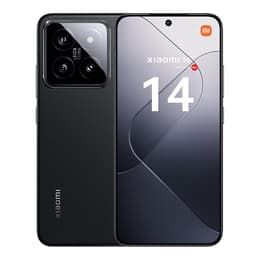
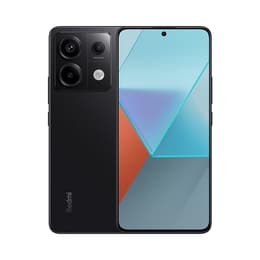

Xiaomi 14 Vs Xiaomi Redmi Note 13 Pro

Xiaomi 14
Xiaomi 14
Starting at

Refurbished price:384.00

Versus €1,099.00 new

See options
Xiaomi Redmi Note 13 Pro
Starting at

Refurbished price:179.00

Versus €349.00 new

See options

Ratings

The Xiaomi 14, released in October 2023, and the Xiaomi Redmi Note 13 Pro, launched in January 2024, are both Android smartphones from the same manufacturer, yet they target different user experiences. The Xiaomi 14 is positioned as a compact flagship device, while the Redmi Note 13 Pro offers a larger display and a strong feature set in a more accessible package. Both run on the Android operating system, with the Xiaomi 14 launching with HyperOS and the Redmi Note 13 Pro with MIUI 14, both upgradable to the newer HyperOS.

Scores

Durability

These devices, released within a few months of each other, offer similar software longevity expectations, though the Xiaomi 14 may receive updates for a slightly longer period due to its flagship status.

  • Software Updates: The Xiaomi 14, as a flagship, typically receives a longer commitment to major Android version updates and security patches compared to the Redmi Note series, potentially extending its usable life by an additional year.
  • Build Durability: The Xiaomi 14 features a more robust IP68 rating for dust and water resistance, along with Gorilla Glass Victus on the front, offering enhanced protection against environmental elements and accidental damage. This compares to the Redmi Note 13 Pro's IP54 rating and Gorilla Glass Victus.
  • Practical Lifespan: Both devices are built to last several years with proper care, but the Xiaomi 14's higher-grade components and superior ingress protection suggest it might withstand daily wear and tear more effectively over an extended period.

Year of Release

2023

2023

Compatible with latest Update

Yes

Yes

OS

Android

Android

Foldable

No

No

Performance

The performance difference between these two devices is notable, reflecting their distinct market segments.

  • Everyday Responsiveness: The Xiaomi 14 delivers exceptionally smooth and rapid performance across all tasks, from launching demanding applications to seamless multitasking, thanks to its advanced processing unit.
  • Gaming and Heavy Use: Users engaging in intensive mobile gaming or running complex productivity applications will find the Xiaomi 14 provides a consistently fluid experience with minimal lag, whereas the Redmi Note 13 Pro handles most daily tasks competently but may show limitations with the most graphically demanding games or heavy multitasking.
  • Storage and Multitasking: The Xiaomi 14 utilizes faster internal storage technology (UFS 4.0) and more efficient RAM (LPDDR5X), contributing to quicker app load times and more responsive background processes compared to the Redmi Note 13 Pro, which uses slightly older, though still capable, memory standards (UFS 2.2, LPDDR4X).

Memory (GB)

16 GB

8 GB

Screen quality

Both smartphones offer vibrant displays, but the Xiaomi 14 provides a more premium visual experience in several aspects.

  • Display Technology and Clarity: The Xiaomi 14 features a compact LTPO OLED display that offers dynamic refresh rates and superior color accuracy, while the Redmi Note 13 Pro has a larger AMOLED panel with a slightly higher resolution, both providing sharp visuals for everyday content consumption.
  • Brightness and Outdoor Visibility: The Xiaomi 14 achieves significantly higher peak brightness levels (up to 3000 nits), making it more comfortable to view content clearly in bright outdoor conditions compared to the Redmi Note 13 Pro, which still offers good visibility but with less intensity (up to 1800 nits peak).
  • Smoothness and Viewing Experience: Both devices offer a 120Hz refresh rate for smooth scrolling and animations, but the Xiaomi 14's LTPO technology allows for more adaptive refresh rate adjustments, potentially contributing to better power efficiency while maintaining fluidity.

Resolution

1200 x 2670

1220 x 2712

Screen type

LTPO OLED

AMOLED

Audiovisual

The camera systems and audio capabilities present a clear distinction between the two models.

  • Photography Capabilities: The Xiaomi 14 features a versatile triple 50MP camera system with Leica optics, including a dedicated telephoto lens, offering superior detail, color reproduction, and zoom capabilities, especially in challenging lighting conditions. The Redmi Note 13 Pro, with its 200MP main sensor, excels in capturing high-resolution images but has less versatile secondary cameras.
  • Video Recording: The Xiaomi 14 supports advanced video recording features and higher resolutions, providing more flexibility for content creators. The Redmi Note 13 Pro offers competent video capture suitable for casual use, though it lacks 4K at 60fps.
  • Audio Experience: Both phones feature stereo speakers, providing an immersive audio experience for media consumption. The Xiaomi 14 generally offers a richer and more balanced sound profile, while the Redmi Note 13 Pro includes a 3.5mm headphone jack, a feature absent on the Xiaomi 14, catering to users who prefer wired audio accessories.

Main camera

50 megapixels

200 megapixels

Front camera

32 megapixels

16 megapixels

Miscellaneous

Beyond core specifications, several practical features differentiate these two Xiaomi devices.

  • Connectivity Standards: The Xiaomi 14 supports newer connectivity standards like Wi-Fi 7 and Bluetooth 5.4, offering potentially faster and more stable wireless connections compared to the Redmi Note 13 Pro's Wi-Fi 5 and Bluetooth 5.2. Both support 5G networks.
  • Physical Ports: The Xiaomi 14 includes a USB-C 3.2 Gen 1 port, providing faster data transfer speeds, while the Redmi Note 13 Pro features a USB-C 2.0 port and retains a 3.5mm headphone jack, which is a convenience for users with wired headphones.
  • Design and Handling: The Xiaomi 14 is a more compact and lighter device (193g/188g), designed for easier one-handed use, featuring premium build materials. The Redmi Note 13 Pro is larger and slightly heavier (187g), offering a more expansive screen experience, with a build that balances durability and cost.

Weight

188 g

187 g

Screen size (in)

6.36

6.67

Network

5G

5G

SIM card

Dual Physical SIM

Dual Physical SIM

Carrier compatibility

Unlocked

Unlocked

User feedback often praises the Xiaomi 14 for its exceptional camera performance, particularly its Leica integration, and its powerful processing capabilities that ensure a smooth user experience across all applications. Users frequently highlight its compact form factor as a significant advantage for one-handed use and portability. Some common criticisms, however, occasionally point to its battery life, which, while adequate for many, might require a midday top-up for very heavy users. The Redmi Note 13 Pro, on the other hand, is frequently lauded for its impressive 200MP main camera, offering detailed photos, and its large, vibrant display. Its battery life is often cited as a strong point, providing extended usage on a single charge. Criticisms sometimes revolve around its secondary cameras, which are not as versatile as those on higher-end devices, and its overall performance, which, while good for its segment, doesn't match the flagship-tier speed.

Users prioritizing a top-tier camera system, especially with advanced features and optical zoom, along with a compact design and uncompromising performance for demanding tasks, may find the Xiaomi 14 well-suited to their needs. Conversely, users who value a larger display for media consumption, extended battery life, and a high-resolution main camera, without needing the absolute fastest processor or the most advanced secondary lenses, may lean toward the Redmi Note 13 Pro. Considering a quality-assured refurbished option can be an eco-friendly alternative for either model, allowing users to make an informed and sustainable choice based on their specific priorities.


See all articles

Our recent comparisons