
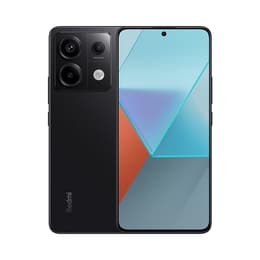


iPhone 15 Vs Xiaomi Redmi Note 13 Pro

iPhone 15
iPhone 15
Starting at

Refurbished price:397.00

Versus €879.00 new

See options
Xiaomi Redmi Note 13 Pro
Starting at

Refurbished price:179.00

Versus €349.00 new

See options

Ratings

The iPhone 15, released in September 2023, and the Xiaomi Redmi Note 13 Pro, with its global launch in January 2024, represent distinct approaches to smartphone design and functionality. While both devices offer modern smartphone experiences, they differ significantly in their operating systems, core hardware philosophies, and user-centric features. The iPhone 15 operates on Apple's iOS ecosystem, known for its integrated services and consistent user experience, whereas the Redmi Note 13 Pro runs on Android with Xiaomi's MIUI overlay, offering greater customization and flexibility.

Scores

Durability

When considering the long-term usability of these devices, several factors come into play, including software support, physical resilience, and ease of repair.

  • Software Longevity: The iPhone 15 launched with iOS 17 and is expected to receive major iOS updates for an extended period, typically five to six years or more, ensuring access to new features and security patches well into the future. The Redmi Note 13 Pro, initially running Android 13 with MIUI 14, has already seen an update to Android 15 with Xiaomi HyperOS 2, indicating ongoing software commitment, though the total duration of major OS updates might be shorter compared to the iPhone.
  • Physical Durability: The iPhone 15 features a Ceramic Shield front and an IP68 rating, signifying resistance to dust and submersion in water up to 6 meters for 30 minutes. The Redmi Note 13 Pro offers Gorilla Glass Victus protection for its display and an IP54 rating, providing protection against dust and splashes.
  • Repairability: The iPhone 15 has seen improvements in repairability, with a score of 7 out of 10, making certain repairs more accessible. The Redmi Note 13 Pro 5G boasts an excellent repairability score of 8.2 out of 10, suggesting good availability of parts and ease of disassembly for common repairs.

Year of Release

2023

2023

Compatible with latest Update

Yes

Yes

OS

iOS

Android

Foldable

No

No

Performance

The performance of a smartphone is crucial for daily tasks, multitasking, and demanding applications. Both devices offer capable hardware designed for smooth operation.

  • Processing Power: The iPhone 15 is equipped with a powerful processor that ensures smooth handling of demanding applications, responsive multitasking, and efficient performance for graphics-intensive games. The Redmi Note 13 Pro features a current-generation processor that provides smooth performance for everyday use and handles moderate gaming and multitasking effectively.
  • Multitasking and Responsiveness: The iPhone 15, with its optimized operating system and integrated hardware, delivers a highly fluid user experience, allowing for quick app launches and seamless transitions between tasks. The Redmi Note 13 Pro, available with various RAM configurations, supports efficient multitasking, ensuring that multiple applications can run concurrently without significant slowdowns.
  • Storage Options: Both devices offer a range of internal storage capacities to suit different user needs. The iPhone 15 is available with 128GB, 256GB, and 512GB options. The Redmi Note 13 Pro also comes with multiple storage variants, including 128GB, 256GB, and 512GB, with some models offering expandable storage.
  • Battery Behavior: The iPhone 15 provides up to 20 hours of video playback, with users generally reporting good battery life for a full day of typical use. The Redmi Note 13 Pro, with its larger battery capacity, is noted for lasting approximately a day and a half with moderate usage and supports fast charging to quickly replenish power.

Memory (GB)

6 GB

8 GB

Screen quality

The display is a primary interface for smartphone interaction, and both models offer vibrant and clear viewing experiences with distinct characteristics.

  • Display Technology and Clarity: The iPhone 15 features a 6.1-inch Super Retina XDR OLED display, providing deep blacks, vibrant colors, and a resolution of 2556x1179 pixels, resulting in sharp and detailed visuals. The Redmi Note 13 Pro boasts a larger 6.67-inch AMOLED display with a 1.5K resolution (1220x2712 pixels), offering a vivid and immersive viewing experience.
  • Brightness and Outdoor Visibility: The iPhone 15 offers a typical brightness of 1000 nits, peaking at 1600 nits for HDR content and up to 2000 nits for outdoor use, ensuring good visibility even in bright sunlight. The Redmi Note 13 Pro also provides excellent brightness, with a peak of 1800 nits, contributing to clear viewing in various lighting conditions.
  • Refresh Rate and Smoothness: The iPhone 15 features a standard 60Hz refresh rate, which provides a consistent visual experience. In contrast, the Redmi Note 13 Pro offers a 120Hz adaptive refresh rate, contributing to smoother scrolling and more fluid animations, particularly noticeable during gaming or fast-paced content.
  • Screen Features: The iPhone 15 incorporates the Dynamic Island, an interactive area around the front camera that displays alerts and live activities. The Redmi Note 13 Pro includes Dolby Vision support for enhanced visual quality and an ultra-thin bottom bezel for a more expansive screen-to-body ratio.

Resolution

1179 x 2556

1220 x 2712

Screen type

Super Retina XDR OLED

AMOLED

Audiovisual

Both smartphones offer advanced camera systems designed to capture high-quality photos and videos, though they approach imaging with different specifications and features.

  • Main Camera Capabilities: The iPhone 15 features an advanced dual-camera system with a 48MP main sensor, which captures detailed 24MP photos by default and can produce 48MP images. It includes sensor-shift optical image stabilization for steady shots. The Redmi Note 13 Pro is equipped with a 200MP main camera that also includes optical image stabilization, capable of capturing highly detailed images.
  • Versatility and Zoom: The iPhone 15 offers a 12MP ultra-wide camera and utilizes its high-resolution main sensor to provide a 2x optical-quality telephoto zoom. The Redmi Note 13 Pro includes an 8MP ultra-wide camera and a 2MP macro lens for close-up photography, offering a different range of photographic options.
  • Low-Light and Portrait Photography: The iPhone 15 delivers improved low-light performance and features an enhanced portrait mode that allows for focus adjustment after the photo is taken. The Redmi Note 13 Pro's 200MP main camera performs well in daylight, producing vibrant and detailed images, and its portrait shots show good edge detection.
  • Video Recording and Front Camera: The iPhone 15 supports 4K Dolby Vision video recording at various frame rates and has a 12MP TrueDepth front camera. The Redmi Note 13 Pro records video up to 1080p at 60fps with OIS and EIS for stability and features a 16MP front camera suitable for selfies and video calls.

Main camera

48 megapixels

200 megapixels

Front camera

12 megapixels

16 megapixels

Miscellaneous

Beyond core performance and display, several practical elements contribute to the overall user experience of these devices.

  • Connectivity Standards: Both phones support modern connectivity. The iPhone 15 includes 5G, Wi-Fi 6, and Bluetooth 5.3, along with a second-generation Ultra Wideband chip for precise location features. The Redmi Note 13 Pro (5G model) also supports 5G, Wi-Fi (802.11 a/b/g/n/ac), and Bluetooth 5.2, offering robust wireless capabilities.
  • Physical Ports and Biometrics: A notable change for the iPhone 15 is the adoption of a USB-C port, replacing the proprietary Lightning connector. It relies on Face ID for secure biometric authentication. The Redmi Note 13 Pro retains a USB-C port and also includes a 3.5mm headphone jack, a feature appreciated by users who prefer wired audio. It uses an in-screen fingerprint sensor for unlocking.
  • Design and Handling: The iPhone 15 features an aluminum design with a color-infused glass back, measuring 147.6 x 71.6 x 7.8 mm and weighing 171 grams. The Redmi Note 13 Pro has dimensions of 161.1 x 74.95 x 7.98 mm and weighs 188 grams, offering a slightly larger form factor.
  • Additional Features: The iPhone 15 integrates features like Dynamic Island for interactive alerts. The Redmi Note 13 Pro includes stereo speakers with Dolby Atmos support for an enhanced audio experience.

Weight

171 g

187 g

Screen size (in)

6.1

6.67

Network

5G

5G

SIM card

Physical SIM + eSIM

Dual Physical SIM

Carrier compatibility

Unlocked

Unlocked

Choosing between the iPhone 15 and the Xiaomi Redmi Note 13 Pro involves weighing different priorities and ecosystem preferences. Users frequently praise the iPhone 15 for its seamless integration within the Apple ecosystem, consistent software updates, and advanced camera capabilities, particularly its ability to adjust focus after taking a portrait. Some heavy users, however, have noted that battery degradation can occur over time with intensive use.

The Redmi Note 13 Pro is often lauded by users for its vibrant, high-refresh-rate AMOLED display, impressive 200MP main camera, and long-lasting battery life coupled with fast charging. The inclusion of a 3.5mm headphone jack is also a frequent point of appreciation. Criticisms sometimes point to the performance of its auxiliary cameras and the consistency of software updates compared to some competitors.

Users who prioritize a compact device with a highly integrated software experience, strong long-term software support, and advanced computational photography features may find the iPhone 15 well-suited to their needs. Its robust durability features and improved repairability also contribute to its appeal. Conversely, individuals who value a larger, high-refresh-rate display, extended battery life with rapid charging, greater customization options through Android, and the convenience of a headphone jack might lean towards the Redmi Note 13 Pro. Both devices offer compelling features for their respective audiences, and considering a quality-assured refurbished option for either model can be an eco-friendly alternative to purchasing new.


See all articles

Our recent comparisons