

Xiaomi 14T Pro Vs Xiaomi Redmi Note 11

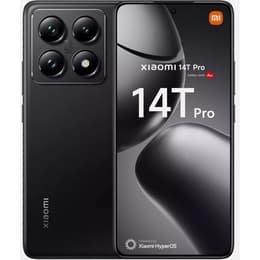
Xiaomi 14T Pro
Xiaomi 14T Pro
Starting at

Refurbished price:394.00

Versus €900.00 new

See options
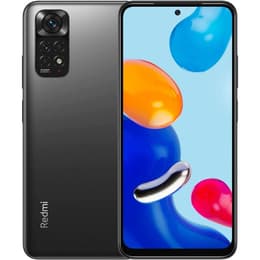
Xiaomi Redmi Note 11
Starting at

Refurbished price:108.00

Versus €249.99 new

See options

Ratings

The Xiaomi 14T Pro, a smartphone released in September 2024, and the Xiaomi Redmi Note 11, launched in January 2022, represent different generations and market segments within Xiaomi's extensive mobile lineup. While both operate on the Android platform with Xiaomi's custom interface, the 14T Pro introduces significant advancements in performance, display technology, and camera capabilities, reflecting over two years of technological evolution. This comparison will highlight the practical differences to help users determine which device best suits their needs.

Scores

Durability

The expected lifespan and software support differ considerably between these two devices, primarily due to their release timelines.

  • Release Timeline: The Xiaomi 14T Pro, being a more recent release from September 2024, benefits from a newer starting point for software support. The Redmi Note 11 was released in January 2022, making it an older device in the smartphone lifecycle. [1, 8, 21]
  • Software Longevity: The 14T Pro is promised four years of Android updates and five years of security patches, extending its support until at least September 2029. The Redmi Note 11 launched with Android 11 and received updates up to Android 13, with security patches likely concluding around early 2026, offering a shorter overall software lifespan. [1, 15, 31, 33]
  • Physical Durability: The 14T Pro features IP68 dust and water resistance, indicating a high level of protection against immersion, and a metal frame. The Redmi Note 11 offers IP53 dust and splash protection and a Gorilla Glass 3 front, providing a more basic level of resistance to environmental elements. [1, 4, 17, 19, 27, 29, 34]

Year of Release

2024

2022

Compatible with latest Update

Yes

No

OS

Android

Android

Foldable

No

No

Performance

Performance is a key area where the two devices show a substantial generational gap, impacting how smoothly they handle various tasks.

  • Processing Power: The Xiaomi 14T Pro is equipped with a current-generation processor designed for demanding applications, intensive gaming, and efficient multitasking. The Redmi Note 11 utilizes a processor that capably handles everyday tasks and general multitasking, but may show limitations with more resource-heavy applications or advanced gaming. [2, 5, 8, 24]
  • System Responsiveness: Users of the 14T Pro can expect a highly responsive experience, with quick app loading times and fluid transitions, supported by its advanced RAM and storage technologies. The Redmi Note 11 provides a smooth experience for typical smartphone usage, though it may exhibit slight delays when switching between numerous applications or loading larger files. [3, 4, 11, 24]
  • Storage and Multitasking: The 14T Pro comes with higher base RAM configurations and faster internal storage, which contributes to superior multitasking capabilities and quicker data access. The Redmi Note 11 offers various RAM and storage options, including expandable storage via microSD, which can be beneficial for users needing to store large media libraries. [3, 4, 8, 10, 11, 24, 38]

Memory (GB)

16 GB

4 GB

Screen quality

The visual experience on both smartphones is delivered through AMOLED technology, but with distinct differences in clarity, brightness, and fluidity.

  • Display Technology and Clarity: Both devices feature AMOLED displays, known for deep blacks and vibrant colors. The 14T Pro offers a higher resolution (2712 x 1220 pixels) on its 6.67-inch screen, providing a sharper and more detailed visual experience compared to the Redmi Note 11's 6.43-inch display with 2400 x 1080 pixels. [3, 4, 7, 17, 19, 22, 34, 37]
  • Brightness and Refresh Rate: The 14T Pro boasts a significantly higher peak brightness of 4000 nits and a refresh rate of up to 144Hz, resulting in exceptionally smooth scrolling and excellent outdoor visibility. The Redmi Note 11 offers a peak brightness of 1000 nits and a 90Hz refresh rate, which provides a noticeably smoother experience than standard 60Hz displays and good visibility in most lighting conditions. [3, 4, 5, 17, 19, 22, 24, 29, 34, 37]
  • Viewing Experience: The 14T Pro's display includes advanced features like Dolby Vision, HDR10+, and 12-bit color depth, enhancing media consumption with richer and more accurate colors. The Redmi Note 11's display also supports a wide color gamut and features like Sunlight display and Reading mode 3.0 for comfortable viewing in various environments. [3, 5, 22]

Resolution

1220 x 2712

1080 x 2400

Screen type

AMOLED

AMOLED

Audiovisual

The camera systems on these two devices cater to different photography expectations, with the 14T Pro offering a more advanced and versatile setup.

  • Rear Camera System: The Xiaomi 14T Pro features a triple-lens rear camera system with Leica optics, including a 50MP main sensor, a 50MP telephoto lens, and a 12MP ultra-wide lens. This setup is designed for high-quality images with enhanced detail, dynamic range, and improved low-light performance. The Redmi Note 11 comes with a quad-camera setup, featuring a 50MP main sensor, an 8MP ultra-wide, and two 2MP auxiliary lenses (macro and depth), suitable for everyday photography. [3, 5, 8, 10, 22, 24, 27, 28, 35, 37]
  • Photography Performance: The 14T Pro's main camera excels in daylight with vibrant colors and good detail, and offers competent low-light performance. Its telephoto lens is particularly effective for capturing distant subjects or creating portraits with blurred backgrounds. The Redmi Note 11's main camera performs well in good lighting conditions for general snapshots, though its performance in challenging low-light scenarios is more limited. [22, 24, 27, 29]
  • Video Recording and Front Camera: The 14T Pro supports video recording up to 8K resolution and includes cinematic features, alongside a 32MP front camera for detailed selfies and video calls. The Redmi Note 11 records video at up to 1080p and features a 13MP front camera, which is adequate for standard video calls and selfies. [3, 8, 16, 22, 29, 37]

Main camera

50 megapixels

50 megapixels

Front camera

32 megapixels

13 megapixels

Miscellaneous

Beyond the core features, several practical elements differentiate the user experience and connectivity options of these smartphones.

  • Connectivity Standards: The Xiaomi 14T Pro supports 5G connectivity, offering faster mobile data speeds, and likely features newer Wi-Fi and Bluetooth standards for improved wireless performance. The Redmi Note 11 is a 4G-only device, supporting Wi-Fi 802.11 a/b/g/n/ac and Bluetooth 5.0. [1, 3, 8, 10]
  • Ports and Sensors: The 14T Pro uses a USB Type-C port and includes an IR blaster and NFC for mobile payments. It does not feature a 3.5mm headphone jack or expandable storage. The Redmi Note 11 also has a USB Type-C port, an IR blaster, and NFC (market dependent), but notably retains a 3.5mm headphone jack and a dedicated microSD card slot for storage expansion. Both devices include fingerprint sensors for secure unlocking. [1, 3, 5, 8, 10, 16, 29, 38]
  • Design and Handling: The 14T Pro has a slightly larger and heavier build at 160.4 x 75.1 x 8.39mm and 209g, with a metal frame and IP68 rating. The Redmi Note 11 is marginally more compact and lighter at 159.87 x 73.87 x 8.09mm and 179g, featuring a plastic build and IP53 rating. [1, 3, 6, 7, 8, 9, 10, 13, 17, 18, 29, 38]

Weight

209 g

179 g

Screen size (in)

6.67

6.43

Network

5G

4G

SIM card

Dual Physical SIM

Dual Physical SIM

Carrier compatibility

Unlocked

Unlocked

User sentiment for the Xiaomi 14T Pro often highlights its exceptional display quality, powerful performance for demanding tasks, and advanced camera system with Leica tuning as significant advantages. Common praise points include its fast wired and wireless charging capabilities and robust IP68 water and dust resistance. Some users, however, have noted that while the camera is strong, it might not always match the absolute top-tier flagships in every specific scenario, and the lack of a 3.5mm headphone jack or expandable storage might be a consideration for some. [19, 22, 24, 27, 30, 34]

For the Xiaomi Redmi Note 11, users frequently commend its vibrant AMOLED display with a 90Hz refresh rate, solid battery life, and the inclusion of a 3.5mm headphone jack and expandable storage. Its ability to handle everyday tasks smoothly and its overall reliability for general use are also often praised. Criticisms sometimes point to its 4G-only connectivity and less powerful processor compared to newer devices, which can impact performance in more intensive applications, and its camera performance in low-light conditions. [2, 5, 17, 29]

Users prioritizing cutting-edge performance, a superior display for media consumption, advanced photography features, and long-term software support will find the Xiaomi 14T Pro well-suited to their needs. Its higher durability rating also makes it a more resilient choice. Conversely, users who value a more accessible device with good battery life, expandable storage, and a traditional headphone jack for everyday communication and media, and who primarily engage in less demanding tasks, may lean toward the Xiaomi Redmi Note 11. Both devices, especially when considering quality-assured refurbished options, offer an eco-friendly alternative for consumers seeking reliable technology.


See all articles

Our recent comparisons