
iPhone 14 Vs Xiaomi Redmi Note 13 Pro

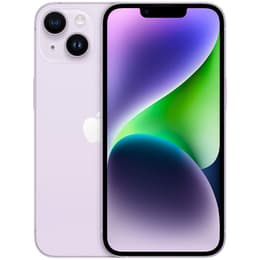
iPhone 14
iPhone 14
Starting at

Refurbished price:287.25

Versus €759.00 new

See options
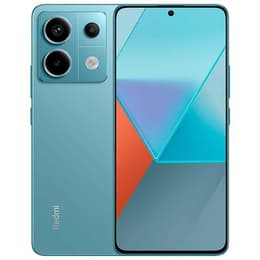
Xiaomi Redmi Note 13 Pro
Starting at

Refurbished price:179.00

Versus €349.00 new

See options

Ratings

The iPhone 14, released in September 2022, and the Xiaomi Redmi Note 13 Pro, launched globally in January 2024, are smartphones designed for different user ecosystems. While the iPhone 14 operates on Apple's iOS, the Redmi Note 13 Pro runs on Android, offering distinct user experiences. These devices differentiate themselves primarily through their camera systems, display technologies, and overall software philosophies.

Scores

Durability

The practical lifespan of a smartphone is influenced by its build quality, software support, and ease of repair. Both devices offer different approaches to longevity.

  • Release Timeline and Age: The iPhone 14 was released in September 2022, making it an earlier model compared to the Redmi Note 13 Pro, which launched globally in January 2024. This difference in release year impacts their respective software support cycles.
  • OS Support Duration: Apple typically provides iOS updates for its devices for approximately five to six years from their release. The Redmi Note 13 Pro is committed to receiving three major Android OS updates, extending to Android 16, and four years of security updates until January 2028.
  • Repairability: The iPhone 14 initially received a favorable repairability assessment due to an internal redesign that made components like the back glass more accessible. However, this score was later downgraded due to Apple's parts pairing system, which can complicate repairs with unauthorized or unpaired components. The Redmi Note 13 Pro (5G variant) has an average repairability score of 8.2 out of 10, indicating good parts availability and ease of disassembly, though the use of adhesive for the back cover and battery can present some challenges.

Year of Release

2022

2023

Compatible with latest Update

Yes

Yes

OS

iOS

Android

Foldable

No

No

Performance

Performance is a key differentiator, affecting how smoothly applications run and how responsive the device feels during daily use.

  • Processor Capabilities: The iPhone 14 is powered by a capable processor that ensures fast app loading times, smooth multitasking, and responsive navigation. It handles demanding tasks efficiently. The Redmi Note 13 Pro features a processor designed to offer smooth performance for everyday tasks and multitasking, even allowing for heavy gaming at moderate settings.
  • Multitasking and Responsiveness: The iPhone 14 provides a fluid user experience, maintaining responsiveness even with multiple applications open. The Redmi Note 13 Pro, with its available RAM configurations, also ensures that multitasking remains smooth, with minimal lag when switching between applications.
  • Storage Options: Both devices offer various internal storage configurations. The iPhone 14 is available with 128GB, 256GB, and 512GB options. The Redmi Note 13 Pro also comes with 128GB, 256GB, and 512GB storage variants, utilizing UFS 2.2 storage.
  • Battery Behavior: The iPhone 14 is designed to offer all-day battery life, supporting up to 20 hours of video playback. The Redmi Note 13 Pro, with its larger battery capacity, can easily last through a full day of heavy use and sometimes extend into a second day with lighter usage. It also supports 67W fast charging for quicker power replenishment.

Memory (GB)

6 GB

8 GB

Screen quality

The display is the primary interface for user interaction, and both devices offer vibrant viewing experiences with distinct characteristics.

  • Display Technology and Clarity: The iPhone 14 features a 6.1-inch Super Retina XDR OLED display, known for its deep blacks, vibrant colors, and high contrast. The Redmi Note 13 Pro boasts a larger 6.67-inch AMOLED display, also delivering vibrant colors and sharp contrasts.
  • Resolution and Pixel Density: The iPhone 14 has a resolution of 2532x1170 pixels with a pixel density of 460 ppi, ensuring crisp and clear visuals. The Redmi Note 13 Pro offers a 1.5K resolution (2712x1220 pixels) for its 5G variant, resulting in a pixel density of 446 ppi, providing sharp and detailed images.
  • Brightness Levels: The iPhone 14 achieves a typical maximum brightness of 800 nits and a peak HDR brightness of 1200 nits, making it suitable for various lighting conditions. The Redmi Note 13 Pro features a peak brightness of 1800 nits, ensuring clear visibility even in bright outdoor environments.
  • Refresh Rate: The iPhone 14 has a standard refresh rate. The Redmi Note 13 Pro offers a smoother visual experience with a 120Hz refresh rate, which benefits scrolling, video playback, and gaming.

Resolution

1170 x 2532

1220 x 2712

Screen type

Super Retina XDR OLED

AMOLED

Audiovisual

Both smartphones provide robust camera systems, catering to different photography and videography needs.

  • Rear Camera System: The iPhone 14 features a dual-camera system with a 12MP main sensor and a 12MP ultra-wide sensor, offering improved low-light performance and features like Cinematic Mode. The Redmi Note 13 Pro is equipped with a triple-camera setup, including a high-resolution 200MP main sensor with optical image stabilization (OIS), an 8MP ultra-wide camera, and a 2MP macro camera.
  • Photography Performance: The iPhone 14 captures detailed images with good color accuracy. The Redmi Note 13 Pro's main camera is capable of producing detailed photos with vibrant saturation in good lighting conditions and performs well in low-light scenarios when using its dedicated night mode.
  • Video Recording Quality: The iPhone 14 supports 4K Dolby Vision HDR video recording at various frame rates. The Redmi Note 13 Pro (5G variant) can record videos up to 4K at 30 frames per second, while the 4G model records at 1080p 60fps.
  • Front Camera: Both devices feature a 12MP TrueDepth front camera on the iPhone 14 and a 16MP front camera on the Redmi Note 13 Pro, suitable for selfies and video calls.

Main camera

12 megapixels

200 megapixels

Front camera

12 megapixels

16 megapixels

Miscellaneous

Beyond core features, several practical elements contribute to the overall user experience and device utility.

  • Connectivity: Both devices support 5G connectivity for fast mobile data. The iPhone 14 includes Emergency SOS via satellite for critical situations. The Redmi Note 13 Pro offers Wi-Fi, Bluetooth 5.2, NFC, and an infrared blaster for controlling home appliances.
  • Ports and Biometrics: The iPhone 14 uses a Lightning port for charging and data transfer. The Redmi Note 13 Pro features a USB Type-C port. For security, the iPhone 14 relies on Face ID, while the Redmi Note 13 Pro incorporates an in-screen fingerprint sensor.
  • Build Materials and Durability Features: The iPhone 14 features a Ceramic Shield front and a glass back with an aluminum design, offering IP68 water and dust resistance. The Redmi Note 13 Pro (5G variant) uses Corning Gorilla Glass Victus for screen protection and has an IP54 rating for dust and splash resistance.
  • Weight and Dimensions: The iPhone 14 weighs 172 grams and measures 146.7 x 71.5 x 7.80 mm. The Redmi Note 13 Pro is slightly heavier at 187 grams and larger at 161.15 x 74.24 x 7.98 mm.

Weight

172 g

187 g

Screen size (in)

6.1

6.67

Network

5G

5G

SIM card

Physical SIM + eSIM

Dual Physical SIM

Carrier compatibility

Unlocked

Unlocked

Users often praise the iPhone 14 for its consistent performance, reliable camera system with features like Cinematic Mode, and the seamless integration within the iOS ecosystem. Its compact size is also a frequent positive point for those preferring a smaller device. However, some users have expressed concerns regarding the limitations imposed by Apple's parts pairing system on repairability, despite initial hardware improvements.

The Xiaomi Redmi Note 13 Pro receives commendation for its vibrant AMOLED display with a high refresh rate, its high-resolution main camera, and its long-lasting battery life with fast charging capabilities. Its overall performance for daily tasks and moderate gaming is also well-regarded. Some criticisms include potential inconsistencies in low-light camera performance and the video recording capabilities of the ultra-wide and front cameras.

Users prioritizing a compact device with a highly optimized software experience and robust video features may find the iPhone 14 well-suited to their needs. Those who value a larger, high-refresh-rate display, a versatile high-megapixel camera system, and extended battery life with rapid charging might lean towards the Redmi Note 13 Pro. Both devices offer compelling features for different user profiles, and considering a quality-assured refurbished option for either model can be an eco-friendly alternative.


See all articles

Our recent comparisons