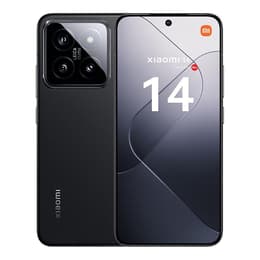



Xiaomi 14 Vs Xiaomi Redmi Note 12 Pro

Xiaomi 14
Xiaomi 14
Starting at

Refurbished price:384.00

Versus €1,099.00 new

See options
Xiaomi Redmi Note 12 Pro
Starting at

Refurbished price:106.00

Versus €399.00 new

See options

Ratings

The Xiaomi 14, released in late 2023 and globally in early 2024, and the Xiaomi Redmi Note 12 Pro, launched in early 2023, are both Android smartphones from Xiaomi. While the Xiaomi 14 is positioned as a compact flagship device, the Redmi Note 12 Pro offers a robust experience in the mid-range segment. Key differences lie in their processing power, camera capabilities, and overall build quality, reflecting their distinct market focuses.

Scores

Durability

When considering the long-term usability of these devices, their release timelines and software support are important factors. The Xiaomi 14, being a newer device, benefits from a longer expected period of software updates and security patches compared to the Redmi Note 12 Pro.

  • Software Longevity: The Xiaomi 14 is expected to receive four years of Android operating system updates and five years of security updates, extending its functional lifespan significantly. The Redmi Note 12 Pro, while receiving updates, typically follows a shorter support cycle common for its segment.
  • Physical Durability: The Xiaomi 14 features Corning Gorilla Glass Victus 2 for enhanced screen protection and boasts an IP68 rating for dust and water resistance, indicating a high level of protection against environmental elements. The Redmi Note 12 Pro uses Corning Gorilla Glass 5 for its display and has an IP53 rating, offering protection against splashes and dust but not full submersion.
  • Repairability: Both devices are designed with modern smartphone construction, and while specific repairability scores can vary, the availability of parts and service for newer flagship models like the Xiaomi 14 might be more consistent over time.

Year of Release

2023

2022

Compatible with latest Update

Yes

No

OS

Android

Android

Foldable

No

No

Performance

The performance of a smartphone is crucial for daily tasks, from browsing to demanding applications. The Xiaomi 14 and Redmi Note 12 Pro offer different levels of processing power and memory configurations to suit various user needs.

  • Processing Power: The Xiaomi 14 is equipped with a current-generation flagship processor, providing substantial power for intensive multitasking, graphic-heavy gaming, and advanced AI-driven features. This results in very fast app loading and smooth overall system responsiveness. The Redmi Note 12 Pro utilizes a capable mid-range processor that handles everyday applications and moderate gaming smoothly. Users will find it responsive for general use, though it may show limitations with the most demanding tasks.
  • Multitasking and Storage: The Xiaomi 14 offers higher RAM configurations, up to 16GB, paired with faster UFS 4.0 storage, which contributes to quicker data access and more efficient multitasking. The Redmi Note 12 Pro comes with up to 8GB of RAM and UFS 2.2 storage, providing adequate performance for typical smartphone usage and app switching.
  • Battery Behavior: The Xiaomi 14, with its 4610 mAh battery, is optimized for efficient power management, often providing over a full day of use for many users, with some reports indicating up to 1.5 days of usage. It also supports very fast 90W wired and 50W wireless charging. The Redmi Note 12 Pro features a larger 5000 mAh battery, typically offering a full day of power even for heavy users, and supports 67W wired fast charging.

Memory (GB)

16 GB

8 GB

Screen quality

The visual experience is a primary interaction point for any smartphone, and both devices offer vibrant displays, though with notable differences in their specifications.

  • Display Technology and Clarity: The Xiaomi 14 features a 6.36-inch LTPO AMOLED display with a resolution of 2670 x 1200 pixels, resulting in a sharp 460 pixels per inch (ppi). This provides exceptional clarity and detail for text and images. The Redmi Note 12 Pro has a larger 6.67-inch AMOLED display with a resolution of 2400 x 1080 pixels, offering a clear viewing experience at 395 ppi.
  • Brightness and Smoothness: The Xiaomi 14's display can reach an impressive peak brightness of 3000 nits, ensuring excellent visibility even in bright outdoor conditions. It also features an adaptive refresh rate ranging from 1Hz to 120Hz for smooth scrolling and power efficiency. The Redmi Note 12 Pro offers a peak brightness of up to 900 nits (or 1100 nits for the 4G variant) and a consistent 120Hz refresh rate, providing a fluid visual experience in most lighting environments.
  • Color and Viewing Experience: Both phones utilize AMOLED technology, delivering deep blacks and vibrant colors. The Xiaomi 14 supports 12-bit color depth, capable of displaying 68 billion colors, which enhances color accuracy and realism. Both displays support HDR10+ and Dolby Vision for an enhanced media consumption experience.

Resolution

1200 x 2670

1080 x 2400

Screen type

LTPO OLED

AMOLED

Audiovisual

Photography and videography capabilities are often a deciding factor for many users, and these two Xiaomi phones offer distinct camera systems tailored to different expectations.

  • Main Camera Performance: The Xiaomi 14 features a Leica-engineered triple 50MP camera system. Its main 50MP sensor (Light Fusion 900) with optical image stabilization (OIS) and a wide f/1.6 aperture excels in capturing detailed and vibrant images across various lighting conditions, including impressive low-light performance. The Redmi Note 12 Pro is equipped with a 50MP main camera (Sony IMX766 sensor) that also includes OIS and an f/1.88 aperture, delivering good quality photos with strong dynamic range, especially in daylight.
  • Versatility of Lenses: The Xiaomi 14's camera setup includes a 50MP ultra-wide lens and a 50MP telephoto lens with 3.2x optical zoom and OIS, which also supports macro photography. This provides a versatile range of focal lengths for different photographic scenarios. The Redmi Note 12 Pro includes an 8MP ultra-wide lens and a 2MP macro lens. While the ultra-wide is suitable for wider shots, its detail and low-light performance are not as strong as the main sensor, and the macro lens offers limited utility.
  • Video and Audio Recording: The Xiaomi 14 is capable of recording video at up to 8K resolution at 24 frames per second and 4K at 60fps with Dolby Vision, offering high-quality video capture. The front-facing 32MP camera can record 4K 60fps video. The Redmi Note 12 Pro supports video recording up to 4K at 30 frames per second and 1080p at 60fps. Its 16MP front camera records 1080p at 60fps.

Main camera

50 megapixels

50 megapixels

Front camera

32 megapixels

16 megapixels

Miscellaneous

Beyond core performance and display, several practical features contribute to the overall user experience and differentiate these two smartphones.

  • Connectivity and Ports: The Xiaomi 14 supports the latest Wi-Fi 7 standard and Bluetooth 5.4, offering advanced and faster wireless connectivity options. It features a USB 3.2 Type-C port for quicker data transfer. The Redmi Note 12 Pro supports Wi-Fi 6 and Bluetooth 5.2, providing reliable modern wireless connections, and uses a USB 2.0 Type-C port. Both devices offer 5G connectivity and NFC.
  • Biometric Security and Haptics: The Xiaomi 14 integrates an optical fingerprint sensor directly into its display for convenient unlocking. It also provides precise haptic feedback for a more tactile user interaction. The Redmi Note 12 Pro features a side-mounted fingerprint sensor for security.
  • Design and Handling: The Xiaomi 14 is a more compact device, measuring 152.8 x 71.5 x 8.2 mm and weighing around 188-193g, making it easier for one-handed use for many. It features an aluminum frame and glass back. The Redmi Note 12 Pro is slightly larger at 162.9 x 76 x 7.9 mm and weighs 187g, offering a larger screen footprint while maintaining a relatively light profile with a glass back and plastic frame.

Weight

188 g

187 g

Screen size (in)

6.36

6.67

Network

5G

5G

SIM card

Dual Physical SIM

Dual Physical SIM

Carrier compatibility

Unlocked

Unlocked

User feedback for the Xiaomi 14 often highlights its exceptional camera system, particularly its Leica collaboration, which delivers consistent and high-quality images across all lenses. Users also frequently praise its powerful performance, smooth display, and impressive battery life for a compact device. Some criticisms occasionally point to the software experience, though HyperOS aims to refine this. For the Redmi Note 12 Pro, common praise centers on its vibrant AMOLED display, reliable battery life, and solid performance for its segment. Its main camera with OIS is also well-regarded for capturing good photos in various conditions. Criticisms sometimes mention the limited utility of its secondary cameras and the software experience at launch.

Users prioritizing a compact form factor with top-tier performance, advanced camera capabilities, and extended software support will find the Xiaomi 14 well-suited to their needs. Its superior display brightness and robust build also cater to those seeking a premium experience. Conversely, users looking for a larger display, dependable all-day battery life, and strong performance for everyday tasks without needing the absolute latest in processing power or camera versatility may lean toward the Redmi Note 12 Pro. Both devices offer compelling features, and choosing between them often comes down to specific priorities regarding performance, photography, and overall budget. For those interested in making a sustainable choice, both models are available as quality-assured refurbished options, providing an eco-friendly alternative to purchasing new.


See all articles

Our recent comparisons