

Compare models

iPhone 13 Vs Xiaomi Redmi Note 12 Pro

  • 1-year minimum warranty
  • Free delivery on all orders
  • Free 30-day returns
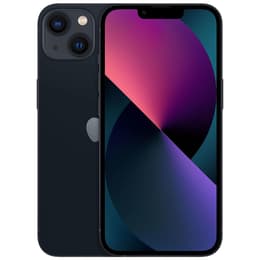
iPhone 13
iPhone 13
Starting at

Refurbished price:233.00

Versus €769.00 new

See options
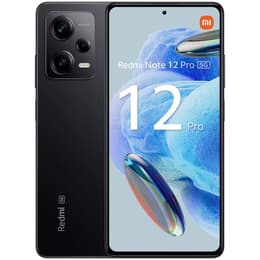
Xiaomi Redmi Note 12 Pro
Starting at

Refurbished price:144.00

Versus €359.00 new

See options

Differences at a glance

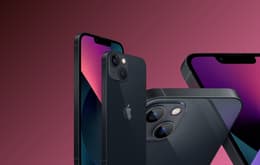
The iPhone 13 (2021) and the Xiaomi Redmi Note 12 Pro (2022) are smartphones from different ecosystems, offering distinct user experiences. While the iPhone 13 runs on Apple's iOS, the Redmi Note 12 Pro operates on Android with Xiaomi's MIUI overlay. Key differentiators include their display refresh rates, camera philosophies, and expected software support timelines.

Scores

Durability

The longevity of a smartphone is influenced by its release timeline, software support, and physical durability features.

  • Release Timeline: The iPhone 13 was released in September 2021, making it an older device compared to the Xiaomi Redmi Note 12 Pro, which launched globally in November 2022. This difference in release year impacts their remaining support cycles.
  • Software Support: Apple is known for extended software support, with the iPhone 13 expected to receive major iOS updates until around 2028, followed by security updates for an additional 18-24 months. The Xiaomi Redmi Note 12 Pro, running Android, typically receives about two years of major OS updates and a longer period of security patches, which is a shorter commitment compared to Apple's.
  • Physical Durability: The iPhone 13 features a Ceramic Shield front cover and an IP68 rating for dust and water resistance, indicating a high level of protection against immersion. The Redmi Note 12 Pro comes with Corning Gorilla Glass 5 on the front and an IP53 rating, offering splash and dust resistance but less protection against full water submersion.

Year of Release

2021

2022

Compatible with latest Update

Yes

No

OS

iOS

Android

Foldable

No

No

Performance

Performance in daily use is a critical aspect, encompassing how smoothly applications run, battery endurance, and multitasking capabilities.

  • Everyday Responsiveness: The iPhone 13 provides a consistently fluid experience across its operating system and applications, handling demanding tasks and gaming smoothly. Users report that it runs everything well, from daily apps to graphically intensive games. The Redmi Note 12 Pro also offers good performance for its segment, ensuring smooth operation for most apps and decent gaming performance without significant heating issues.
  • Battery Behavior: The iPhone 13 is noted for its significantly improved battery life compared to its predecessors, often lasting a full day for most users, even with moderate to heavy usage. The Redmi Note 12 Pro, with its larger battery capacity, also provides good battery backup, frequently lasting a full day or more for light users, and around six hours of screen-on time for heavy usage.
  • Multitasking and Storage: The iPhone 13 is available with various internal storage options, and while its RAM capacity is lower than many Android counterparts, iOS's optimization allows for efficient multitasking. Some users, however, note that keeping many apps in memory can be a limitation. The Redmi Note 12 Pro offers more generous RAM configurations, which can be beneficial for users who frequently switch between numerous applications. It also comes with ample internal storage options.

Memory (GB)

4 GB

6 GB

Screen quality

The display is the primary interface for interaction, and its quality significantly impacts the user experience.

  • Display Technology and Clarity: Both devices feature OLED displays, offering deep blacks and vibrant colors. The iPhone 13 has a 6.1-inch Super Retina XDR OLED display with a resolution of 2532x1170 pixels, resulting in a high pixel density of approximately 460 PPI. The Redmi Note 12 Pro features a larger 6.67-inch FHD+ Flow AMOLED display with a resolution of 2400x1080 pixels, yielding about 394 PPI.
  • Brightness and Outdoor Visibility: The iPhone 13 offers a typical brightness of 800 nits and a peak HDR brightness of 1200 nits, ensuring clear visibility even in bright outdoor conditions and excellent HDR content consumption. The Redmi Note 12 Pro provides a peak brightness of 900 nits, which is also sufficient for comfortable outdoor use, especially with its dedicated 'sunlight mode'.
  • Refresh Rate and Smoothness: A notable difference lies in the refresh rate. The iPhone 13 features a standard 60Hz refresh rate. In contrast, the Redmi Note 12 Pro boasts a 120Hz adaptive refresh rate, which contributes to a smoother scrolling experience and more fluid animations, particularly noticeable during gaming or navigating the user interface.

Resolution

1170 x 2532

1080 x 2400

Screen type

Super Retina XDR OLED

AMOLED

Audiovisual

Camera capabilities are a major consideration for many users, influencing how they capture and share moments.

  • Rear Camera System: The iPhone 13 features a dual 12MP camera system, comprising a wide lens with a larger sensor and Sensor Shift Optical Image Stabilization (OIS), and an ultrawide lens. This setup is praised for its consistent image quality, excellent low-light performance, and natural color reproduction. The Redmi Note 12 Pro comes with a triple camera array, including a 50MP main sensor with OIS, an 8MP ultrawide lens, and a 2MP macro lens. Its main camera performs well in daylight with good dynamic range, but the ultrawide and macro lenses are generally considered less capable.
  • Video Recording and Features: Both phones are capable of recording 4K video. The iPhone 13 offers Cinematic Mode, which provides a shallow depth of field effect for videos, and records 4K at up to 60 frames per second. The Redmi Note 12 Pro records 4K video at 30 frames per second.
  • Front Camera and Audio: The iPhone 13 includes a 12MP front camera that performs well for selfies and video calls, supporting features like Night Mode and Portrait Mode. The Redmi Note 12 Pro has a 16MP front camera capable of solid selfies. For audio, the Redmi Note 12 Pro features dual stereo speakers and a 3.5mm headphone jack, while the iPhone 13 relies on its stereo speakers and requires an adapter for wired headphones.

Main camera

12 megapixels

50 megapixels

Front camera

12 megapixels

16 megapixels

Miscellaneous

Beyond core features, several practical elements contribute to the overall user experience and device utility.

  • Connectivity and Ports: Both devices support 5G connectivity and modern Wi-Fi standards. The iPhone 13 utilizes Apple's proprietary Lightning port for charging and data transfer. The Redmi Note 12 Pro features a USB-C port, which is a widely adopted standard, and also includes a 3.5mm headphone jack, offering direct compatibility with traditional wired audio accessories.
  • Biometric Security: The iPhone 13 relies on Face ID for secure facial recognition. The Redmi Note 12 Pro incorporates a side-mounted fingerprint sensor for biometric authentication, alongside AI Face Unlock.
  • Design and Handling: The iPhone 13 has a compact design, weighing 174 grams, with a flat-edged aluminum frame and a Ceramic Shield front. The Redmi Note 12 Pro is slightly larger and heavier at 187 grams, featuring a glass front and back with a plastic frame. The Redmi also includes an IR blaster, a feature not found on the iPhone, which allows it to function as a universal remote control.

Weight

173 g

193 g

Screen size (in)

6.1

6.67

Network

5G

5G

SIM card

Physical SIM + eSIM

Dual Physical SIM

Carrier compatibility

Unlocked

Unlocked

Connector

Lightning

USB-C + Jack 3.5mm

What the community thinks

Choosing between the iPhone 13 and the Xiaomi Redmi Note 12 Pro involves weighing different priorities and ecosystem preferences. User feedback for the iPhone 13 often praises its robust performance, significantly improved battery life over previous models, and its capable camera system, particularly for consistent results and video. Some common criticisms include its 60Hz display refresh rate, which can feel less fluid compared to higher refresh rate screens, and the relatively smaller RAM capacity for heavy multitasking.

The Xiaomi Redmi Note 12 Pro is frequently lauded for its vibrant 120Hz AMOLED display, fast wired charging, and the inclusion of a 3.5mm headphone jack. Its main camera is generally well-regarded for daylight photography. However, some users note that its secondary cameras (ultrawide and macro) are less impressive, and the software update longevity is shorter than that of the iPhone.

Users prioritizing a long-term software support, a highly optimized ecosystem, and a consistently strong camera for both photos and video may find the iPhone 13 well-suited to their needs. Conversely, individuals who value a smoother display experience with a higher refresh rate, faster charging, and more traditional connectivity options like a headphone jack might lean towards the Redmi Note 12 Pro. Both devices offer reliable performance for everyday use, and considering a quality-assured refurbished option for either model can be an eco-friendly alternative for making an informed choice.