

Compare models

iPhone 17 Pro Vs iPhone Air

  • 1-year minimum warranty
  • Free delivery on all orders
  • Free 30-day returns
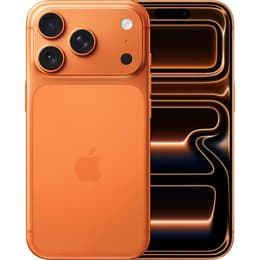
iPhone 17 Pro
Starting at

Refurbished price:€964.00

Versus €1,339.00 new

See options
iPhone Air
Starting at

Refurbished price:€781.00

Versus €1,339.00 new

See options

Differences at a glance

The iPhone 17 Pro (2025) and iPhone Air (2025) represent two distinct design philosophies within Apple's nineteenth generation of smartphones. While the iPhone 17 Pro focuses on robust capability and photographic versatility, the iPhone Air prioritizes an ultra-slim profile and lightweight form factor. Running on iOS, both models deliver current software experiences, yet they cater to entirely different user preferences regarding daily handling and hardware capability.

Available Models

Colour

Storage (GB)

Scores

Durability

Both devices launched in late 2025 and share modern software support foundations, ensuring long-term operating system updates and security patches for years to come. Expected lifespan remains high for both models, supported by durable outer materials and advanced internal components.

  • Software longevity: Both phones receive identical multi-year iOS update cycles, maintaining feature parity and security freshness over their operational lifespans.
  • Build resilience: The iPhone 17 Pro uses a sturdy metal frame designed for rugged daily use, whereas the iPhone Air implements a thin titanium structure balancing rigidity with a minimal weight footprint.
  • Repairability standards: Both models maintain similar internal modularity ratings, allowing authorized technicians to service components like batteries and displays effectively.

Year of Release

2025

2025

Compatible with latest Update

Yes

Yes

OS

iOS

iOS

Foldable

No

No

Performance

Under the hood, both smartphones handle demanding tasks, multitasking, and high-end gaming smoothly without noticeable stutter or slowdowns. RAM configurations and thermal management differ to accommodate their respective physical dimensions.

  • Multitasking capacity: Generous memory allocations on both handsets allow numerous background applications to remain active simultaneously without forcing reloads.
  • Thermal efficiency: The iPhone 17 Pro features specialized cooling hardware to sustain maximum processing speeds during extended gaming sessions, while the iPhone Air relies on its slender chassis design.
  • Battery behavior: The iPhone 17 Pro accommodates a larger physical battery for extended usage between charges, whereas the lighter iPhone Air requires more frequent charging under heavy daily workloads.

Screen quality

Viewing experiences on both devices benefit from high-refresh-rate OLED technology, delivering crisp text, deep contrast levels, and smooth scrolling animations. Display sizes and physical dimensions vary to suit different handling preferences.

  • Display technology: Both models utilize advanced OLED panels providing vivid color reproduction, deep blacks, and high peak brightness levels for comfortable outdoor visibility.
  • Refresh rate smoothness: Fast display refresh rates ensure fluid motion during web browsing, UI navigation, and compatible gaming applications on both devices.
  • Viewing workspace: The iPhone 17 Pro offers a compact 6.3-inch viewing area for single-handed reach, while the iPhone Air provides a larger 6.5-inch screen canvas for enhanced media consumption.

Resolution

2622x1206

2736x1260

Screen type

Super Retina XDR

Super Retina XDR

Audiovisual

Optics represent one of the primary functional divergences between these two models, impacting photography and media creation workflows. Audio playback hardware also differs significantly based on physical internal space.

  • Camera versatility: The iPhone 17 Pro equips a comprehensive triple-lens array including a dedicated high-zoom telephoto lens, whereas the iPhone Air features a streamlined single main camera setup.
  • Low-light photography: Main sensor capabilities on both devices capture detailed images in dim environments, though the Pro model adds extra framing flexibility via its multi-lens configuration.
  • Audio output: The iPhone 17 Pro incorporates stereo speaker architecture for balanced media audio, while the ultra-thin profile of the iPhone Air limits acoustic output to a mono speaker arrangement.

Main camera

48 megapixels

48 megapixels

Front camera

18 megapixels

18 megapixels

Miscellaneous

Practical day-to-day attributes such as connectivity standards, physical ports, and handling ergonomics highlight the distinct engineering goals behind each device. Dimensions dictate how each smartphone rests in pockets and hands.

  • Physical dimensions: The iPhone Air measures an ultra-thin 5.6 mm in thickness and weighs 165 g, contrasting with the heavier, more traditional 8.8 mm profile of the iPhone 17 Pro.
  • Biometric security: Both handsets utilize responsive facial recognition technology housed within the display cutout area for secure unlocking and authentication.
  • Connectivity suite: Modern wireless protocols including advanced Wi-Fi standards, 5G capabilities, and universal USB-C ports are integrated across both lineups.

Weight

206 g

165 g

Screen size (in)

6.3

6.5

Network

5G

5G

SIM card

eSIM

eSIM

Carrier compatibility

Unlocked

Unlocked

Connector

USB-C

USB-C

What the community thinks

User feedback from online communities highlights distinct praise and common criticisms for each smartphone. Owners of the iPhone 17 Pro frequently praise its reliable battery longevity, flexible multi-lens camera system, and sustained performance during intensive tasks, though some note its heavier weight in the hand. Conversely, users appreciate the iPhone Air for its remarkably slim and lightweight profile that minimizes pocket bulk, while noting that its single camera and mono speaker involve trade-offs compared to thicker flagship models. Choosing a quality-assured refurbished option through Back Market can also provide a sustainable choice for acquiring either device.

Users who prioritize photographic versatility, robust audio playback, and extended battery endurance will find the iPhone 17 Pro well-suited to their daily routines. Meanwhile, users who value a featherlight feel and an ultra-thin build for effortless portability may lean toward the iPhone Air. Evaluating these individual design and functional priorities will guide your final decision between the two.