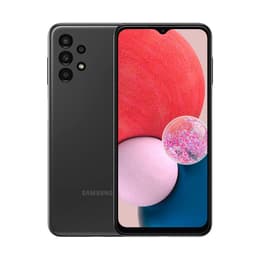
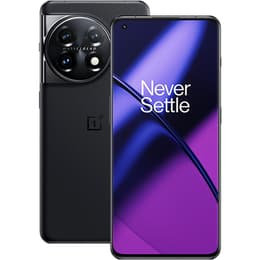


Galaxy A13 Vs OnePlus 11

Galaxy A13
Galaxy A13
Starting at

Refurbished price:97.00

Versus €249.00 new

See options
OnePlus 11
OnePlus 11
Starting at

Refurbished price:325.00

Versus €949.00 new

See options

Ratings

The Samsung Galaxy A13, released in March 2022, and the OnePlus 11, launched in January 2023, represent distinct segments within the Android smartphone market. While both devices operate on the Android platform, they cater to different user expectations, with the Galaxy A13 focusing on essential functionality and the OnePlus 11 delivering a more advanced experience. This comparison aims to highlight their practical differences to assist consumers in making an informed choice, including considering quality-assured refurbished options as a sustainable alternative.

Scores

Durability

The longevity of a smartphone is influenced by its release timeline, software support, and physical durability.

  • Release Timeline: The Samsung Galaxy A13 was released in March 2022, making it an older device compared to the OnePlus 11, which launched in January 2023. This difference in release year impacts their respective software support cycles.
  • Software Support: The Galaxy A13 launched with Android 12 and is expected to receive two major OS upgrades, reaching Android 14, along with five years of security updates until 2027. The OnePlus 11, starting with Android 13, is promised four generations of Android upgrades and five years of security updates from its launch date, suggesting a longer period of software relevance.
  • Physical Durability: The Galaxy A13 features a plastic body and a Gorilla Glass 5 display, offering a reasonable level of protection for everyday use. The OnePlus 11, with its glass front and back protected by Gorilla Glass Victus and an aluminum frame, presents a more robust build. The Galaxy A13 has been noted for a repairability score of 7/10 or 8/10 for its LTE variant, indicating a degree of ease in servicing. The OnePlus 11 carries an IP64 rating, providing protection against dust and splashes.

Year of Release

2022

2023

OS

Android

Android

Foldable

No

No

Performance

Performance is a key differentiator, impacting how smoothly applications run and how responsive the device feels during daily use.

  • Processing Power: The Galaxy A13 is equipped with an octa-core processor, such as the Exynos 850 or MediaTek Helio G80, which is suitable for basic tasks like browsing and social media. Users may experience occasional stutters or lag when navigating menus or running more demanding applications. The OnePlus 11 features a high-end current-generation processor, delivering smooth and responsive performance for intensive gaming, complex applications, and seamless multitasking.
  • Memory and Storage: The Galaxy A13 offers RAM options ranging from 3GB to 6GB and internal storage from 32GB to 128GB, utilizing eMMC 5.1 storage, which can be expanded up to 1TB via a microSD card. The OnePlus 11 provides more substantial memory configurations, with 8GB to 16GB of LPDDR5X RAM and faster UFS 3.1 or UFS 4.0 storage options from 128GB to 512GB, contributing to its superior multitasking capabilities and faster app loading times.
  • Battery Behavior: Both devices house a 5000mAh battery. The Galaxy A13 supports 15W fast charging. The OnePlus 11 supports significantly faster charging, with 100W SUPERVOOC charging in some regions, allowing for very rapid power replenishment. Users of the OnePlus 11 report excellent battery life, often lasting through a full day of heavy use and potentially two days with lighter usage.

Memory (GB)

4 GB

16 GB

Screen quality

The display is a primary interface for user interaction, and differences in screen technology and specifications can significantly impact the visual experience.

  • Display Technology and Resolution: The Galaxy A13 features a 6.6-inch PLS TFT LCD with a Full HD+ resolution (1080 x 2408 pixels), providing clear visuals for everyday content. The OnePlus 11 boasts a 6.7-inch Super Fluid AMOLED display with a Quad HD+ resolution (1440 x 3216 pixels), offering sharper details and more vibrant colors.
  • Refresh Rate and Smoothness: The Galaxy A13 typically has a 60Hz refresh rate, which is standard for basic scrolling and video playback, though some 5G variants offer 90Hz. The OnePlus 11 features a dynamic 1-120Hz refresh rate, which adapts to content for smoother scrolling, gaming, and video playback while optimizing power consumption.
  • Brightness and Viewing Experience: The Galaxy A13 offers a decent brightness level, peaking around 483 nits, which is adequate for indoor use but may struggle in direct sunlight. The OnePlus 11 provides higher peak brightness, reaching up to 1300 nits, ensuring better visibility outdoors and a more immersive viewing experience with support for Dolby Vision and HDR.

Resolution

1080 x 2408

1440 x 3216

Audiovisual

Camera capabilities are often a deciding factor for many users, with both devices offering different photographic strengths.

  • Rear Camera System: The Galaxy A13 includes a quad-camera setup with a 50MP main sensor, a 5MP ultrawide, a 2MP macro, and a 2MP depth sensor. The OnePlus 11 features a more advanced triple-camera system co-developed with Hasselblad, comprising a 50MP main sensor with optical image stabilization (OIS), a 48MP ultrawide lens, and a 32MP telephoto lens with 2x optical zoom.
  • Photography Performance: The Galaxy A13's main camera performs well in good lighting conditions, capturing solid shots for a budget phone, but it lacks optical image stabilization and may struggle with detail and noise in low-light environments. The OnePlus 11 excels in various lighting conditions, producing sharp images with natural colors and good detail, even in low light, thanks to its larger sensors and Hasselblad color calibration.
  • Video Recording and Audio: Both devices are capable of recording video at 1080p at 30 frames per second. The OnePlus 11 offers significantly higher video recording capabilities, including up to 8K at 24fps and 4K at 30/60fps, along with gyro-EIS for smoother footage. The OnePlus 11 also features dual stereo speakers with Dolby Atmos support, providing a richer audio experience for media consumption compared to the Galaxy A13's mono speaker.

Miscellaneous

Beyond core performance, several practical features contribute to the overall user experience and daily convenience.

  • Connectivity and Ports: The Galaxy A13 supports Wi-Fi 802.11 a/b/g/n/ac and Bluetooth 5.0, along with a USB-C port and a 3.5mm headphone jack. The OnePlus 11 offers more advanced connectivity with Wi-Fi 6/7, Bluetooth 5.3, and 5G capabilities, utilizing a USB-C 2.0 port but omitting the headphone jack.
  • Biometric Security: The Galaxy A13 features a side-mounted fingerprint sensor integrated into the power button for secure unlocking. The OnePlus 11 incorporates an in-display fingerprint sensor, offering a modern and convenient biometric authentication method.
  • Design and Handling: The Galaxy A13 has dimensions of 165.1 x 76.4 x 8.8mm and weighs 195g, with a plastic build. The OnePlus 11 measures 163.1 x 74.1 x 8.53mm and weighs 205g, featuring a premium glass and aluminum construction. The OnePlus 11 also includes a signature alert slider for quick sound profile adjustments.

Weight

195 g

205 g

Screen size (in)

6.6

6.7

Network

4G

5G

SIM card

Dual Physical SIM

Physical SIM

Carrier compatibility

Unlocked

Unlocked

The Samsung Galaxy A13 and OnePlus 11 cater to distinct user needs, reflecting their different positions in the smartphone market. User feedback for the Galaxy A13 often praises its long-lasting battery and its display quality for its segment. However, common criticisms point to its performance, which can be sluggish for anything beyond basic tasks, and its camera's limitations in challenging lighting conditions.

Conversely, the OnePlus 11 receives widespread acclaim for its powerful performance, vibrant and smooth display, rapid charging capabilities, and versatile camera system. Some minor concerns have been noted regarding its macro camera mode and occasional thermal throttling during extended heavy use, as well as its IP64 rating being less robust than some competitors.

Users prioritizing essential smartphone functions, extended battery life, and a traditional headphone jack for audio may find the Galaxy A13 well-suited to their needs. It serves as a reliable device for communication, light browsing, and casual media consumption. On the other hand, users who demand high-end performance for gaming, advanced photography, fast multitasking, and a premium visual experience will lean towards the OnePlus 11. Its superior processing power, advanced display, and sophisticated camera system make it ideal for power users and multimedia enthusiasts.

Ultimately, the choice depends on individual priorities and usage patterns. Both devices are available as quality-assured refurbished options, providing an eco-friendly way to access these technologies.


See all articles

Our recent comparisons






