
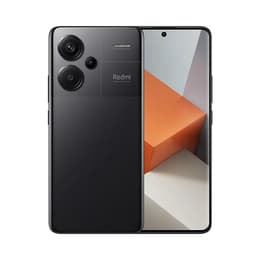


Xiaomi 13T Vs Xiaomi Redmi Note 13 Pro+

Xiaomi 13T
Xiaomi 13T
Starting at

Refurbished price:183.00

Versus €630.00 new

See options
Xiaomi Redmi Note 13 Pro+
Starting at

Refurbished price:198.00

Versus €449.00 new

See options

Ratings

The Xiaomi 13T, released in September 2023, and the Xiaomi Redmi Note 13 Pro+, launched in January 2024, are both Android smartphones from Xiaomi. While they share a common operating system, offering a familiar user experience, they differentiate themselves primarily through their camera configurations, display characteristics, and underlying processing capabilities. These distinctions cater to varying user priorities, from photography enthusiasts to performance-focused individuals.

Scores

Durability

When considering the long-term usability of these devices, several factors contribute to their expected lifespan.

  • Software Support: The Xiaomi 13T is set to receive four generations of Android OS upgrades and five years of security patches, extending its software longevity significantly. The Redmi Note 13 Pro+, being a Redmi series device, typically receives three major Android OS updates and four years of security patches. This means the 13T will generally benefit from a longer period of official software updates.
  • Physical Durability: Both devices feature an IP68 rating, indicating robust resistance to dust and water immersion. For screen protection, the Xiaomi 13T utilizes Corning Gorilla Glass 5, while the newer Redmi Note 13 Pro+ incorporates Corning Gorilla Glass Victus. Gorilla Glass Victus offers enhanced drop and scratch resistance compared to Gorilla Glass 5, suggesting a slight edge in screen resilience for the Redmi Note 13 Pro+.
  • Repairability: Both models generally align with the repairability standards typical for Xiaomi smartphones in their respective segments, with no significant differences noted in ease of repair.

Year of Release

2023

2023

Compatible with latest Update

Yes

Yes

OS

Android

Android

Foldable

No

No

Performance

The performance of a smartphone is crucial for daily operations, from launching applications to handling demanding tasks.

  • Processing Power: The Xiaomi 13T is equipped with a more powerful processor, which translates to smoother performance in graphically intensive games and more demanding applications. The Redmi Note 13 Pro+ features a capable processor that handles everyday tasks and general multitasking smoothly, but it may show limitations when pushed with very heavy workloads or high-end gaming compared to the 13T.
  • Storage and Multitasking: The Xiaomi 13T typically uses UFS 3.1 storage, which offers significantly faster read and write speeds compared to the UFS 2.2 storage found in most configurations of the Redmi Note 13 Pro+. This difference can result in quicker app loading times and faster file transfers on the 13T. Both devices offer various RAM configurations, commonly 8GB or 12GB, providing ample capacity for efficient multitasking.
  • Battery and Charging: Both smartphones house a 5000 mAh battery, designed to provide a full day of typical use. However, their charging speeds differ considerably. The Xiaomi 13T supports 67W wired fast charging, while the Redmi Note 13 Pro+ boasts significantly faster 120W wired charging, allowing for very rapid battery top-ups. User experiences with battery life vary, with some finding the 13T's battery performance to be average, and the Redmi Note 13 Pro+ offering consistent all-day use, though not always exceptional.

Memory (GB)

8 GB

12 GB

Screen quality

The display is a primary interface for smartphone interaction, and both devices offer high-quality viewing experiences with some notable differences.

  • Display Technology and Resolution: Both the Xiaomi 13T and Redmi Note 13 Pro+ feature vibrant 6.67-inch AMOLED displays, offering deep blacks and rich colors. They share the same sharp resolution of 1220 x 2712 pixels, ensuring clear and detailed visuals for content consumption and daily use.
  • Refresh Rate and Brightness: The Xiaomi 13T offers a higher refresh rate of 144Hz, providing a slightly smoother scrolling and animation experience compared to the Redmi Note 13 Pro+'s 120Hz refresh rate. In terms of brightness, the 13T achieves a peak brightness of 2600 nits, which is notably brighter than the Redmi Note 13 Pro+'s 1800 nits peak brightness. This higher brightness on the 13T can improve outdoor visibility and HDR content viewing.
  • Viewing Experience: Both displays support HDR10+ and Dolby Vision, enhancing the dynamic range and color accuracy for compatible media. The overall viewing experience on both devices is immersive, with the 13T offering a marginal advantage in smoothness and outdoor visibility due to its higher refresh rate and peak brightness.

Resolution

1220 x 2712

1220 x 2712

Screen type

AMOLED

AMOLED

Audiovisual

The camera systems on these two smartphones offer distinct approaches to photography, catering to different user preferences.

  • Rear Camera Systems: The Xiaomi 13T features a versatile triple-camera setup, including a 50MP main sensor with optical image stabilization (OIS), a 50MP telephoto lens offering 2x optical zoom, and a 12MP ultrawide lens. This configuration provides flexibility for various shooting scenarios, particularly benefiting from the dedicated telephoto lens for zoomed shots. The Redmi Note 13 Pro+ boasts a high-resolution 200MP main sensor with OIS, an 8MP ultrawide lens, and a 2MP macro lens. Its strength lies in capturing highly detailed images with its primary sensor, though its ultrawide and macro capabilities are less pronounced.
  • Photography Performance: The 13T's camera system, often tuned with Leica, is praised for its overall image quality and versatility, especially with its optical zoom capabilities. The Redmi Note 13 Pro+'s 200MP main camera can produce impressive, detailed photos, particularly in good lighting conditions, and offers in-sensor zoom for up to 4x lossless zoom. However, its ultrawide and macro lenses are generally considered less capable than the 13T's secondary lenses.
  • Video and Audio: Both devices are capable of recording video at 4K resolution at 30 frames per second from their main cameras. Both phones typically offer good speaker output for media consumption and clear microphone quality for calls and recordings.

Main camera

50 megapixels

200 megapixels

Front camera

20 megapixels

16 megapixels

Miscellaneous

Beyond the core specifications, several practical features contribute to the overall user experience and daily convenience.

  • Connectivity: Both smartphones support 5G cellular networks and Wi-Fi 6, ensuring fast and reliable wireless connectivity. The Xiaomi 13T features Bluetooth 5.4, offering a slightly newer standard for wireless accessories compared to the Redmi Note 13 Pro+'s Bluetooth 5.3.
  • Ports and Sensors: Both devices utilize a USB-C 2.0 port for charging and data transfer. For biometric security, both incorporate an under-display optical fingerprint sensor, providing convenient and secure unlocking.
  • Design and Handling: The Xiaomi 13T measures approximately 162.2 x 75.7 x 8.5 mm and weighs around 193g to 197g. The Redmi Note 13 Pro+ has dimensions of about 161.4 x 74.2 x 8.9 mm and weighs between 198.5g and 204.5g. These dimensions indicate that both phones are similar in size and weight, offering a comparable in-hand feel. The 13T is available with a glass front (Gorilla Glass 5) and a plastic or silicone polymer back, while the Redmi Note 13 Pro+ features a glass front (Gorilla Glass Victus) and a glass or silicone polymer back.

Weight

193 g

204 g

Screen size (in)

6.67

6.67

Network

5G

5G

SIM card

Dual Physical SIM

Dual Physical SIM

Carrier compatibility

Unlocked

Unlocked

User feedback and expert reviews highlight distinct strengths and weaknesses for both the Xiaomi 13T and the Xiaomi Redmi Note 13 Pro+.

The Xiaomi 13T is frequently praised for its robust processing power, making it well-suited for demanding applications and gaming. Its versatile camera system, particularly the inclusion of a telephoto lens, and its bright, high-refresh-rate display are also common points of appreciation. Some users, however, have noted average battery life as a potential concern.

Conversely, the Redmi Note 13 Pro+ receives commendation for its newer release, enhanced screen durability with Gorilla Glass Victus, and exceptionally fast 120W charging. Its high-megapixel main camera is often highlighted for capturing detailed images. Criticisms sometimes point to its less powerful processor compared to the 13T, the absence of a dedicated telephoto lens, and the use of slower UFS 2.2 storage in many configurations. Some user reports also indicate that its battery life, while generally all-day, is not always outstanding despite the large capacity.

For users prioritizing raw processing power for intensive tasks, a versatile camera system with optical zoom, and a very bright, fluid display, the Xiaomi 13T may be the more suitable choice. On the other hand, individuals who value cutting-edge screen durability, extremely rapid charging capabilities, a high-resolution main camera for detailed photography, and a slightly newer device might find the Redmi Note 13 Pro+ better aligns with their needs. Both devices offer compelling features, and considering a quality-assured refurbished option can be an eco-friendly alternative for either model.

See all articles

Our recent comparisons