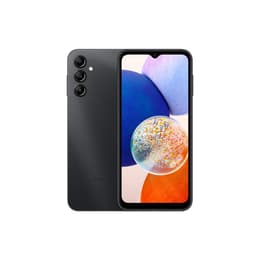



Galaxy A14 Vs Xiaomi Redmi Note 11 Pro 5G

Galaxy A14
Galaxy A14
Starting at

Refurbished price:97.00

Versus €269.00 new

See options
Xiaomi Redmi Note 11 Pro 5G
Starting at

Refurbished price:126.00

Versus €699.00 new

See options

Ratings

The Samsung Galaxy A14 and the Xiaomi Redmi Note 11 Pro 5G are smartphones designed to offer a balance of features for everyday use. Released in January 2023, the Galaxy A14 runs on Android 13, while the Redmi Note 11 Pro 5G, launched in January 2022, started with Android 11. The primary distinctions between these two devices lie in their display technology, camera capabilities, and software support timelines.

Scores

Durability

When considering the long-term usability of these devices, their release dates and software support policies are key factors.

  • Release Timeline: The Samsung Galaxy A14 was released in January 2023, making it a year newer than the Xiaomi Redmi Note 11 Pro 5G, which launched in January 2022. This difference in release directly impacts their expected software longevity.
  • Software Longevity: The Galaxy A14 is expected to receive two major Android OS upgrades, bringing it up to Android 15, and four years of security updates, extending until 2027. The Redmi Note 11 Pro 5G typically receives two major OS updates, reaching Android 13, and three years of security updates, with support generally ending around 2025.
  • Repairability: The Galaxy A14 has a repairability score of 8 out of 10, featuring an accessible design with battery pull tabs that simplify battery replacement. The Redmi Note 11 Pro also scores well in repairability, with a rating of 8.75 out of 10, noting that its back plate is easy to remove and internal components are accessible.

Year of Release

2023

2022

Compatible with latest Update

No

No

OS

Android

Android

Foldable

No

No

Performance

Both devices are equipped to handle daily tasks, but they offer different experiences in terms of processing power and storage configurations.

  • Processor Capabilities: The Galaxy A14 provides a responsive experience for general use and common applications. Some users, however, have noted occasional sluggishness with more demanding tasks or prolonged use. The Redmi Note 11 Pro 5G offers performance suitable for its category, handling typical applications and multitasking smoothly, though some users have reported stuttering when many applications are running in the background.
  • Storage and RAM: Both phones offer internal storage options of 64GB or 128GB, with the ability to expand storage using a microSD card. The Galaxy A14 is available with 4GB, 6GB, or 8GB of RAM, while the Redmi Note 11 Pro 5G comes with 6GB or 8GB of RAM, which can influence multitasking efficiency.
  • Battery Behavior: Both devices feature a 5000 mAh battery capacity. Users of the Galaxy A14 frequently report excellent battery life, often lasting through a full day of use. The Redmi Note 11 Pro 5G also delivers strong battery performance, with users praising its long-lasting charge and notably fast charging capabilities.

Memory (GB)

4 GB

6 GB

Screen quality

The visual experience on these smartphones differs significantly due to their display technologies and refresh rates.

  • Display Technology: The Samsung Galaxy A14 features a 6.6-inch PLS LCD display. In contrast, the Xiaomi Redmi Note 11 Pro 5G boasts a 6.67-inch Super AMOLED display, which typically offers deeper blacks and more vibrant colors compared to LCD panels.
  • Resolution and Clarity: Both phones provide a Full HD+ resolution (1080 x 2408 pixels for A14, 1080 x 2400 pixels for Note 11 Pro 5G), ensuring clear and sharp visuals for browsing, videos, and apps.
  • Refresh Rate and Brightness: The Galaxy A14 has a 90Hz refresh rate, providing smoother scrolling and animations than a standard 60Hz display. The Redmi Note 11 Pro 5G elevates this with a 120Hz refresh rate, offering an even more fluid visual experience. It also achieves a higher peak brightness of 1200 nits, which can improve visibility in bright outdoor conditions compared to the A14's display.

Resolution

1080 x 2408

1080 x 2400

Screen type

PLS LCD

Super AMOLED

Audiovisual

The camera systems on the Galaxy A14 and Redmi Note 11 Pro 5G present different strengths and capabilities for capturing photos and videos.

  • Rear Camera System: The Galaxy A14 is equipped with a triple rear camera setup, including a 50 MP main sensor, a 2 MP macro lens, and a 2 MP depth sensor. It does not include an ultrawide camera. The Redmi Note 11 Pro 5G features a more versatile triple camera array, with a 108 MP main sensor, an 8 MP ultrawide lens, and a 2 MP macro camera.
  • Photography Performance: User feedback for the Galaxy A14's camera is mixed, with some finding it adequate for basic photos but others reporting issues with focus and overall quality. The Redmi Note 11 Pro 5G's main camera is generally considered dependable, though some users have expressed dissatisfaction with its overall camera performance, particularly regarding focus and video stabilization.
  • Front Camera and Audio: For selfies, the Galaxy A14 has a 13 MP front camera, while the Redmi Note 11 Pro 5G offers a 16 MP front camera. The Redmi Note 11 Pro 5G also features loud stereo speakers, enhancing the media consumption experience.

Main camera

50 megapixels

108 megapixels

Front camera

13 megapixels

16 megapixels

Miscellaneous

Beyond core features, several practical elements contribute to the overall user experience of these smartphones.

  • Connectivity and Ports: Both devices support 5G connectivity, Wi-Fi 5 (802.11 a/b/g/n/ac), and feature a USB-C port for charging and data transfer, along with a 3.5mm headphone jack. The Redmi Note 11 Pro 5G includes Bluetooth 5.1, while the Galaxy A14 features Bluetooth 5.2. The Redmi Note 11 Pro 5G also incorporates NFC and an IR blaster, offering additional utility.
  • Build Materials and Dimensions: The Galaxy A14 has a plastic frame and back, contributing to its 202g weight and dimensions of 167.7 x 78 x 9.1 mm. The Redmi Note 11 Pro 5G features a glass front (Corning Gorilla Glass 5) and glass back with a plastic frame, providing a more premium feel and some splash resistance with an IP53 rating. It weighs 202g and measures 164.19 x 76.1 x 8.12 mm.
  • Security Features: Both smartphones include a side-mounted fingerprint sensor for secure unlocking.

Weight

201 g

202 g

Screen size (in)

6.6

6.67

Network

4G

5G

SIM card

Dual Physical SIM

Dual Physical SIM

Carrier compatibility

Unlocked

Unlocked

User feedback for the Samsung Galaxy A14 often highlights its excellent battery life and generally reliable performance for basic smartphone functions. However, some users have expressed concerns regarding its camera quality, occasional performance sluggishness, and display characteristics. The Redmi Note 11 Pro 5G receives praise for its vibrant AMOLED display, fast charging capabilities, and robust battery life. Criticisms frequently point to its camera performance, particularly in video, and some software-related issues, though many can be addressed by disabling certain features.

Users prioritizing extended software support and a more recent release date may find the Samsung Galaxy A14 better suited to their needs. Its strong repairability is also a notable advantage for those who value ease of maintenance. Conversely, individuals who prioritize a superior display experience with a higher refresh rate, faster charging, and a more premium build with splash resistance might lean towards the Xiaomi Redmi Note 11 Pro 5G. Both devices offer solid foundations for daily use, and considering a quality-assured refurbished option for either model can be an eco-friendly alternative to purchasing new.


See all articles

Our recent comparisons







