
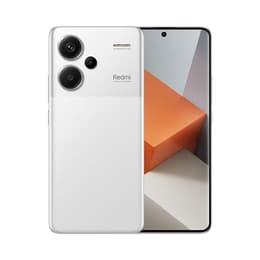


Xiaomi 12T Vs Xiaomi Redmi Note 13 Pro+

Xiaomi 12T
Xiaomi 12T
Starting at

Refurbished price:138.00

Versus €649.00 new

See options
Xiaomi Redmi Note 13 Pro+
Starting at

Refurbished price:198.00

Versus €449.00 new

See options

Ratings

The Xiaomi 12T, launched in October 2022, and the Xiaomi Redmi Note 13 Pro+, released in September 2023, are both Android smartphones from Xiaomi. While the 12T offers a strong foundation with its performance and display, the Redmi Note 13 Pro+ introduces several advancements, including a more refined design, an upgraded camera system, and enhanced durability features. Both devices operate on the Android platform, with the Redmi Note 13 Pro+ benefiting from a more recent version of the operating system at its launch.

Scores

Durability

The longevity and resilience of a smartphone are key considerations for many users, influencing its practical lifespan and ability to withstand daily wear and tear.

  • Release Timeline and OS Support: The Xiaomi 12T, released in October 2022, will receive software updates for a substantial period. The Redmi Note 13 Pro+, launched in September 2023, benefits from a more recent release date, which typically translates to an extended duration of official Android and security updates, potentially offering a longer practical lifespan.
  • Physical Protection and Water Resistance: The Xiaomi 12T is equipped with Corning Gorilla Glass 5 on its front display, providing a degree of scratch and drop resistance, and carries an IP53 rating for basic dust and splash protection. In contrast, the Redmi Note 13 Pro+ features the more advanced Corning Gorilla Glass Victus for superior screen durability and boasts an IP68 rating, signifying a higher level of resistance against both dust ingress and immersion in water.
  • Build Materials and Feel: The 12T utilizes a glass front combined with a plastic back and frame. The Redmi Note 13 Pro+ presents a more robust feel with Gorilla Glass Victus protecting the front, a choice of glass or a silicone polymer finish for the back, and an aluminum frame, contributing to its overall structural integrity.

Year of Release

2022

2023

Compatible with latest Update

Yes

Yes

OS

Android

Android

Foldable

No

No

Performance

Assessing a smartphone's performance involves understanding how efficiently it handles various tasks, from everyday browsing to more demanding applications.

  • Everyday Responsiveness and Efficiency: The Xiaomi 12T is powered by a processor designed to deliver a consistently smooth and responsive user experience. It handles common applications, web browsing, and general navigation with ease, ensuring quick app loading times and fluid transitions between tasks.
  • Multitasking and Demanding Applications: The Redmi Note 13 Pro+ incorporates a newer generation processor, engineered for improved power efficiency and enhanced computational capabilities. This translates into a more seamless experience when multitasking with numerous applications, faster processing of complex operations, and a more stable performance during extended gaming sessions or when running resource-intensive apps.
  • Memory and Storage Configurations: The Xiaomi 12T typically comes with 8GB of RAM and offers internal storage options up to 256GB. The Redmi Note 13 Pro+ provides configurations with up to 12GB of RAM, offering greater headroom for heavy multitasking and future application demands, alongside larger storage options up to 512GB.

Memory (GB)

8 GB

12 GB

Screen quality

The display is a critical component, directly impacting how users interact with and consume content on their device.

  • Display Technology and Visual Clarity: Both devices feature a 6.67-inch AMOLED display, known for its ability to produce deep, true blacks and vibrant colors. With a resolution of 1220 x 2712 pixels, both screens offer sharp and detailed visuals, making text and images appear clear and crisp.
  • Brightness Levels and Smoothness: Both the Xiaomi 12T and Redmi Note 13 Pro+ support a 120Hz refresh rate, which results in noticeably smoother scrolling and more fluid animations. The Xiaomi 12T achieves a typical brightness of 500 nits and a peak of 900 nits. The Redmi Note 13 Pro+ significantly boosts peak brightness to 1800 nits, which can greatly enhance screen legibility and viewing comfort in bright outdoor environments.
  • High Dynamic Range (HDR) Support: Both smartphones are equipped with HDR10+ support, allowing for a wider range of colors and contrast when viewing compatible content. The Redmi Note 13 Pro+ further enhances its display capabilities with Dolby Vision support, potentially offering an even more refined and immersive high dynamic range viewing experience.

Resolution

1220 x 2712

1220 x 2712

Screen type

AMOLED

AMOLED

Audiovisual

The camera system is a primary consideration for many users, influencing the quality of photos and videos captured.

  • Main Camera Sensor and Stabilization: The Xiaomi 12T is equipped with a 108 MP main camera sensor featuring optical image stabilization (OIS), which helps in capturing sharp, detailed photos and stable videos. The Redmi Note 13 Pro+ takes a step forward with a 200 MP main sensor, also with OIS, designed to capture even finer details, offer greater flexibility for digital zoom and cropping, and potentially improve low-light performance.
  • Versatility of Lenses and Video Capabilities: Both devices include an 8 MP ultrawide lens for expansive landscape shots and a 2 MP macro lens for close-up photography. For video recording, the Xiaomi 12T supports up to 4K resolution at 30 frames per second (fps). The Redmi Note 13 Pro+ also offers 4K at 30fps, along with additional options for high frame rate 1080p recording, beneficial for capturing fast-moving subjects.
  • Audio Output and Recording: Both smartphones feature stereo speakers, delivering a more immersive audio experience for media consumption. The microphone quality on both devices is generally clear and suitable for voice calls, video conferencing, and basic audio recording.

Main camera

108 megapixels

200 megapixels

Front camera

20 megapixels

16 megapixels

Miscellaneous

Beyond the core specifications, several practical features contribute to the overall usability and convenience of a smartphone.

  • Connectivity and Charging Technology: Both the Xiaomi 12T and Redmi Note 13 Pro+ are future-ready with 5G connectivity, enabling faster mobile data speeds. They also support Wi-Fi 6 for enhanced wireless network performance and Bluetooth 5.3 for efficient and stable connections with various accessories. Both devices house a 5000 mAh battery and support an impressive 120W wired charging, allowing for extremely rapid power replenishment.
  • Ports and Biometric Security: For physical connections, both smartphones utilize a USB Type-C 2.0 port for charging, data transfer, and connecting peripherals. In terms of security, both devices feature a reliable under-display optical fingerprint sensor, offering a convenient and secure method for unlocking the phone and authenticating payments.
  • Physical Dimensions and Handling: The Xiaomi 12T measures 163.1 x 75.9 x 8.6 mm and weighs 202 grams. The Redmi Note 13 Pro+ is slightly more compact at 161.4 x 74.2 x 8.9 mm and weighs 204.5 grams. These subtle differences in dimensions and weight can influence the ergonomic feel and one-handed usability for different users.

Weight

220 g

204 g

Screen size (in)

6.67

6.67

Network

5G

5G

SIM card

Dual Physical SIM

Dual Physical SIM

Carrier compatibility

Unlocked

Unlocked

User discussions frequently highlight the Xiaomi 12T as a well-rounded device, often praised for its exceptionally fast charging capabilities and a vibrant AMOLED display that enhances media consumption. Some users have noted its build materials, particularly the plastic back, as a point of differentiation from more premium-feeling devices. The Redmi Note 13 Pro+, being a more recent iteration, consistently receives positive feedback for its significantly upgraded 200 MP main camera, which is often cited for its detail capture and versatility. Its enhanced durability with an IP68 rating and a brighter display are also frequently appreciated by users.

Users who prioritize a device with the latest software support for an extended period, coupled with superior physical durability against dust and water, will find the Redmi Note 13 Pro+ to be a compelling choice. Its advanced camera system also makes it particularly appealing to those who place a high value on high-resolution photography and detailed image capture. Conversely, users seeking a robust and reliable all-around smartphone that still offers impressive fast charging and a high-quality display, without necessarily needing the absolute latest camera or highest durability rating, may find the Xiaomi 12T to be a suitable option. Both models offer distinct advantages, and exploring a quality-assured refurbished option for either can provide an eco-friendly alternative for making an informed choice.


See all articles

Our recent comparisons