

Galaxy S23 FE Vs iPhone SE (2020)

Galaxy S23 FE
Galaxy S23 FE
Starting at

Refurbished price:226.00

Versus €708.98 new

See options
iPhone SE (2020)
iPhone SE (2020)
Starting at

Refurbished price:99.00

Versus €319.00 new

See options

Ratings

The Samsung Galaxy S23 FE, released in October 2023, and the Apple iPhone SE 2020, launched in April 2020, represent distinct approaches to smartphone design and functionality. While both offer a quality smartphone experience, they cater to different user preferences through their operating systems and hardware. The Galaxy S23 FE runs on Android, providing a larger display and a more versatile camera system, whereas the iPhone SE 2020 operates on iOS, focusing on a compact form factor and a streamlined user experience.

Scores

Durability

The expected lifespan of a smartphone is influenced by its release date, software support, and physical durability. These two devices, released years apart, offer different timelines for ongoing support and expected practical use.

  • Release Timeline: The Galaxy S23 FE, launched in October 2023, is a more recent device compared to the iPhone SE 2020, which debuted in April 2020. This difference in release year directly impacts their remaining software support.
  • OS Support Duration: The Galaxy S23 FE is promised four major Android OS updates and five years of security updates, extending its support well into the future. The iPhone SE 2020, while known for Apple's long-term support, is expected to receive major iOS updates for approximately 5-7 years from its release, with security updates potentially continuing beyond that. Users report the iPhone SE 2020 still receives official iOS updates even after six years.
  • Physical Durability: Both devices feature glass fronts and backs with aluminum frames. The Galaxy S23 FE uses Gorilla Glass 5 for protection and has an IP68 rating for dust and water resistance. The iPhone SE 2020 has an IP67 rating, offering similar protection against dust and water ingress.

Year of Release

2023

2020

Compatible with latest Update

Yes

Yes

OS

Android

iOS

Foldable

No

No

Performance

Performance in smartphones is about how smoothly applications run, how quickly tasks are completed, and how efficiently the device manages power. Both the Galaxy S23 FE and the iPhone SE 2020 deliver capable performance, though with different underlying architectures and user experiences.

  • Processing Power: The Galaxy S23 FE is equipped with a capable current-generation processor, allowing it to handle demanding applications and multitasking with ease. The iPhone SE 2020 features an older, yet still efficient, processor that provides a responsive experience for everyday tasks and many modern applications.
  • Multitasking and Responsiveness: The Galaxy S23 FE typically comes with 8GB of RAM, contributing to smooth multitasking and app switching. The iPhone SE 2020 has 3GB of RAM, which, combined with iOS optimization, still offers a fluid user experience for its intended use cases.
  • Battery Behavior: The Galaxy S23 FE houses a 4,500 mAh battery, generally providing a full day of use for many users, though heavy usage, especially with gaming or camera, can lead to more frequent charging. The iPhone SE 2020 has a smaller 1,821 mAh battery, which for some users can last a full day with moderate use, but heavy users may find themselves needing to recharge more often.

Memory (GB)

8 GB

3 GB

Screen quality

The display is a primary interface for smartphone interaction, and the quality of the screen significantly impacts the user experience. The Galaxy S23 FE and iPhone SE 2020 offer distinct display technologies and sizes.

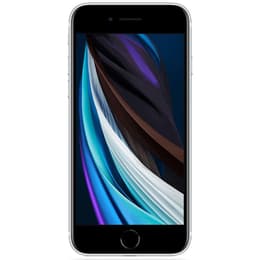
  • Display Technology and Size: The Galaxy S23 FE features a 6.4-inch Dynamic AMOLED 2X display, known for its vibrant colors, deep blacks, and high contrast. The iPhone SE 2020 has a smaller 4.7-inch Retina IPS LCD, which provides accurate colors and good viewing angles.
  • Resolution and Clarity: The Galaxy S23 FE offers a Full HD+ resolution (1080 x 2340 pixels), resulting in a sharp and detailed image. The iPhone SE 2020 has a resolution of 750 x 1334 pixels, which delivers sufficient clarity for its screen size.
  • Refresh Rate and Brightness: The Galaxy S23 FE boasts a 120Hz refresh rate, providing smoother scrolling and a more fluid visual experience, along with a peak brightness of up to 1450 nits for good outdoor visibility. The iPhone SE 2020 has a standard 60Hz refresh rate and a peak brightness of 625 nits.

Resolution

1080 x 2340

750 x 1334

Screen type

Dynamic AMOLED 2X

Retina IPS LCD

Audiovisual

Camera capabilities are a significant factor for many smartphone users, and both devices offer different photographic strengths and features for capturing moments.

  • Rear Camera System: The Galaxy S23 FE features a versatile triple-camera setup, including a 50 MP main sensor with optical image stabilization (OIS), a 12 MP ultrawide lens, and an 8 MP telephoto lens with 3x optical zoom. The iPhone SE 2020 has a single 12 MP main camera with OIS, which is well-regarded for its image processing and consistency.
  • Photography Performance: The Galaxy S23 FE's multiple lenses provide flexibility for various shooting scenarios, including wide-angle and zoomed shots, and performs well in different lighting conditions. The iPhone SE 2020 excels in everyday photography with natural color reproduction and reliable performance, particularly in good lighting.
  • Video Recording and Front Camera: The Galaxy S23 FE supports video recording up to 8K resolution and features a 10 MP front camera. The iPhone SE 2020 can record video up to 4K and includes a 7 MP front camera.

Main camera

50 megapixels

12 megapixels

Front camera

10 megapixels

7 megapixels

Miscellaneous

Beyond core performance and display, several practical features contribute to the overall user experience and daily convenience of a smartphone.

  • Connectivity and Ports: The Galaxy S23 FE supports 5G connectivity, Wi-Fi 6E, and Bluetooth 5.3, utilizing a USB-C port for charging and data transfer. The iPhone SE 2020 offers 4G LTE, Wi-Fi 6, and Bluetooth 5.0, and uses Apple's proprietary Lightning port.
  • Biometric Security: For secure access, the Galaxy S23 FE incorporates an under-display optical fingerprint sensor. The iPhone SE 2020 features a physical home button with integrated Touch ID for fingerprint recognition.
  • Design and Handling: The Galaxy S23 FE is larger and heavier, measuring 158 x 76.5 x 8.2 mm and weighing 209g, which might appeal to users who prefer a more substantial device. The iPhone SE 2020 is more compact and lighter at 138.4 x 67.3 x 7.3 mm and 148g, making it suitable for one-handed use and those who prefer a smaller phone.

Weight

209 g

148 g

Screen size (in)

6.4

4.7

Network

5G

4G

SIM card

Physical SIM

Physical SIM + eSIM

Carrier compatibility

Unlocked

Unlocked

User feedback for the Galaxy S23 FE often highlights its vibrant display, versatile camera system, and solid performance for its segment. Some users, however, have noted concerns regarding battery life under heavy use and occasional thermal management, particularly with certain processor variants. The iPhone SE 2020 is frequently praised for its compact size, familiar design, and the consistent performance of its operating system. Common criticisms often point to its smaller, older display technology, single camera, and battery life that may require more frequent charging for active users.

Users prioritizing a larger, more modern display with a high refresh rate, a multi-lens camera system for varied photography, and the Android ecosystem may find the Galaxy S23 FE well-suited to their needs. Conversely, individuals who value a compact form factor, the streamlined iOS experience, and consistent performance for everyday tasks might lean toward the iPhone SE 2020. Both devices offer compelling features for different user profiles, and considering a quality-assured refurbished option for either model can be an eco-friendly alternative to purchasing new.


See all articles

Our recent comparisons