

Compare models

Google Pixel 7A Vs Xiaomi Redmi Note 13 4G

  • 1-year minimum warranty
  • Free delivery on all orders
  • Free 30-day returns
Google Pixel 7A
Starting at

Refurbished price:165.00

Versus €649.99 new

See options
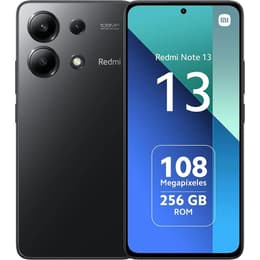
Xiaomi Redmi Note 13 4G
Starting at

Refurbished price:200.00

Versus €340.00 new

See options

Differences at a glance

The Google Pixel 7a (2023) and the Xiaomi Redmi Note 13 4G (2024) are mid-range smartphones designed for everyday mobile users. While both devices run on the Android operating system with custom manufacturer interfaces, they approach everyday usability through different design priorities. The Google Pixel 7a focuses on streamlined software integration and advanced computational photography, whereas the Xiaomi Redmi Note 13 4G centers its experience on media consumption features and extended battery endurance.

Available Models

Colour

Storage (GB)

Scores

Durability

When evaluating hardware durability and software lifespan, both devices offer multi-year support windows tailored to different user expectations.

  • Software Support: The Google Pixel 7a receives long-term major operating system upgrades and security patches directly from Google, while the Xiaomi Redmi Note 13 4G relies on regular interface updates through its manufacturer schedule.
  • Build Durability: The Google Pixel 7a incorporates robust water resistance ratings (IP67) alongside metal framing, whereas the Xiaomi Redmi Note 13 4G features splash resistance (IP54) with a lightweight frame construction.
  • Practical Lifespan: Both models provide sufficient internal component longevity for standard daily tasks, though software update pacing differs between the two ecosystems.

Year of Release

2023

2024

Compatible with latest Update

Yes

Yes

OS

Android

Android

Foldable

No

No

Performance

Performance capabilities vary noticeably between these models due to distinct internal hardware configurations and memory management.

  • System Responsiveness: The Google Pixel 7a handles demanding multitasking, complex applications, and graphics-heavy gaming smoothly using its advanced custom processor. The Xiaomi Redmi Note 13 4G manages routine messaging, web browsing, and casual applications reliably with its efficiency-focused processor.
  • Battery Behavior: The Xiaomi Redmi Note 13 4G typically lasts through a full day of mixed use on a single charge thanks to a larger capacity cell, while the Google Pixel 7a relies on adaptive charging software to optimize power distribution throughout the day.
  • Memory Configuration: The Google Pixel 7a pairs its processor with ample random access memory for seamless app switching, whereas the Xiaomi Redmi Note 13 4G offers flexible storage expansion choices to accommodate large personal media libraries.

Screen quality

Display characteristics define the visual experience of each device, balancing panel technology and refresh rates for daily media viewing.

  • Display Technology: The Google Pixel 7a features a compact OLED panel delivering deep contrast levels, while the Xiaomi Redmi Note 13 4G utilizes a larger AMOLED screen with high peak brightness capabilities for outdoor visibility.
  • Refresh Rate: The Xiaomi Redmi Note 13 4G supports a 120 Hz refresh rate for smooth scrolling animations, whereas the Google Pixel 7a operates at a 90 Hz refresh rate which balances motion fluidity with power efficiency.
  • Viewing Comfort: The Google Pixel 7a provides a denser pixel layout in a smaller form factor, while the Xiaomi Redmi Note 13 4G offers a more expansive screen real estate suited for watching videos and reading documents.

Resolution

1080 x 2400

1080 x 2400

Screen type

OLED

AMOLED

Audiovisual

Audio-visual hardware configurations cater to different content creation and media consumption preferences.

  • Photography Systems: The Google Pixel 7a utilizes a high-resolution main sensor backed by advanced image processing software to capture detailed low-light photos. The Xiaomi Redmi Note 13 4G features a multi-lens array led by a high megapixel main camera suited for bright daylight conditions.
  • Video and Audio: The Google Pixel 7a records stable video footage with clean microphone input, whereas the Xiaomi Redmi Note 13 4G provides stereo speaker output suited for casual media playback without headphones.
  • Practical Media Use: Users prioritizing consistent point-and-shoot photography across varied lighting conditions will find the Google Pixel configuration robust, while the Xiaomi model supports general multimedia viewing needs adequately.

Main camera

64 megapixels

108 megapixels

Front camera

13 megapixels

16 megapixels

Miscellaneous

Practical everyday features, connectivity standards, and physical handling characteristics shape the daily user experience.

  • Connectivity and Ports: Both smartphones support modern 5G or 4G mobile networks, Wi-Fi connectivity, and Bluetooth pairing, utilizing reversible USB-C ports for charging and data transfer.
  • Security Sensors: Both models incorporate optical in-display fingerprint sensors alongside secure facial recognition options for convenient device unlocking.
  • Physical Dimensions: The Google Pixel 7a presents a compact, heavier feel in the hand due to its dense glass and metal build, whereas the Xiaomi Redmi Note 13 4G adopts a lighter, slimmer profile with a larger overall footprint.

Weight

193 g

175 g

Screen size (in)

6.1

6.67

Network

5G

4G

SIM card

Physical SIM + eSIM

Dual Physical SIM

Carrier compatibility

Unlocked

Unlocked

Connector

USB-C

USB-C

What the community thinks

User feedback from online communities highlights distinct preferences for each device based on everyday requirements. Owners of the Google Pixel 7a frequently praise its clean software experience, rapid security updates, and reliable camera output in challenging lighting. Conversely, users of the Xiaomi Redmi Note 13 4G often commend its smooth display refresh rate, reliable daily battery endurance, and generous storage options relative to its hardware class. Common criticisms for the Google model point toward moderate battery capacity under heavy usage, while Xiaomi users occasionally note pre-installed system applications that require manual cleanup.

Users prioritizing photography, streamlined software updates, and a compact form factor may prefer the Google Pixel 7a. Meanwhile, users prioritizing extended battery life, a larger media display, and expandable storage will find the Xiaomi Redmi Note 13 4G well-suited to their needs. For those looking for an eco-friendly, quality-assured alternative, choosing a quality-assured refurbished option from Back Market enables a sustainable choice without compromising on device functionality.