
Xiaomi 12T Pro Vs Xiaomi Redmi Note 14 Pro

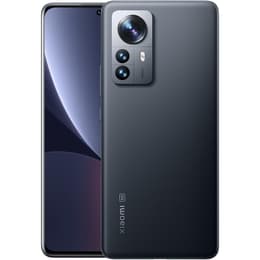
Xiaomi 12T Pro
Xiaomi 12T Pro
Starting at

Refurbished price:201.00

Versus €1,199.00 new

See options
Xiaomi Redmi Note 14 Pro
Starting at

Refurbished price:260.77

Versus €349.99 new

See options

Ratings

The Xiaomi 12T Pro, released in October 2022, and the Xiaomi Redmi Note 14 Pro, launched in January 2025, represent different segments and generations within Xiaomi's smartphone lineup. While both devices offer high-resolution main cameras and vibrant displays, the 12T Pro emphasizes flagship-level performance, whereas the Redmi Note 14 Pro focuses on delivering a balanced experience with enhanced durability features for its segment. Both operate on Android with Xiaomi's custom interface, HyperOS on the newer Redmi Note 14 Pro and MIUI on the 12T Pro.

Scores

Durability

When considering the long-term usability of these smartphones, their release timelines and software support policies are key factors.

  • Release Timeline: The Xiaomi 12T Pro was introduced in October 2022, making it an older device compared to the Redmi Note 14 Pro, which launched in January 2025. This age difference inherently impacts their remaining software support and overall practical lifespan.
  • Software Longevity: The Xiaomi 12T Pro was promised three major Android OS updates, concluding with Android 15, and four years of security updates from its launch. The Redmi Note 14 Pro, being newer, is expected to receive three Android OS updates, reaching Android 17, and four years of security patches. This means the Redmi Note 14 Pro will likely receive software support for a longer duration.
  • Durability Features: The 12T Pro features Corning Gorilla Glass 5 on its front and has an IP53 rating for dust and splash resistance. The Redmi Note 14 Pro steps up with Corning Gorilla Glass Victus 2 protection and an IP68/IP69 rating, indicating a higher level of resistance against dust and water ingress.

Year of Release

2022

2025

OS

Android

Android

Foldable

No

No

Performance

The performance capabilities of these two devices are influenced by their respective processors and system optimizations, impacting how smoothly they handle various tasks.

  • Processing Power: The Xiaomi 12T Pro is equipped with a processor designed for demanding applications and intensive multitasking, allowing for smooth operation even with graphically rich games and complex software. The Redmi Note 14 Pro utilizes a processor that provides stable performance for everyday use, social media, and moderate gaming, though some users have reported occasional software-related lag or heating during simple tasks.
  • Storage and Responsiveness: Both devices offer ample storage options, with the 12T Pro available in 128GB or 256GB configurations, and the Redmi Note 14 Pro extending to 512GB in some variants. The 12T Pro's internal storage technology contributes to faster app loading and data transfer speeds.
  • Multitasking Efficiency: With up to 12GB of RAM available in both models, both phones are capable of managing multiple applications simultaneously without significant slowdowns. However, the 12T Pro's more powerful processor generally provides a more consistent and responsive experience under heavy loads.

Memory (GB)

8 GB

8 GB

Screen quality

Both smartphones feature large, vibrant displays, but there are distinctions in their brightness and protective layers.

  • Display Technology and Clarity: Both the Xiaomi 12T Pro and the Redmi Note 14 Pro feature 6.67-inch AMOLED displays with a 120Hz refresh rate, offering smooth scrolling and vivid visuals. They share a similar resolution of 1220x2712 pixels, resulting in sharp and clear images.
  • Brightness and Outdoor Visibility: The Redmi Note 14 Pro offers a significantly higher peak brightness of up to 3000 nits, or 2500 cd/m², compared to the 12T Pro's 900 nits peak brightness. This difference means the Redmi Note 14 Pro's screen will be more easily viewable in bright outdoor conditions.
  • Screen Protection: The 12T Pro uses Corning Gorilla Glass 5 for screen protection. The Redmi Note 14 Pro features the newer Corning Gorilla Glass Victus 2, providing enhanced durability against drops and scratches.

Resolution

1220 x 2712

1080x2400

Audiovisual

Both devices highlight their main camera capabilities, but their overall camera systems and video performance present notable differences.

  • Main Camera Performance: Both the Xiaomi 12T Pro and the Redmi Note 14 Pro feature a 200-megapixel main camera with optical image stabilization (OIS), capable of capturing detailed photos, especially in good lighting conditions. The 12T Pro's main camera is noted for its ability to capture detail from faraway subjects and perform well in low light. The Redmi Note 14 Pro's main sensor is also praised for sharp, detailed stills and good dynamic range in daylight.
  • Secondary Cameras and Video: Both phones include an 8-megapixel ultrawide camera and a 2-megapixel macro camera. User reviews for both devices often indicate that these secondary lenses are less capable than the main sensor, with the macro camera particularly noted as being of limited utility. For video recording, the 12T Pro supports up to 8K at 24fps or 4K at 60fps. In contrast, while some specifications for the Redmi Note 14 Pro suggest 4K@30fps video, many user reports indicate that video recording is often limited to 1080p at 60fps or even 30fps, with concerns about stabilization and overall quality.
  • Front Camera: Both devices are equipped with a 20-megapixel front-facing camera. The 12T Pro's front camera is noted for detailed and accurately colored shots, though some users have observed a persistent beauty filter.

Front camera

20 megapixels

32 MP

Miscellaneous

Beyond core specifications, several practical features contribute to the overall user experience of these smartphones.

  • Connectivity and Ports: Both the 12T Pro and Redmi Note 14 Pro support 5G connectivity, Wi-Fi, and Bluetooth, ensuring modern wireless communication capabilities. Both devices feature a USB-C port for charging and data transfer. Neither phone includes a traditional 3.5mm headphone jack.
  • Biometrics and Audio: Both smartphones incorporate an in-display fingerprint sensor for secure unlocking. The Xiaomi 12T Pro features stereo speakers tuned by Harman Kardon with Dolby Atmos support, providing a rich audio experience. The Redmi Note 14 Pro also has loudspeakers, but specific audio enhancements like Harman Kardon tuning are not consistently highlighted in its specifications.
  • Build Materials and Handling: The 12T Pro has a glass front (Gorilla Glass 5) and a glass back, with a plastic frame. The Redmi Note 14 Pro features Gorilla Glass Victus 2 on the front and some variants offer a vegan leather finish on the back, contributing to a modern feel. The dimensions and weight of both phones are comparable, offering a similar handling experience for users accustomed to larger smartphones.

Weight

204 g

180 g

Screen size (in)

6.67

6.67

Network

5G

4G

SIM card

Dual Physical SIM

Dual Physical SIM

Carrier compatibility

Unlocked

Unlocked

The Xiaomi 12T Pro and the Xiaomi Redmi Note 14 Pro cater to slightly different user priorities, reflecting their respective release timelines and market positioning. The 12T Pro, while older, is often praised by users for its robust performance, fast charging capabilities, and a main camera that delivers strong still images. Its display is also a consistent highlight, offering a vibrant viewing experience. Criticisms sometimes point to its less impressive secondary cameras and the absence of wireless charging.

The Redmi Note 14 Pro, as a newer device, brings enhanced durability with Gorilla Glass Victus 2 and a higher IP rating, alongside a brighter display. Users generally appreciate its main camera for stills and its overall build quality. However, a recurring concern among users is the video recording capability, with many reporting limitations to 1080p and issues with stabilization, despite some specifications suggesting 4K. Some users have also noted software inconsistencies and occasional performance hiccups.

Users prioritizing raw processing power and high-resolution video recording from the main camera may find the Xiaomi 12T Pro better suited to their needs. Those who value a newer device with enhanced physical durability, a brighter screen for outdoor use, and a longer software support window may lean towards the Redmi Note 14 Pro. Both devices offer a quality-assured refurbished option, providing an eco-friendly alternative for consumers.


See all articles

Our recent comparisons