

iPhone 11 Vs Xiaomi 12T Pro

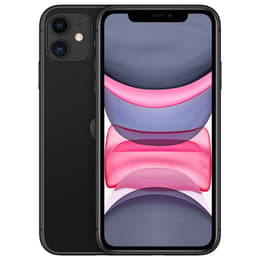
iPhone 11
iPhone 11
Starting at

Refurbished price:153.79

Versus €639.00 new

See options
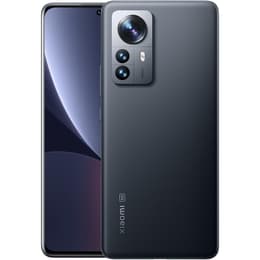
Xiaomi 12T Pro
Xiaomi 12T Pro
Starting at

Refurbished price:201.00

Versus €1,199.00 new

See options

Ratings

The iPhone 11, released in September 2019, is a prominent model from Apple's smartphone lineup, known for its balanced features and iOS ecosystem. In contrast, the Xiaomi 12T Pro, launched in October 2022, represents a more recent Android device, emphasizing high-resolution imaging and rapid charging capabilities. These two smartphones offer distinct experiences, primarily differing in their operating systems, display technology, and camera philosophies.

Scores

Durability

When considering the practical lifespan of these devices, their release timelines and software support policies are key factors.

  • Release and Software Support: The iPhone 11, launched in September 2019, typically receives iOS updates for approximately five to six years from its release, meaning it could continue to receive major iOS versions until around 2024 or 2025. The Xiaomi 12T Pro, released in October 2022, is expected to receive three major Android OS updates, bringing it up to Android 15, and four years of security patches, likely extending its support until late 2026.
  • Physical Durability: The iPhone 11 features an IP68 rating for water and dust resistance, indicating it can withstand submersion in up to 2 meters of water for 30 minutes. It is constructed with a glass front and back, framed by aluminum. The Xiaomi 12T Pro has an IP53 rating, offering dust and splash resistance. Its build includes a Corning Gorilla Glass 5 front, a glass back, and an aluminum frame.
  • User Longevity: Users of the iPhone 11 often report that the device remains functional and performs well for everyday tasks several years after its release, with some finding it still usable in 2024 and 2025. The Xiaomi 12T Pro, being a newer device, is anticipated to offer robust performance and reliability for a comparable period within its update cycle.

Year of Release

2019

2022

Compatible with latest Update

Yes

Yes

OS

iOS

Android

Foldable

No

No

Performance

The performance of a smartphone is largely determined by its internal components and how efficiently its software utilizes them for daily tasks and demanding applications.

  • Processing Power: The iPhone 11 is equipped with a processor that, at its release, offered strong performance for a wide range of applications and multitasking. Users have consistently noted its smooth operation and responsiveness for general use, even several years after its launch. The Xiaomi 12T Pro incorporates a more recent and powerful processor, designed to handle current demanding applications, intensive gaming, and complex multitasking with ease and efficiency.
  • Memory and Storage: The iPhone 11 typically comes with 4GB of RAM and offers storage options of 64GB, 128GB, or 256GB. The Xiaomi 12T Pro provides configurations with 8GB or 12GB of RAM and storage options of 128GB or 256GB, allowing for more applications to run simultaneously and larger files to be stored.
  • Real-world Responsiveness: While the iPhone 11 maintains good speed for its age, the Xiaomi 12T Pro's newer processing unit and higher RAM capacity contribute to quicker app loading times, smoother transitions, and a more fluid experience when switching between multiple heavy applications.

Memory (GB)

4 GB

8 GB

Screen quality

The display is a primary interface for user interaction, and both devices offer different visual experiences.

  • Display Technology and Resolution: The iPhone 11 features a 6.1-inch Liquid Retina IPS LCD display with a resolution of 1792 x 828 pixels, resulting in a pixel density of 326 pixels per inch (PPI). This LCD panel provides accurate colors and good viewing angles. The Xiaomi 12T Pro boasts a larger 6.67-inch AMOLED display with a higher resolution of 2712 x 1220 pixels, achieving a pixel density of 446 PPI. AMOLED technology typically offers deeper blacks and higher contrast ratios compared to LCDs.
  • Brightness and Refresh Rate: The iPhone 11 has a typical maximum brightness of 625 nits, which is suitable for most indoor and outdoor conditions. The Xiaomi 12T Pro offers a typical brightness of 500 nits, with a peak brightness of 900 nits, enhancing visibility in bright sunlight and improving HDR content viewing. Additionally, the Xiaomi 12T Pro features a 120Hz refresh rate, providing a smoother scrolling and animation experience compared to the iPhone 11's standard 60Hz refresh rate.
  • Visual Enhancements: The iPhone 11 includes True Tone technology, which adjusts the display's white balance to match ambient light. The Xiaomi 12T Pro supports Dolby Vision and HDR10+, offering enhanced dynamic range and color reproduction for compatible content.

Resolution

828 x 1792

1220 x 2712

Screen type

Liquid Retina IPS LCD

AMOLED

Audiovisual

Camera capabilities are a significant consideration for many users, and these devices approach photography with different hardware and software strengths.

  • Rear Camera Systems: The iPhone 11 features a dual 12-megapixel camera system, comprising a wide-angle lens with an f/1.8 aperture and optical image stabilization, and an ultra-wide-angle lens with an f/2.4 aperture. It includes Night mode for improved low-light photography. The Xiaomi 12T Pro is equipped with a triple camera setup, highlighted by a 200-megapixel wide-angle main sensor with an f/1.7 aperture and optical image stabilization. It also includes an 8-megapixel ultra-wide-angle lens and a 2-megapixel macro lens.
  • Photography Performance: The iPhone 11 is recognized for its consistent image quality in various lighting conditions, with users praising its Night mode and overall reliability. The Xiaomi 12T Pro's high-megapixel main sensor is capable of capturing highly detailed images, particularly in good lighting. However, its ultra-wide and macro lenses are generally considered less capable than the main sensor.
  • Video Recording and Front Camera: Both devices offer 4K video recording at up to 60 frames per second from their main rear cameras. The Xiaomi 12T Pro also supports 8K video recording at 24 frames per second. For selfies, the iPhone 11 has a 12-megapixel front camera capable of 4K video at 60fps. The Xiaomi 12T Pro features a 20-megapixel front camera, which users find capable for selfies.

Main camera

12 megapixels

200 megapixels

Front camera

12 megapixels

20 megapixels

Miscellaneous

Beyond core features, several practical elements contribute to the overall user experience and daily usability of a smartphone.

  • Connectivity and Ports: The iPhone 11 supports 4G LTE connectivity and utilizes Apple's proprietary Lightning port for charging and data transfer. The Xiaomi 12T Pro offers more modern connectivity options, including 5G and Wi-Fi 6, and features a universal USB-C port.
  • Biometric Security and Audio: The iPhone 11 relies on Face ID for secure facial recognition. The Xiaomi 12T Pro provides both an in-display fingerprint sensor and face unlock for biometric authentication. For audio, the Xiaomi 12T Pro includes stereo speakers with tuning by Harman Kardon, enhancing the media consumption experience.
  • Physical Characteristics: The iPhone 11 measures 150.9 x 75.7 x 8.3 mm and weighs 194 grams. The Xiaomi 12T Pro is slightly larger and heavier at 163.1 x 75.9 x 8.6 mm and 205 grams, which can impact one-handed use and pocketability.

Weight

194 g

204 g

Screen size (in)

6.1

6.67

Network

4G

5G

SIM card

Physical SIM + eSIM

Dual Physical SIM

Carrier compatibility

Unlocked

Unlocked

User feedback for the iPhone 11 often highlights its enduring performance, reliable battery life, particularly in standby, and a camera system that continues to deliver satisfactory results for its age. Common criticisms include its older LCD display technology and the limitations of its proprietary Lightning port for universal connectivity.

The Xiaomi 12T Pro receives praise for its powerful processing capabilities, exceptionally fast charging, and a vibrant, high-refresh-rate AMOLED display. However, some users note that while the main camera is impressive, the secondary ultra-wide and macro lenses are less capable, and there have been occasional concerns regarding software update consistency.

Users prioritizing a familiar, long-supported operating system, consistent performance for everyday tasks, and a balanced camera system without needing the absolute latest features may find the iPhone 11 well-suited to their needs. Conversely, users who prioritize a modern, high-refresh-rate AMOLED display, cutting-edge processing power for gaming and demanding applications, and extremely fast charging will likely find the Xiaomi 12T Pro aligns better with their preferences. Both devices, when purchased as quality-assured refurbished options, offer an eco-friendly alternative to buying new, extending their lifecycle and providing excellent value.


See all articles

Our recent comparisons




