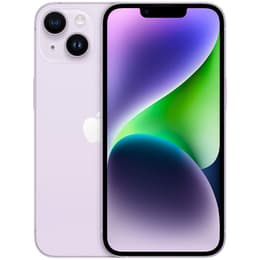
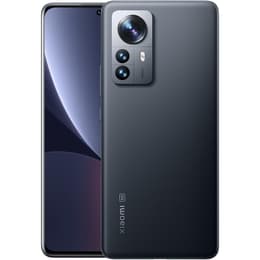

iPhone 14 Vs Xiaomi 12T Pro

iPhone 14
iPhone 14
Starting at

Refurbished price:287.25

Versus €759.00 new

See options
Xiaomi 12T Pro
Xiaomi 12T Pro
Starting at

Refurbished price:201.00

Versus €1,199.00 new

See options

Ratings

The iPhone 14, released in September 2022, and the Xiaomi 12T Pro, launched in October 2022, are contemporary smartphones that offer distinct approaches to mobile technology. While the iPhone 14 operates on Apple's iOS ecosystem, the Xiaomi 12T Pro runs on Android with Xiaomi's MIUI overlay. Key differentiators include their camera systems, display technologies, and overall performance philosophies, catering to different user preferences.

Scores

Durability

The longevity of a smartphone is influenced by its release timeline, software support, and repairability.

  • Software Updates: The iPhone 14, running on iOS, typically receives major operating system updates for approximately five to six years from its release date, offering extended software support. The Xiaomi 12T Pro, launched with Android 12, is promised three major Android OS updates, extending to Android 15, and four years of security updates.
  • Repairability: Initially, the iPhone 14 was noted for improved hardware accessibility, particularly for back glass repairs. However, its repairability score was later adjusted to reflect challenges posed by part-pairing software limitations, which can restrict functionality with unauthorized components. The Xiaomi 12T Pro has received a repairability score indicating good accessibility for repairs.
  • Practical Lifespan: Both devices are built to last, but the iPhone 14's longer expected software update cycle may offer a slightly extended period of full feature compatibility and security. The Xiaomi 12T Pro's robust build and decent repairability score also contribute to a considerable practical lifespan.

Year of Release

2022

2022

Compatible with latest Update

Yes

Yes

OS

iOS

Android

Foldable

No

No

Performance

Performance in daily use, from app handling to gaming, is a critical aspect where these devices showcase their capabilities.

  • System Responsiveness: The iPhone 14 delivers a consistently smooth and responsive user experience, handling demanding applications and multitasking with ease. The Xiaomi 12T Pro, equipped with a powerful current-generation processor, also provides a fluid experience for everyday tasks and high-performance gaming, demonstrating efficient thermal management during intensive use.
  • Multitasking and Storage: The iPhone 14 comes with 6GB of RAM, supporting efficient multitasking. Storage options for the iPhone 14 range from 128GB to 512GB. The Xiaomi 12T Pro offers configurations with 8GB or 12GB of RAM, providing ample capacity for heavy multitasking, and storage options of 128GB or 256GB.
  • Battery Behavior: The iPhone 14 is designed for all-day battery use, offering up to 20 hours of video playback. The Xiaomi 12T Pro features a larger battery capacity, providing excellent endurance with up to 13.5 hours of screen-on time in tests. It also supports exceptionally fast charging, capable of reaching a full charge in under 20 minutes.

Memory (GB)

6 GB

8 GB

Screen quality

The visual experience is largely defined by the display, with differences in technology, resolution, and refresh rates impacting clarity and smoothness.

  • Display Technology and Clarity: The iPhone 14 features a 6.1-inch Super Retina XDR OLED display, known for its deep blacks and vibrant colors, with a resolution of 2532 x 1170 pixels, resulting in sharp visuals. The Xiaomi 12T Pro boasts a larger 6.67-inch AMOLED DotDisplay with a 1.5K resolution (1220x2712 pixels), offering high clarity and supporting HDR10+ and Dolby Vision for an immersive viewing experience.
  • Brightness and Outdoor Visibility: Both devices offer good brightness levels. The iPhone 14 provides 800 nits of typical brightness and can reach 1200 nits for HDR content. The Xiaomi 12T Pro has a typical brightness of 500 nits, with a peak brightness of 900 nits in auto mode, ensuring good visibility in various lighting conditions.
  • Refresh Rate and Smoothness: The iPhone 14 maintains a standard 60Hz refresh rate, providing a consistent visual flow. The Xiaomi 12T Pro offers a 120Hz adaptive refresh rate, which dynamically adjusts based on content, contributing to smoother scrolling and more fluid animations, particularly noticeable during gaming or fast-paced content consumption.

Resolution

1170 x 2532

1220 x 2712

Screen type

Super Retina XDR OLED

AMOLED

Audiovisual

Camera capabilities are a significant factor for many users, with both devices offering distinct photographic and videographic strengths.

  • Main Camera Performance: The iPhone 14 features an advanced dual-camera system with a 12MP main sensor, delivering strong performance in everyday photography and notable improvements in low-light conditions. The Xiaomi 12T Pro stands out with a 200MP main camera, which excels in capturing fine details and performs well in low-light environments, utilizing pixel-binning technology for enhanced image quality.
  • Ultra-Wide and Macro Lenses: The iPhone 14 includes a 12MP ultra-wide camera, offering a broader field of view. The Xiaomi 12T Pro features an 8MP ultra-wide lens and a 2MP macro camera. User feedback suggests that while the main camera is impressive, the ultra-wide and macro sensors on the Xiaomi 12T Pro are less capable, especially in challenging lighting.
  • Video Recording and Audio: Both phones support high-quality video recording. The iPhone 14 offers 4K Dolby Vision HDR recording and Cinematic Mode. The Xiaomi 12T Pro can record video up to 8K at 24 frames per second. For audio, the Xiaomi 12T Pro features dual speakers tuned by Harman Kardon with Dolby Atmos support, providing a rich media consumption experience.

Main camera

12 megapixels

200 megapixels

Front camera

12 megapixels

20 megapixels

Miscellaneous

Beyond core features, several practical elements contribute to the overall user experience and device utility.

  • Connectivity and Ports: Both devices support 5G connectivity for fast mobile data. The iPhone 14 uses Apple's proprietary Lightning port. The Xiaomi 12T Pro features a USB Type-C 2.0 port and offers dual SIM capabilities, including eSIM support in some regions. Neither device includes a traditional headphone jack.
  • Security and Biometrics: The iPhone 14 relies on Face ID for secure authentication. The Xiaomi 12T Pro incorporates an in-display fingerprint sensor and supports face unlock for convenient access.
  • Build and Durability: The iPhone 14 features a Ceramic Shield front cover and an aluminum frame, with an IP68 rating for splash, water, and dust resistance. The Xiaomi 12T Pro has a Corning Gorilla Glass 5 front and a glass back with a plastic frame, offering IP53 dust and splash resistance. The iPhone 14 is generally lighter at 172 grams, compared to the Xiaomi 12T Pro's 205 grams.

Weight

172 g

204 g

Screen size (in)

6.1

6.67

Network

5G

5G

SIM card

Physical SIM + eSIM

Dual Physical SIM

Carrier compatibility

Unlocked

Unlocked

User feedback for the iPhone 14 often praises its consistent performance, reliable camera system, and the seamless integration within the Apple ecosystem. Some users note that while it's a solid device, the performance upgrade from its direct predecessor might feel incremental. The Xiaomi 12T Pro is frequently lauded for its impressive 200MP main camera, exceptionally fast charging, and robust battery life. Criticisms sometimes point to the less capable ultra-wide and macro cameras, and the absence of wireless charging or a higher official IP rating.

Users prioritizing a long software support timeline, a highly integrated ecosystem, and a compact form factor may find the iPhone 14 well-suited to their needs. Those who value cutting-edge camera resolution, rapid charging speeds, a larger display with a high refresh rate, and the flexibility of the Android operating system might lean towards the Xiaomi 12T Pro. Both devices offer compelling features for different user profiles. For those considering a more sustainable choice, exploring quality-assured refurbished options for either model can provide an eco-friendly alternative.


See all articles

Our recent comparisons







