

OnePlus 11 Vs Xiaomi 14

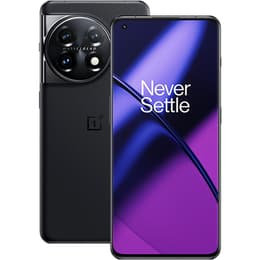
OnePlus 11
OnePlus 11
Starting at

Refurbished price:325.00

Versus €949.00 new

See options
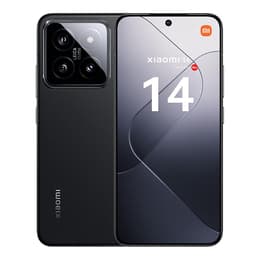
Xiaomi 14
Xiaomi 14
Starting at

Refurbished price:385.00

Versus €1,099.00 new

See options

Ratings

The OnePlus 11 and the Xiaomi 14 are both high-performance Android smartphones, released in consecutive years. The OnePlus 11, launched in early 2023, offers a robust experience with its powerful internals and a focus on display quality and fast charging. The Xiaomi 14, introduced in late 2023 and globally in early 2024, brings a newer generation processor, an enhanced camera system co-engineered with Leica, and a more compact design. Both devices run on Android, with the OnePlus 11 featuring OxygenOS and the Xiaomi 14 utilizing HyperOS, each offering distinct user interfaces and feature sets.

Scores

Durability

The longevity of a smartphone is influenced by its release timeline, software support, and physical durability features.

  • Release Timeline: The OnePlus 11 was released in early 2023, while the Xiaomi 14 followed in late 2023, with its global launch in early 2024. This means the Xiaomi 14 benefits from a slightly newer hardware generation. [1, 3, 7, 14]
  • Software Support: Both devices are committed to receiving four major Android operating system updates and five years of security updates from their respective launch dates. The OnePlus 11 launched with Android 13 and is expected to receive updates through Android 17. The Xiaomi 14 launched with Android 14, ensuring it will also receive a similar duration of software support. [1, 4, 7, 39]
  • Physical Durability: The OnePlus 11 features Corning Gorilla Glass Victus on its display and Gorilla Glass 5 on the back, with an aluminum frame, and carries an IP54 rating for splash resistance. The Xiaomi 14 steps up with Gorilla Glass Victus 2 on both the front and back, an aluminum alloy body, and a more comprehensive IP68 rating, indicating greater resistance to dust and water immersion. [10, 18, 19, 21, 29, 43]

Year of Release

2023

2023

OS

Android

Android

Foldable

No

No

Performance

Performance in daily use is a key consideration, encompassing how smoothly applications run, how efficiently the battery operates, and the overall responsiveness of the system.

  • Processing Power: The OnePlus 11 is equipped with a powerful processor from 2023, capable of handling demanding applications and multitasking with ease. The Xiaomi 14 features a newer generation processor from 2024, which provides enhanced performance for intensive tasks, gaming, and AI-powered applications, often with improved thermal management. [1, 7, 9, 11, 21, 25]
  • Battery Behavior: The OnePlus 11 houses a 5000 mAh battery, generally providing a full day of use for many users, with some reporting even longer durations under moderate usage. The Xiaomi 14 has a 4610 mAh battery, which, despite being slightly smaller, is optimized for efficiency and often delivers a full day of usage, with some users noting strong battery management. [1, 2, 9, 12, 17, 21, 23, 26, 29]
  • System Responsiveness: Both devices offer configurations with ample RAM, ranging from 8GB to 16GB, ensuring smooth multitasking and quick app switching. The OnePlus 11 offers storage options up to 256GB globally, while the Xiaomi 14 provides more expansive storage options, including up to 1TB in some configurations, utilizing faster UFS 4.0 storage for quicker data access. [1, 11, 17, 18]

Memory (GB)

16 GB

16 GB

Screen quality

The display is a primary interface for user interaction, and both devices offer high-quality viewing experiences with distinct characteristics.

  • Display Technology and Size: The OnePlus 11 features a larger 6.7-inch LTPO AMOLED display, offering a spacious viewing area. The Xiaomi 14 comes with a slightly more compact 6.36-inch LTPO OLED display, which some users may find easier for one-handed use. Both displays utilize LTPO technology, allowing for adaptive refresh rates. [1, 11, 14, 19]
  • Resolution and Clarity: The OnePlus 11 boasts a QHD+ resolution of 1440 x 3216 pixels, resulting in a high pixel density of 525 ppi for sharp visuals. The Xiaomi 14 offers a resolution of 1200 x 2670 pixels, providing excellent clarity with a pixel density of 460 ppi. [1, 7, 14, 19]
  • Brightness and Refresh Rate: Both phones feature a 120Hz adaptive refresh rate for smooth scrolling and responsiveness. However, the Xiaomi 14's display can reach a significantly higher peak brightness of up to 3000 nits, making it exceptionally legible in bright outdoor conditions, compared to the OnePlus 11's peak brightness of around 1300 nits. Both support HDR10+ and Dolby Vision for enhanced color and contrast. [1, 7, 11, 16, 19, 21]

Resolution

1440 x 3216

1200 x 2670

Audiovisual

The camera systems on both smartphones are designed to capture high-quality images and videos, each with unique strengths and tuning.

  • Rear Camera Systems: The OnePlus 11 features a triple camera setup co-developed with Hasselblad, including a 50 MP main sensor with optical image stabilization (OIS), a 48 MP ultrawide lens with autofocus, and a 32 MP telephoto lens offering 2x optical zoom. The Xiaomi 14 also has a triple camera system, co-engineered with Leica, comprising a 50 MP main sensor with OIS, a 50 MP ultrawide lens, and a 50 MP telephoto lens with 3.2x optical zoom, providing greater reach. [1, 7, 8, 17, 21, 23, 25, 34, 35]
  • Photography Performance: The OnePlus 11's main camera delivers detailed and color-accurate photos in good lighting, with solid low-light performance. Its ultrawide can be slightly softer, and the 2x telephoto is effective for portraits. The Xiaomi 14's Leica-tuned cameras are praised for their rich detail, dynamic range, and aesthetic color science, particularly excelling in various lighting conditions and offering a distinct photographic style. [9, 21, 23, 25, 26, 29, 35]
  • Video and Front Camera: Both devices are capable of recording video up to 8K resolution at 24 frames per second. For selfies, the OnePlus 11 has a 16 MP front camera, while the Xiaomi 14 features a higher-resolution 32 MP front camera, capable of recording 4K video at 30fps, which can be beneficial for video calls and vlogging. [1, 7, 13, 17, 21, 26, 35, 40]

Miscellaneous

Beyond core performance, several practical features contribute to the overall user experience and device utility.

  • Connectivity and Ports: Both smartphones support 5G connectivity and modern Wi-Fi standards for fast internet access. The OnePlus 11 uses Bluetooth 5.3, while the Xiaomi 14 features the slightly newer Bluetooth 5.4. Both devices utilize a USB-C port for charging and data transfer, and neither includes a traditional 3.5mm headphone jack. The Xiaomi 14 also includes an infrared blaster, which can be used to control various home appliances. [1, 11, 19]
  • Biometrics and Build: Both phones incorporate under-display fingerprint sensors for secure unlocking. The OnePlus 11 is slightly larger and heavier, measuring 163.1 x 74.1 x 8.5 mm and weighing 205g. The Xiaomi 14 offers a more compact and lighter form factor at 152.8 x 71.5 x 8.2 mm and 193g, which may appeal to users preferring a smaller device. The OnePlus 11 includes a physical alert slider, a signature feature for quick sound profile changes. [1, 10, 18, 19, 21, 29]
  • Charging Capabilities: The OnePlus 11 supports rapid wired charging at 100W (International) or 80W (USA), allowing for very quick recharges. The Xiaomi 14 offers 90W wired charging, which is also very fast, and additionally supports 50W wireless charging and 10W reverse wireless charging, providing more versatile charging options. [1, 11, 17, 19, 21, 27]

Weight

205 g

188 g

Screen size (in)

6.7

6.36

Network

5G

5G

SIM card

Physical SIM

Dual Physical SIM

Carrier compatibility

Unlocked

Unlocked

User feedback for the OnePlus 11 often highlights its strong battery life, exceptionally fast wired charging, and smooth overall performance. Many appreciate its vibrant display and the consistent software experience offered by OxygenOS, despite some criticisms regarding its evolution from a more minimalist approach. The camera system is generally considered solid for everyday use, though some users note that the telephoto capabilities are not class-leading compared to some rivals. [12, 23, 29, 33]

The Xiaomi 14 receives significant praise for its advanced camera system, co-engineered with Leica, often described as producing exceptional photos with a distinctive aesthetic. Its powerful, newer-generation processor delivers impressive performance for all tasks, and the display is lauded for its extreme brightness and clarity. Users also appreciate its compact design and versatile charging options, including fast wireless charging. Some common feedback points to the HyperOS software having a rich feature set that can sometimes feel overwhelming. [9, 21, 25, 26, 27]

Users prioritizing a larger display, a slightly bigger battery, and very fast wired-only charging may find the OnePlus 11 well-suited to their needs. It offers a reliable and powerful experience for general use and gaming. Conversely, users who place a high premium on camera performance, a more compact and lighter design, a brighter display for outdoor visibility, and the convenience of wireless charging, along with a higher water and dust resistance rating, may lean towards the Xiaomi 14. Both devices represent strong choices in the Android smartphone market, and considering a quality-assured refurbished option can be a sustainable choice for either model.


See all articles

Our recent comparisons