


Google Pixel 8 Pro Vs Xiaomi Redmi Note 13 Pro

Google Pixel 8 Pro
Google Pixel 8 Pro
Starting at

Refurbished price:293.00

Versus €1,099.00 new

See options
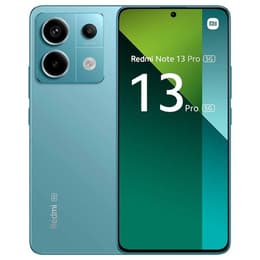
Xiaomi Redmi Note 13 Pro
Starting at

Refurbished price:179.00

Versus €349.00 new

See options

Ratings

The Google Pixel 8 Pro, released in October 2023, and the Xiaomi Redmi Note 13 Pro 5G, launched globally in January 2024, are both modern smartphones running on the Android operating system. While the Pixel 8 Pro positions itself as a premium device with a strong focus on advanced computational photography and long-term software support, the Redmi Note 13 Pro 5G offers a balanced package with a high-resolution main camera and a vibrant display, catering to users seeking capable performance in everyday use.

Scores

Durability

The longevity of a smartphone is influenced by its build quality, software support, and ease of repair. Both devices offer different approaches to durability and long-term usability.

  • Software Support: The Google Pixel 8 Pro stands out with an industry-leading commitment to seven years of OS and security updates, extending its software lifespan until 2030. In contrast, the Xiaomi Redmi Note 13 Pro 5G is slated to receive three Android OS upgrades and four years of security updates, with support expected until January 2028.
  • Physical Durability: The Pixel 8 Pro features Gorilla Glass Victus 2 on both its front and back, along with an IP68 rating for dust and water resistance, indicating a high level of protection against environmental elements. The Redmi Note 13 Pro 5G uses Gorilla Glass Victus for its display and carries an IP54 rating, offering resistance against dust and splashes.
  • Repairability: The Pixel 8 Pro has been noted for a good repairability score, with some assessments placing it around 7 out of 10, similar to other high-end devices. The Redmi Note 13 Pro 5G has an excellent repairability index of 8.2 out of 10, suggesting easier access to parts and simpler disassembly for common repairs.

Year of Release

2023

2023

Compatible with latest Update

Yes

Yes

Foldable

No

No

Performance

Performance in a smartphone encompasses how smoothly it handles daily tasks, demanding applications, and multitasking. Both devices are equipped to deliver a responsive user experience, though with different underlying capabilities.

  • Processing Power: The Google Pixel 8 Pro is powered by a current-generation processor designed by Google, which excels in AI-driven tasks and provides robust performance for demanding applications and gaming. The Xiaomi Redmi Note 13 Pro 5G features a capable mid-range processor that handles everyday apps and multitasking smoothly, providing a balanced performance for general use.
  • Memory and Storage: The Pixel 8 Pro comes with 12GB of RAM, ensuring fluid multitasking and app switching, and offers storage options up to 1TB. The Redmi Note 13 Pro 5G is available with 8GB or 12GB of RAM and storage options up to 512GB, which is ample for most users' needs.
  • Battery Performance: The Pixel 8 Pro houses a 5050 mAh battery, typically providing a full day of use for most users, even with heavy activity. The Redmi Note 13 Pro 5G is equipped with a slightly larger 5100 mAh battery, often lasting a day and a half on a single charge for average usage.

Memory (GB)

12 GB

8 GB

Screen quality

The display is a primary interface for smartphone interaction, and both models offer high-quality viewing experiences with distinct characteristics.

  • Display Technology and Clarity: The Google Pixel 8 Pro features a 6.7-inch LTPO OLED display with a resolution of 1344 x 2992 pixels, offering sharp visuals, deep blacks, and vibrant colors. The Xiaomi Redmi Note 13 Pro 5G sports a 6.67-inch AMOLED display with a resolution of 1220 x 2712 pixels, providing clear and detailed images.
  • Brightness and Refresh Rate: The Pixel 8 Pro's display can reach a peak brightness of 2400 nits, making it highly visible even in bright outdoor conditions, and features a 120Hz adaptive refresh rate for smooth scrolling and responsiveness. The Redmi Note 13 Pro 5G offers a peak brightness of 1800 nits and also has a 120Hz refresh rate, contributing to a fluid visual experience.
  • Viewing Experience: Both devices provide immersive viewing experiences suitable for media consumption and daily tasks. The Pixel 8 Pro's higher peak brightness and slightly higher resolution contribute to its premium display characteristics.

Resolution

1344 x 2992

1220 x 2712

Screen type

LTPO OLED

AMOLED

Audiovisual

Camera capabilities are a significant factor for many smartphone users, and both devices offer distinct photographic strengths.

  • Rear Camera System: The Google Pixel 8 Pro features a versatile triple-camera setup, including a 50MP main sensor, a 48MP ultrawide lens, and a 48MP telephoto lens with 5x optical zoom. It is renowned for its computational photography, delivering consistent and high-quality images across various conditions, including impressive low-light performance. The Xiaomi Redmi Note 13 Pro 5G boasts a 200MP main camera with optical image stabilization, an 8MP ultrawide lens, and a 2MP macro sensor. Its main camera captures highly detailed photos, especially in good lighting.
  • Video Recording: The Pixel 8 Pro supports 4K video recording at up to 60 frames per second, offering advanced stabilization and features for video creators. The Redmi Note 13 Pro 5G can record 4K video at 30 frames per second.
  • Audio Experience: Both phones provide a good media consumption experience. The Pixel 8 Pro offers clear audio output, while the Redmi Note 13 Pro 5G includes dual stereo speakers with Dolby Atmos support and retains a 3.5mm headphone jack, which can be a benefit for users with wired audio accessories.

Main camera

50 megapixels

200 megapixels

Front camera

10.5 megapixels

16 megapixels

Miscellaneous

Beyond core specifications, several practical features and design elements contribute to the overall user experience of these smartphones.

  • Connectivity and Ports: The Google Pixel 8 Pro supports Wi-Fi 7 and Bluetooth 5.3, offering advanced wireless connectivity, and features a USB-C 3.2 port. The Xiaomi Redmi Note 13 Pro 5G supports Wi-Fi 5 and Bluetooth 5.2, and includes a USB-C 2.0 port along with a 3.5mm headphone jack.
  • Biometric Security: Both devices incorporate in-display fingerprint sensors for secure unlocking. The Pixel 8 Pro also offers reliable face recognition.
  • Design and Handling: The Pixel 8 Pro has dimensions of 162.6 x 76.5 x 8.8 mm and weighs 213g, featuring a premium build with an aluminum frame and glass back. The Redmi Note 13 Pro 5G is slightly more compact and lighter at 161.2 x 74.2 x 8 mm and 187g, with a plastic frame and glass front.

Weight

213 g

187 g

Screen size (in)

6.7

6.67

Network

5G

5G

SIM card

Physical SIM + eSIM

Dual Physical SIM

Carrier compatibility

Unlocked

Unlocked

User feedback for the Google Pixel 8 Pro frequently praises its exceptional camera performance, particularly its computational photography capabilities and AI-driven editing tools. Users also appreciate its vibrant display and the promise of extended software updates. Some common criticisms include its performance in graphically intensive games and occasional battery inconsistencies for very heavy users.

The Xiaomi Redmi Note 13 Pro 5G is often lauded for its impressive 200MP main camera, bright AMOLED display, and strong battery life that can extend beyond a single day. Users also value the inclusion of a 3.5mm headphone jack. However, some feedback points to less impressive performance from its secondary cameras and the presence of pre-installed third-party applications.

Users prioritizing a cutting-edge camera system, long-term software support, and a premium build will find the Google Pixel 8 Pro well-suited to their needs. Its advanced AI features and robust performance cater to those who want the latest technological innovations. Conversely, users who prioritize a high-resolution main camera, extended battery life, and the convenience of a headphone jack, while still seeking a capable and visually appealing device, may lean toward the Xiaomi Redmi Note 13 Pro 5G. Both devices offer compelling features for different user profiles, and considering a quality-assured refurbished option can be an eco-friendly alternative for either model.


See all articles

Our recent comparisons