

Compare models

Galaxy S21 5G Vs Google Pixel 9 Pro XL

  • 1-year minimum warranty
  • Free delivery on all orders
  • Free 30-day returns
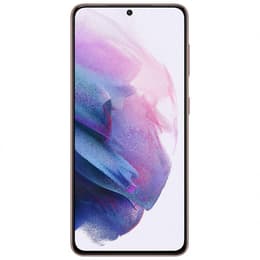
Galaxy S21 5G
Starting at

Refurbished price:€207.00

Versus €999.00 new

See options
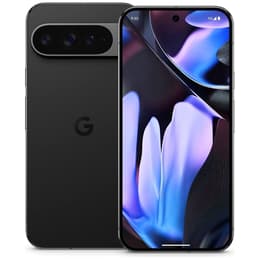
Google Pixel 9 Pro XL
Starting at

Refurbished price:€520.97

Versus €1,298.07 new

See options

Differences at a glance

The Samsung Galaxy S21 5G (2021) and the Google Pixel 9 Pro XL (2024) represent different generations and philosophies within the Android smartphone market. While the Galaxy S21 5G delivers a compact and streamlined mobile experience from an earlier hardware cycle, the Google Pixel 9 Pro XL introduces a larger form factor with advanced modern processing capabilities. Both devices run the Android operating system, though they offer distinct interface designs and software ecosystems. Understanding their practical differences helps users choose the device that best matches their daily requirements.

Available Models

Colour

Storage

Scores

Durability

When evaluating longevity and software support, both devices offer distinct timelines based on their respective release years and manufacturer policies.

  • Software support duration: The Google Pixel 9 Pro XL benefits from an extended software update commitment, receiving system updates and security patches for several years beyond the Galaxy S21 5G, which is further along in its support lifecycle.
  • Expected practical lifespan: Users seeking long-term system updates will find the Pixel model well-positioned for future readiness, whereas the Galaxy S21 5G remains a functional choice for medium-term daily utility.
  • Repairability and durability: Both models feature durable glass and metal construction with water resistance ratings, and each can be maintained through standard repair channels when components require replacement.

Year of Release

2021

2024

Performance

Daily performance and multitasking capabilities vary significantly due to the generational gap between the internal hardware of each device.

  • App loading and responsiveness: The Google Pixel 9 Pro XL handles demanding applications, intensive gaming, and split-screen multitasking with noticeable smoothness, supported by modern processing architecture and higher baseline memory.
  • Everyday multitasking: The Galaxy S21 5G manages standard messaging, web browsing, and media streaming reliably, though heavy background tasks may occasionally show its age compared to newer silicon.
  • Battery behavior: The Pixel model includes a larger physical battery capacity paired with power-efficient components, while the Galaxy S21 5G relies on a more compact power cell that typically requires a recharge by the end of a busy day of heavy use.

Screen quality

Display technology has advanced noticeably, offering different visual experiences in terms of size, brightness, and panel responsiveness.

  • Display technology and clarity: Both smartphones utilize vibrant OLED panels that deliver deep blacks and high contrast ratios, though the Google Pixel 9 Pro XL features a noticeably larger screen estate suited for media consumption and document viewing.
  • Outdoor visibility: The Pixel model incorporates a higher peak brightness level, making text and images easier to read under direct sunlight compared to the Galaxy S21 5G.
  • Refresh rate and smoothness: Both devices support high refresh rates for fluid scrolling through web pages and user interfaces, though newer panel technology on the Pixel provides enhanced power efficiency during high-refresh operation.

Audiovisual

Photography and media recording capabilities highlight different approaches to image processing and lens configurations between the two models.

  • Camera system versatility: The Google Pixel 9 Pro XL features an advanced triple-lens array including a dedicated high-resolution telephoto lens, whereas the Galaxy S21 5G relies on a crop-based hybrid zoom approach alongside its main and ultra-wide sensors.
  • Low-light and everyday photography: Both devices capture detailed images in daylight, but the Pixel model utilizes advanced computational photography to retain clarity and balanced lighting in challenging low-light environments.
  • Video and audio output: Video recording on the Pixel benefits from sophisticated stabilization features, and both phones provide clear stereo speaker output suitable for hands-free calls and casual media playback.

Miscellaneous

Practical daily features, physical dimensions, and connectivity options define how each device feels and operates in the hand.

  • Physical dimensions and weight: The Galaxy S21 5G offers a lightweight, compact footprint that is easy to operate with one hand, while the Google Pixel 9 Pro XL features a substantially larger and heavier chassis designed for users who prefer expansive viewing areas.
  • Authentication and ports: Both phones utilize modern biometric security including facial recognition and under-display fingerprint sensors, and rely on standard reversible ports for charging and data transfer.
  • Connectivity standards: Both models support current 5G cellular networks, high-speed Wi-Fi standards, and Bluetooth for reliable accessory pairing.

Screen size (in)

6.2

6.8

Network

5G

5G

SIM card

Dual Physical SIM + eSIM

Physical SIM + eSIM

Carrier compatibility

Unlocked

Unlocked

What the community thinks

User discussions and community feedback indicate that the Galaxy S21 5G is frequently praised for its comfortable one-handed size and dependable daily performance, though some users note that its battery life diminishes under heavy loads. Conversely, the Google Pixel 9 Pro XL receives positive feedback for its expansive display quality and advanced camera versatility, though its larger physical size can feel cumbersome for users with smaller hands. Users prioritizing a compact, easily maneuverable device may prefer the Galaxy S21 5G, while users prioritizing screen space, camera reach, and extended software longevity will lean toward the Google Pixel 9 Pro XL. Exploring a quality-assured refurbished option provides a sustainable choice for acquiring either device while reducing electronic waste. Ultimately, the choice depends on whether physical compactness or modern hardware capabilities align more closely with your daily routine.