

Compare models
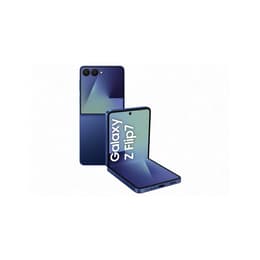
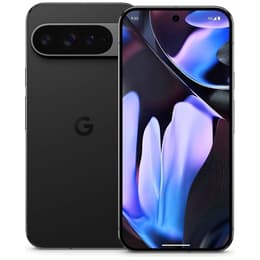
Galaxy Z Flip7 Vs Google Pixel 9 Pro XL
- 1-year minimum warranty
- Free delivery on all orders
- Free 30-day returns
Differences at a glance
The Samsung Galaxy Z Flip7 (2025) and the Google Pixel 9 Pro XL (2024) represent two distinct approaches to modern smartphone design, contrasting a foldable clamshell form factor with a traditional large-screen slate layout. While both devices run on the Android operating system and target users seeking high-end capabilities, they differ fundamentally in physical structure, display formats, and everyday handling.
Available Models
Colour
Storage (GB)
Scores
Durability
Both smartphones offer long-term software support commitments, though their physical durability and hardware designs present different considerations for long-term usage.
- Software longevity: Both manufacturers provide extensive operating system updates spanning multiple years, helping keep security patches and features current over the device's lifespan.
- Physical durability: The Google Pixel 9 Pro XL utilizes a rigid slate construction with reinforced glass, whereas the Galaxy Z Flip7 features a folding internal screen mechanism that requires distinct hinge care over years of daily opening and closing.
- Repairability: Traditional slate handsets like the Pixel generally present more straightforward maintenance procedures compared to modern folding display assemblies.
Year of Release
2025
2024
Compatible with latest Update
Yes
Yes
OS
Android
Android
Foldable
Yes
No
Performance
System responsiveness and everyday processing capabilities support heavy multitasking and demanding applications across both devices, though thermal management and battery distribution differ.
- Multitasking capacity: Generous memory allocations on both models allow seamless switching between numerous active background applications and productivity tools without noticeable stutter.
- Battery behavior: The Pixel 9 Pro XL incorporates a larger physical power cell to sustain its expansive display through a full day of mixed tasks, while the Galaxy Z Flip7 balances a more compact battery capacity with efficient power management for its dual-screen setup.
- Storage configurations: Multiple internal capacity tiers are available on both smartphones to accommodate large media libraries and locally stored documents.
Screen quality
Display characteristics vary significantly between the two models, primarily due to the folding architecture of one and the expansive fixed panel of the other.
- Display technology: Both devices utilize advanced organic light-emitting diode panels that deliver deep contrast levels, rich color reproduction, and high peak brightness for outdoor readability.
- Refresh rate and smoothness: Dynamic refresh rates reaching up to 120Hz ensure fluid scrolling through web pages, animations, and supported gaming applications on both screens.
- Viewing format: The Galaxy Z Flip7 offers a tall internal folding display alongside an external cover screen for quick interactions, whereas the Pixel 9 Pro XL provides a uniform, uninterrupted large-format viewing area.
Resolution
1080x2520
1344 x 2992
Audiovisual
Optics and media capture hardware are tailored to different photography styles, ranging from flexible folding angles to traditional multi-lens setups.
- Camera systems: The Pixel 9 Pro XL features a versatile triple-lens array including a dedicated telephoto zoom lens, while the Galaxy Z Flip7 equips a dual-rear camera configuration that utilizes its folding design for hands-free stationary framing.
- Low-light and video performance: Computational photography processing on both models yields clear low-light imagery and stable high-resolution video recording with effective background noise reduction.
- Audio output: Stereo speaker configurations on both smartphones provide balanced sound delivery for media playback, hands-free calls, and casual video viewing.
Front camera
10 megapixels
42 megapixels
Miscellaneous
Practical everyday features, connectivity standards, and physical dimensions define how each device integrates into travel and professional routines.
- Connectivity and ports: Both handsets support modern 5G networks, fast Wi-Fi standards, and Bluetooth pairing via standard USB-C connection interfaces without legacy headphone jacks.
- Biometrics: Secure device unlocking is handled via facial recognition and responsive fingerprint sensors integrated directly into the display or power keys.
- Physical handling: The Galaxy Z Flip7 folds down into a compact square that slips easily into small pockets, while the Pixel 9 Pro XL offers a wider, traditional slate footprint optimized for two-handed media consumption.
Weight
188 g
221 g
Screen size (in)
6.9
6.8
Network
5G
5G
SIM card
Physical SIM + eSIM
Physical SIM + eSIM
Carrier compatibility
Unlocked
Unlocked
Connector
USB-C
USB-C
What the community thinks
User feedback from online communities highlights distinct preferences for each device based on form factor and everyday utility. Owners of the Galaxy Z Flip7 frequently praise its pocket-friendly folding design, convenient cover screen shortcuts, and unique hands-free photo capabilities, though some note that the internal crease requires getting used to. Conversely, users of the Google Pixel 9 Pro XL often commend its reliable all-day battery endurance, expansive display estate, and advanced computational photo editing features, while mentioning its heavier overall weight in hand.
Users prioritizing pocket space and a compact, innovative folding design may prefer the Galaxy Z Flip7, while users focusing on a traditional large screen, dedicated zoom capabilities, and steady battery longevity will find the Google Pixel 9 Pro XL well-suited to their needs. For those exploring a sustainable choice, a quality-assured refurbished option from Back Market provides a reliable, eco-friendly alternative that extends device life cycles without compromising on performance standards.