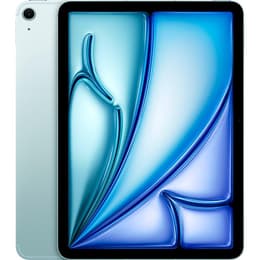



iPad Air 6 (2024, M2 series) Vs Xiaomi Pad 6 (11.0", 2023)

iPad Air 6 (2024, M2 series)
Starting at

Refurbished price:414.00

Versus €729.00 new

See options
Xiaomi Pad 6 (11.0", 2023)
Starting at

Refurbished price:235.39

Versus €699.00 new

See options

Ratings

The iPad Air M2 Series (2024) and the Xiaomi Pad 6 (2023) are two distinct tablet offerings, each designed to cater to different user preferences and ecosystems. The iPad Air M2, released in May 2024, operates on Apple's iPadOS, while the Xiaomi Pad 6, launched in April 2023, runs on Android with Xiaomi's MIUI for Pad interface. Key differentiators include their underlying operating systems, processor architectures, and display technologies, which influence overall user experience and performance capabilities.

Scores

Durability

When considering the long-term usability of these tablets, several factors contribute to their expected practical lifespan, including software support and physical durability.

  • Release Timeline: The iPad Air M2 was released in May 2024, making it a more recent device compared to the Xiaomi Pad 6, which launched in April 2023. This difference in release dates typically translates to a longer period of software support for the newer device.
  • Software Longevity: Apple generally provides extensive iPadOS updates for its devices, often spanning five to six years or more from the release date. The iPad Air M2 launched with iPadOS 17 and has already seen updates to iPadOS 26.4. In contrast, the Xiaomi Pad 6, initially running Android 13 with MIUI for Pad 14, is expected to receive fewer major Android updates. While it has been updated to Android 14-based HyperOS, it is not anticipated to receive Android 15.
  • Build Quality: Both tablets feature robust constructions. The iPad Air M2 utilizes a recycled aluminum enclosure, contributing to its durability. The Xiaomi Pad 6 also boasts an aluminum unibody design with Corning Gorilla Glass 3 protecting its display, offering a solid and premium feel.

Year of Release

2024

2023

Compatible with latest Update

Yes

No

OS

iPadOS

Android

Performance

The performance of a tablet is crucial for handling demanding applications, multitasking, and ensuring a responsive user experience. Both devices offer capable performance for their respective ecosystems.

  • Processing Power: The iPad Air M2 is equipped with a powerful processor that enables smooth operation across a wide range of tasks, from everyday browsing to intensive creative applications and gaming. It offers substantial performance headroom for future software advancements. The Xiaomi Pad 6 features a processor that handles most applications and multitasking smoothly, providing a responsive experience for general use and gaming, though it may require adjusting settings for the most graphically demanding titles.
  • Multitasking and Responsiveness: The iPad Air M2, with its integrated memory, is designed for efficient multitasking, allowing users to switch between apps and manage complex workflows without significant slowdowns. The Xiaomi Pad 6, available with 6GB or 8GB of RAM, also supports fluid multitasking, with users reporting smooth navigation through the interface and between applications.
  • Storage Options: The iPad Air M2 offers a wide range of storage configurations, starting from 128GB and extending up to 1TB, accommodating users with varying storage needs for apps, media, and documents. The Xiaomi Pad 6 comes with 128GB or 256GB of internal storage, which is suitable for many users but offers less flexibility for those requiring extensive local storage.

Memory (GB)

8 GB

6 GB

Screen quality

The display is a primary interface for tablets, and both models offer high-quality viewing experiences with distinct characteristics.

  • Display Technology and Clarity: The iPad Air M2 features an 11-inch Liquid Retina IPS LCD display, providing clear images and accurate color reproduction. The Xiaomi Pad 6 also has an 11-inch IPS LCD panel, but it boasts a higher resolution of 2880x1800 pixels, resulting in a slightly higher pixel density for sharper text and images.
  • Brightness and Color: The 11-inch iPad Air M2 offers a typical brightness of 500 nits and supports a wide P3 color gamut, ensuring vibrant and true-to-life colors. The Xiaomi Pad 6 provides up to 550 nits of brightness and supports Dolby Vision and HDR10, enhancing contrast and color depth for compatible content.
  • Refresh Rate: The iPad Air M2 maintains a standard 60Hz refresh rate, which is suitable for most daily tasks and media consumption. The Xiaomi Pad 6 stands out with an adaptive refresh rate of up to 144Hz, offering noticeably smoother scrolling and a more fluid visual experience, particularly in supported games and applications.

Resolution

2360 x 1640

1800 x 2880

Screen type

Liquid Retina display

IPS LCD

Pixel density

264ppp

310ppp

Audiovisual

While tablets are not typically primary photography devices, their camera systems are important for video calls, document scanning, and occasional photo capture.

  • Rear Camera Capabilities: The iPad Air M2 includes a 12MP wide rear camera with an f/1.8 aperture, capable of recording 4K video at up to 60 frames per second, suitable for capturing detailed photos and high-quality video. The Xiaomi Pad 6 features a 13MP rear camera with an f/2.2 aperture, which can record 4K video at 30 frames per second, performing well for document scanning and casual photography in good lighting conditions.
  • Front Camera and Video Conferencing: The iPad Air M2 has a 12MP ultra-wide front camera, now positioned on the landscape edge, which is ideal for video calls and supports Center Stage technology to keep users in frame. It records 1080p video. The Xiaomi Pad 6 is equipped with an 8MP front camera that records 1080p video at 30 frames per second, also positioned for effective video conferencing.
  • Audio Experience: The iPad Air M2 provides stereo speakers and dual microphones for clear audio during calls and media playback. The Xiaomi Pad 6 offers a more immersive audio experience with a quad-speaker setup supporting Dolby Atmos and Hi-Res Audio, delivering rich sound for media consumption.

Miscellaneous

Beyond core performance and display, various other features contribute to the overall utility and user experience of a tablet.

  • Connectivity Standards: The iPad Air M2 supports Wi-Fi 6E and Bluetooth 5.3, offering fast and reliable wireless connections. The Xiaomi Pad 6 includes Wi-Fi 6 and Bluetooth 5.2, providing modern wireless capabilities for internet access and peripheral connections.
  • Ports and Sensors: Both tablets feature a USB-C port for charging and data transfer. The iPad Air M2's USB-C port supports USB 3 speeds up to 10 Gb/s and DisplayPort. The Xiaomi Pad 6's USB-C port supports USB 3.2 Gen1 at 5Gbps and DisplayPort. For security, the iPad Air M2 uses Touch ID integrated into the top button. The Xiaomi Pad 6 offers software-based face unlock.
  • Physical Attributes: The 11-inch iPad Air M2 measures 247.6 x 178.5 x 6.1 mm and weighs 462 grams. The Xiaomi Pad 6 has dimensions of 253.95 x 165.18 x 6.51 mm and weighs 490 grams. Both are relatively thin and light, making them portable for daily use.

Weight

462 g

490 g

Width

17.8 cm

16,52 cm

Height

24 cm

25,4 cm

Depth

0.61 cm

0,65 cm

Screen size (in)

11

11.0

Network

Wi-Fi

Wi-Fi

Carrier compatibility

Without SIM Port

Without SIM Port

The iPad Air M2 (2024) and the Xiaomi Pad 6 (2023) each present a compelling package, though they cater to different priorities and ecosystems. Users often praise the iPad Air M2 for its robust performance, driven by its advanced processor, which ensures smooth operation for demanding tasks and a long lifespan for software updates. Its integration within the Apple ecosystem and support for accessories like the Apple Pencil Pro are frequently highlighted as strengths. Some users note that its display, while high quality, maintains a 60Hz refresh rate, which might be a point of consideration for those accustomed to higher refresh rates on other devices.

The Xiaomi Pad 6 receives positive feedback for its vibrant 144Hz display, which offers a fluid visual experience, and its immersive quad-speaker audio system, making it a strong contender for media consumption. Its performance is generally considered very capable for most tasks and gaming, especially given its positioning. However, a common concern among users is the more limited long-term software update policy compared to its counterpart.

Users prioritizing a tablet with extensive software longevity, a highly integrated ecosystem, and top-tier processing power for professional or creative applications may find the iPad Air M2 well-suited to their needs. Conversely, users who value a high refresh rate display, superior audio for entertainment, and a capable Android experience for general use and media consumption may lean toward the Xiaomi Pad 6. Both devices are available as quality-assured refurbished options, providing an eco-friendly alternative for consumers.


See all articles

Our recent comparisons