

iPhone 16 Pro Vs Xiaomi 13T Pro

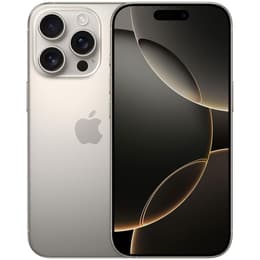
iPhone 16 Pro
iPhone 16 Pro
Starting at

Refurbished price:645.00

Versus €1,239.00 new

See options
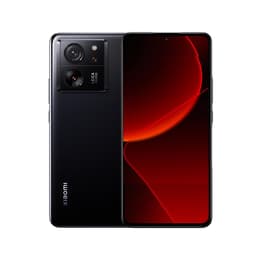
Xiaomi 13T Pro
Xiaomi 13T Pro
Starting at

Refurbished price:245.00

Versus €900.00 new

See options

Ratings

The iPhone 16 Pro, released in September 2024, and the Xiaomi 13T Pro, launched in September 2023, represent distinct approaches to high-performance smartphones. While both offer advanced camera systems and vibrant displays, they differ significantly in their operating systems, design philosophies, and charging capabilities. The iPhone 16 Pro operates on Apple's iOS, known for its integrated ecosystem, whereas the Xiaomi 13T Pro runs on Android with Xiaomi's HyperOS, offering a customizable experience.

Scores

Durability

When considering the long-term usability of these devices, several factors contribute to their expected practical lifespan.

  • Release Timeline and Software Support: The iPhone 16 Pro, being a 2024 release, benefits from a more recent launch, typically translating to a longer period of software updates from Apple, which historically provides extensive iOS support for its devices. The Xiaomi 13T Pro, released in 2023, is promised four major Android OS upgrades and five years of security patches, offering substantial longevity for an Android device.
  • Physical Durability: The iPhone 16 Pro features a titanium frame and a second-generation Ceramic Shield front, which Apple states is significantly tougher than previous generations and other smartphone glass. The Xiaomi 13T Pro utilizes Corning Gorilla Glass 5 for its display and offers an IP68 rating for dust and water resistance, similar to the iPhone 16 Pro's IP68 rating. However, some early durability tests for the iPhone 16 Pro indicated potential vulnerabilities with its ultra-thin bezels during certain drop scenarios.
  • Repairability: While specific repairability scores can vary, both devices are designed with modern smartphone construction, meaning professional repair is generally recommended for significant damage. The availability of parts and service networks can influence the practical lifespan, with both brands having established support systems.

Year of Release

2024

2023

Foldable

No

No

Performance

Both the iPhone 16 Pro and the Xiaomi 13T Pro are engineered to deliver smooth and responsive user experiences, though they achieve this through different hardware and software optimizations.

  • Processing Power: The iPhone 16 Pro is equipped with a current-generation processor designed by Apple, enabling it to handle demanding applications, complex multitasking, and graphics-intensive games with efficiency. The Xiaomi 13T Pro also features a powerful processor, allowing for smooth operation across various tasks, from everyday browsing to more intensive gaming sessions.
  • Multitasking and Responsiveness: The iPhone 16 Pro comes with 8GB of RAM, which, combined with iOS's memory management, ensures applications remain responsive even when many are open in the background. The Xiaomi 13T Pro offers higher RAM configurations, up to 16GB, contributing to its ability to manage numerous applications simultaneously and maintain fluidity in user interactions.
  • Storage Options and Battery Behavior: Both devices offer ample internal storage options, ranging up to 1TB, utilizing fast storage technologies for quick app loading and data access. The iPhone 16 Pro has shown improved battery performance compared to its predecessor, capable of lasting a full day even with heavy usage. The Xiaomi 13T Pro features a larger 5000mAh battery, generally providing a full day of use, with some users reporting it can extend beyond a day depending on usage intensity.

Memory (GB)

8 GB

16 GB

Screen quality

The visual experience on both the iPhone 16 Pro and the Xiaomi 13T Pro is characterized by high-quality displays, each with specific strengths.

  • Display Technology and Clarity: The iPhone 16 Pro features a 6.3-inch Super Retina XDR OLED display with a resolution of 2622 x 1206 pixels, resulting in a pixel density of 460 pixels per inch (ppi). This provides sharp text and detailed images. The Xiaomi 13T Pro sports a slightly larger 6.67-inch AMOLED display with a resolution of 1220 x 2712 pixels, offering excellent clarity and vibrant colors.
  • Brightness and Refresh Rate: Both phones offer impressive brightness levels, with the iPhone 16 Pro reaching 1000 nits typical and up to 2000 nits peak brightness outdoors, along with a new 1 nit minimum brightness for comfortable low-light viewing. The Xiaomi 13T Pro boasts a typical brightness of 1200 nits and a peak brightness of 2600 nits, ensuring visibility even in bright sunlight. For smoothness, the iPhone 16 Pro includes ProMotion technology with an adaptive refresh rate up to 120Hz. The Xiaomi 13T Pro offers an even higher adaptive refresh rate of up to 144Hz, which can provide a very fluid scrolling and gaming experience.
  • Color and HDR Support: Both displays support HDR content, with the iPhone 16 Pro supporting HDR10 and the Xiaomi 13T Pro supporting HDR10+ and Dolby Vision, delivering rich contrast and a wide color gamut for media consumption.

Resolution

1206 x 2622

1220 x 2712

Audiovisual

Both the iPhone 16 Pro and the Xiaomi 13T Pro offer sophisticated camera systems designed to capture high-quality photos and videos, each with unique features and optimizations.

  • Rear Camera Systems: The iPhone 16 Pro features a versatile triple-camera setup, including a 48MP main wide camera with optical image stabilization (OIS), a 48MP ultra-wide camera optimized for low light, and a 12MP telephoto lens offering 5x optical zoom. The Xiaomi 13T Pro also has a triple camera system, co-engineered with Leica, comprising a 50MP main wide camera with OIS, a 50MP telephoto camera with 2x optical zoom, and a 12MP ultra-wide camera. The Leica tuning on the Xiaomi aims for natural color reproduction.
  • Photography Performance: The iPhone 16 Pro's 48MP main and ultra-wide cameras are noted for capturing impressive detail, especially in good lighting, with the main camera featuring a second-generation sensor. The Xiaomi 13T Pro's main camera also delivers detailed images, often pixel-binned to 12.5MP by default, and its telephoto lens performs well in adequate light. Both devices offer various photographic modes and computational photography enhancements.
  • Video Recording and Audio: The iPhone 16 Pro supports video recording up to 4K at 120 frames per second (fps) and includes ProRes Log capabilities, offering advanced options for videographers. The Xiaomi 13T Pro can record up to 8K at 24fps and 4K at 60fps, with HDR10+ support and gyro-EIS for stable footage. For audio, both phones provide quality microphone capture for calls and recordings, and stereo speakers for media consumption. The iPhone 16 Pro also introduces a new Camera Control button for quick access to camera functions.

Miscellaneous

Beyond core performance and display, several practical elements differentiate the user experience of the iPhone 16 Pro and the Xiaomi 13T Pro.

  • Connectivity and Ports: Both smartphones support advanced connectivity standards, including Wi-Fi 7 for faster wireless internet and NFC for contactless payments. The iPhone 16 Pro uses a USB-C port with 10Gbps transfer speeds, while the Xiaomi 13T Pro also features a USB-C port. Neither device includes a traditional 3.5mm headphone jack.
  • Biometric Security and Design: The iPhone 16 Pro relies on Face ID for secure facial recognition. The Xiaomi 13T Pro incorporates an in-screen fingerprint sensor and AI face unlock for biometric security. In terms of physical design, the iPhone 16 Pro has dimensions of 149.6 × 71.5 × 8.25 mm and weighs 199 grams, featuring a titanium frame. The Xiaomi 13T Pro measures 162.2 × 75.7 × 8.5 mm and weighs between 200g and 206g, with options for a glass or a silicone polymer (vegan leather) back.
  • Additional Features: The iPhone 16 Pro includes Ultra-wideband technology and satellite connectivity for emergency services. The Xiaomi 13T Pro emphasizes its 120W wired fast charging capability, allowing for a full charge in under 20 minutes, a significant advantage for users needing quick power-ups, though it lacks wireless charging. The iPhone 16 Pro supports MagSafe and Qi2 wireless charging.

Weight

199 g

206 g

Screen size (in)

6.3

6.67

Network

5G

5G

SIM card

eSIM

Physical SIM + eSIM

Carrier compatibility

Unlocked

Unlocked

Connector

USB-C (USB 3)

USB-C

The iPhone 16 Pro and Xiaomi 13T Pro cater to users with varying priorities, each excelling in different areas. Users often praise the iPhone 16 Pro for its seamless integration within the Apple ecosystem, consistent software updates, and robust video capabilities. Its improved battery life and the introduction of the Camera Control button are frequently highlighted as practical enhancements. Some users, however, have expressed concerns regarding the durability of its ultra-thin bezels in certain drop scenarios, despite the Ceramic Shield.

The Xiaomi 13T Pro receives commendation for its vibrant 144Hz display, exceptionally fast 120W wired charging, and the detailed output from its Leica-tuned camera system. Its larger battery capacity is also a common point of appreciation. Conversely, some users note that while battery life is good, it might not be outstanding for heavy users compared to some competitors, and the absence of wireless charging is a consideration for those accustomed to the feature.

Users prioritizing a highly integrated software experience, advanced video recording features, and a compact yet powerful device may find the iPhone 16 Pro well-suited to their needs. Those who value a larger, high-refresh-rate display, rapid charging speeds, and a customizable Android experience, particularly with a focus on photography, might lean towards the Xiaomi 13T Pro. Both devices offer compelling features for their respective audiences, and for those seeking a more sustainable choice, quality-assured refurbished options for both models are available, providing an eco-friendly alternative.


See all articles

Our recent comparisons