

iPhone 16 Pro Vs Xiaomi 12T Pro

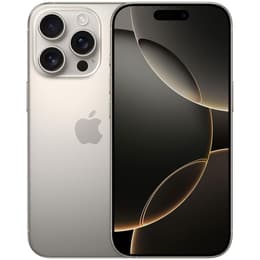
iPhone 16 Pro
iPhone 16 Pro
Starting at

Refurbished price:645.00

Versus €1,239.00 new

See options
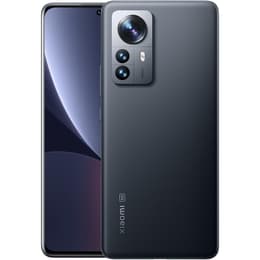
Xiaomi 12T Pro
Xiaomi 12T Pro
Starting at

Refurbished price:201.00

Versus €1,199.00 new

See options

Ratings

The iPhone 16 Pro, released in September 2024, and the Xiaomi 12T Pro, launched in October 2022, represent different generations and philosophies in the smartphone market. While both are designed to offer a premium mobile experience, the iPhone 16 Pro integrates Apple's latest hardware and software advancements, running on iOS, whereas the Xiaomi 12T Pro operates on Android with Xiaomi's MIUI overlay, focusing on high-megapixel photography and rapid charging technology. The primary differentiators lie in their release timelines, software ecosystems, and core hardware capabilities.

Scores

Durability

The longevity of a smartphone is influenced by its initial build, software support, and the availability of repairs. These two devices offer different timelines for expected usability.

  • Release Timeline and Age: The iPhone 16 Pro was released in September 2024, making it a more recent device. The Xiaomi 12T Pro, having launched in October 2022, is approximately two years older, which impacts its remaining software support window and the freshness of its components.
  • Software Longevity: Apple typically provides extensive software support for its devices. The iPhone 16 Pro is guaranteed to receive software updates until at least September 2029, with a strong likelihood of receiving major iOS upgrades for up to seven years. In contrast, the Xiaomi 12T Pro launched with Android 12 and was promised three major Android OS updates (up to Android 15) and four years of security updates, which would extend until October 2026.
  • Build and Repairability: The iPhone 16 Pro features a durable titanium design and Ceramic Shield front cover, along with an IP68 rating for dust and water resistance, suggesting robust physical durability. The Xiaomi 12T Pro uses Gorilla Glass 5 on the front and has an IP53 rating, indicating splash and dust resistance, but not full submersion.

Year of Release

2024

2022

Compatible with latest Update

Yes

Yes

Foldable

No

No

Performance

Performance is a key aspect for daily usage, affecting everything from app responsiveness to demanding tasks like gaming and video editing. The generational gap between these devices is notable in this area.

  • Processor Capabilities: The iPhone 16 Pro is powered by Apple's A18 Pro chip, which is designed for high-end performance, enabling smooth multitasking, rapid app loading, and efficient handling of graphics-intensive applications and advanced AI features. The Xiaomi 12T Pro features the Qualcomm Snapdragon 8+ Gen 1 processor, which was a top-tier chip at its release, providing strong performance for everyday tasks and gaming, with users reporting smooth operation and minimal throttling even during extended use.
  • Storage and RAM: The iPhone 16 Pro offers storage options starting from 128GB, with higher configurations up to 1TB, and includes 8GB of RAM, supporting its operating system and application demands. The Xiaomi 12T Pro comes with 8GB or 12GB of RAM and storage options of 128GB or 256GB, utilizing UFS 3.1 for fast data access.
  • Battery Behavior: The iPhone 16 Pro is expected to offer enhanced battery life, supported by a 3577 mAh battery and optimized power management from its A18 Pro chip. The Xiaomi 12T Pro houses a larger 5000 mAh battery, with user reports indicating it can last over a full day with moderate use and up to 14 hours with heavy usage. It also features exceptionally fast 120W wired charging, capable of fully charging the device in about 20-25 minutes.

Memory (GB)

8 GB

8 GB

Screen quality

The display is the primary interface for user interaction, and both devices offer high-quality viewing experiences with distinct characteristics.

  • Display Technology and Clarity: Both smartphones feature vibrant OLED displays, known for deep blacks and excellent contrast. The iPhone 16 Pro utilizes a Super Retina XDR OLED display, offering a resolution of 2622x1206 pixels at 460 pixels per inch. The Xiaomi 12T Pro has a 6.67-inch AMOLED display with a resolution of 1220 x 2712 pixels, resulting in a pixel density of 446 ppi.
  • Brightness and Refresh Rate: The iPhone 16 Pro's display is capable of reaching 1000 nits typical brightness, 1600 nits peak HDR brightness, and up to 2000 nits peak brightness outdoors, along with ProMotion technology for adaptive refresh rates. The Xiaomi 12T Pro offers a 120Hz adaptive refresh rate and a peak brightness of 900 nits, providing smooth scrolling and good visibility in various lighting conditions.
  • Screen Size and Features: The iPhone 16 Pro features a slightly larger 6.3-inch display with slimmer bezels, enhancing the viewing area. The Xiaomi 12T Pro offers a spacious 6.67-inch flat display and supports HDR10+ and Dolby Vision for an immersive media consumption experience.

Resolution

1206 x 2622

1220 x 2712

Screen type

LTPO Super Retina XDR OLED

AMOLED

Audiovisual

Camera capabilities are a significant factor for many users, and both devices approach mobile photography with different strengths.

  • Main Camera System: The iPhone 16 Pro features an advanced camera system with an upgraded 48-megapixel Ultra Wide lens and a 5x optical zoom telephoto lens across both Pro models, supported by Apple's computational photography for improved image processing and low-light performance. The Xiaomi 12T Pro's standout feature is its 200-megapixel main camera with optical image stabilization (OIS) and 2x in-sensor zoom, which excels at capturing detailed images in good lighting.
  • Secondary Lenses and Performance: While the iPhone 16 Pro's secondary cameras are expected to be highly capable and integrated, the Xiaomi 12T Pro includes an 8-megapixel ultrawide and a 2-megapixel macro camera. User reviews suggest that the ultrawide and macro lenses on the Xiaomi 12T Pro are less impressive compared to its main sensor, with some reporting soft details, especially in low light.
  • Video Recording and Features: The iPhone 16 Pro offers advanced video recording capabilities, including features like a new Camera Control button and enhanced stabilization. The Xiaomi 12T Pro supports 8K video recording at 24 frames per second and includes various creative shooting modes, though stabilization can be less effective at higher resolutions.

Main camera

48 megapixels

200 megapixels

Front camera

12 megapixels

20 megapixels

Miscellaneous

Beyond the core specifications, several practical elements contribute to the overall user experience and daily convenience.

  • Connectivity and Ports: The iPhone 16 Pro supports the latest wireless standards, including Wi-Fi 7 and an updated 5G modem, ensuring fast and reliable network connections. The Xiaomi 12T Pro offers 5G connectivity, Wi-Fi 6E, Bluetooth 5.2, and a USB Type-C port. Notably, the Xiaomi 12T Pro also includes an IR blaster, a feature not commonly found on many modern smartphones, allowing it to function as a universal remote.
  • Biometric Security: Both devices incorporate advanced biometric security. The iPhone 16 Pro relies on Face ID for secure facial recognition. The Xiaomi 12T Pro features an in-display fingerprint sensor for convenient unlocking.
  • Design and Handling: The iPhone 16 Pro features a titanium alloy frame, contributing to a lighter yet durable build, with dimensions of 149.6 x 71.5 x 8.25 mm and a weight of 199 grams. The Xiaomi 12T Pro has a glass back and plastic frame, measuring 163.1 x 75.9 x 8.6 mm and weighing 205 grams, offering a substantial feel in hand.

Weight

199 g

204 g

Screen size (in)

6.3

6.67

Network

5G

5G

SIM card

eSIM

Dual Physical SIM

Carrier compatibility

Unlocked

Unlocked

The iPhone 16 Pro and Xiaomi 12T Pro cater to users with distinct priorities, largely influenced by their release dates and operating systems. The iPhone 16 Pro, as a more recent release, benefits from the latest advancements in processor technology, offering a highly optimized and responsive user experience with extended software support. Users often praise iPhones for their consistent performance, robust ecosystem, and long-term software updates, ensuring a device that remains current for many years. Criticisms, when they arise, often relate to the closed nature of iOS or specific feature implementations.

The Xiaomi 12T Pro, while an older model, was a strong performer at its launch, particularly noted for its impressive 200-megapixel main camera and exceptionally fast 120W wired charging. Users frequently highlight the convenience of its rapid charging and the clarity of photos from its primary sensor. However, some user feedback points to the secondary cameras being less capable and occasional software inconsistencies or over-sharpening in images. Some users have also reported mixed experiences with software updates and potential overheating, though others have found it to be a reliable device.

Users prioritizing long-term software support, a highly integrated ecosystem, and a balanced, advanced camera system with strong computational photography may find the iPhone 16 Pro well-suited to their needs. Conversely, individuals who value extremely fast charging, a large, vibrant display, and a high-resolution main camera for detailed shots, and prefer the Android ecosystem, might lean towards the Xiaomi 12T Pro. Both devices offer compelling features, and choosing between them often comes down to individual preferences regarding operating system, camera versatility versus raw megapixel count, and charging speed. For those considering either device, exploring quality-assured refurbished options can be an eco-friendly alternative to extend the life cycle of these products.


See all articles

Our recent comparisons