

iPhone 15 Pro Vs iPhone SE (2020)

iPhone 15 Pro
iPhone 15 Pro
Starting at

Refurbished price:510.00

Versus €1,165.38 new

See options
iPhone SE (2020)
iPhone SE (2020)
Starting at

Refurbished price:102.00

Versus €319.00 new

See options

Ratings

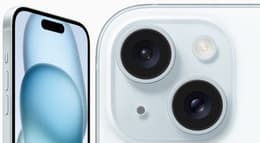
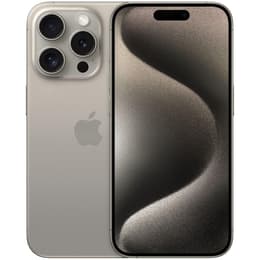
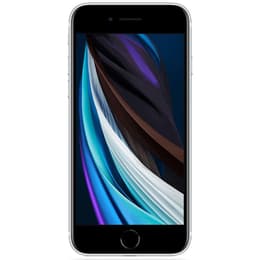
The iPhone 15 Pro, released in September 2023, represents Apple's advanced smartphone offering, featuring a modern design and cutting-edge technology. In contrast, the iPhone SE 2020, launched in April 2020, provides a more classic iPhone experience with a compact form factor and essential features. The primary distinctions between these two devices lie in their display technology, camera capabilities, and overall processing power, catering to different user priorities.

Scores

Durability

When considering the longevity of these devices, their release timelines and Apple's software support policies are key factors. The iPhone 15 Pro, being a much newer device, benefits from a significantly longer expected period of major operating system updates and security patches compared to the iPhone SE 2020.

  • Software Support: The iPhone 15 Pro is expected to receive major iOS updates until at least September 2028, with some estimates suggesting support could extend to 2030, followed by additional security updates. The iPhone SE 2020, having been released in 2020, is likely to continue receiving major iOS updates until around 2025-2027, with security updates potentially extending for a couple more years beyond that.
  • Repairability: The iPhone 15 Pro initially received a repairability score of 4 out of 10 from iFixit, which was later promoted to 7 out of 10 due to improvements in repair processes and the availability of a Repair Assistant tool that allows users to calibrate parts. The iPhone SE 2020 scored 6 out of 10 for repairability, with many components being modular and relatively easy to source, particularly the display and battery.
  • Practical Lifespan: Users prioritizing the latest software features and long-term compatibility with new applications will find the iPhone 15 Pro offers a considerably extended practical lifespan. The iPhone SE 2020, while still functional, will reach its end-of-life for major software updates sooner, making the iPhone 15 Pro a more future-proof option for those seeking maximum longevity.

Year of Release

2023

2020

Compatible with latest Update

Yes

Yes

OS

iOS

iOS

Foldable

No

No

Performance

The performance capabilities of the iPhone 15 Pro and iPhone SE 2020 reflect their respective release years, with the newer device offering a substantial leap in processing power and efficiency.

  • Processing Power: The iPhone 15 Pro is equipped with a current-generation processor, enabling it to handle demanding applications, complex multitasking, and graphically intensive games with smooth responsiveness. The iPhone SE 2020 features a processor that, while capable for everyday tasks and general use, may exhibit slower loading times or less fluid performance when running the most resource-intensive apps or engaging in heavy multitasking.
  • Multitasking and Responsiveness: The iPhone 15 Pro includes 8GB of RAM, contributing to its ability to keep numerous applications open in the background and switch between them seamlessly. The iPhone SE 2020 comes with 3GB of RAM, which is sufficient for typical daily usage but may lead to apps reloading more frequently when switching between them.
  • Storage and Battery Behavior: The iPhone 15 Pro offers a wider range of storage options, starting from 128GB and going up to 1TB, providing ample space for extensive media libraries and applications. Its battery generally provides all-day power for medium to heavy usage. The iPhone SE 2020 is available with storage capacities from 64GB to 256GB. Its smaller battery capacity means that heavy users may find themselves needing to recharge more frequently throughout the day.

Memory (GB)

8 GB

3 GB

Screen quality

The visual experience on these two iPhones differs significantly due to advancements in display technology and design philosophy over the years.

  • Display Technology and Clarity: The iPhone 15 Pro features a 6.1-inch Super Retina XDR OLED display, which delivers deep blacks, vibrant colors, and excellent contrast. It has a resolution of 2556x1179 pixels, resulting in sharp and detailed visuals. The iPhone SE 2020 utilizes a 4.7-inch Retina HD LCD display with a resolution of 1334x750 pixels. While it offers good clarity for its size, it does not achieve the same level of contrast or color vibrancy as an OLED panel.
  • Brightness and Refresh Rate: The iPhone 15 Pro boasts a high brightness level, reaching up to 1000 nits typical and 2000 nits peak, ensuring excellent visibility even in bright outdoor conditions. It also features ProMotion technology, offering an adaptive refresh rate up to 120Hz for incredibly smooth scrolling and responsive interactions. The iPhone SE 2020 has a maximum brightness of 625 nits, which is adequate for most indoor and outdoor use but may struggle in direct sunlight. Its display has a standard 60Hz refresh rate.
  • Screen Size and Viewing Experience: The larger, edge-to-edge display of the iPhone 15 Pro provides a more immersive viewing experience for media consumption and productivity. The iPhone SE 2020's smaller screen, coupled with thicker bezels, offers a more compact form factor that some users prefer for one-handed use, though it provides a less expansive visual area.

Resolution

1179 x 2556

750 x 1334

Screen type

LTPO Super Retina XDR OLED

Retina IPS LCD

Audiovisual

The camera systems on the iPhone 15 Pro and iPhone SE 2020 reflect different tiers of photographic capability, with the newer model offering a more versatile and advanced setup.

  • Rear Camera System: The iPhone 15 Pro features a triple-camera system, including a 48-megapixel main sensor, a 12-megapixel ultra-wide lens, and a 12-megapixel telephoto lens with 3x optical zoom. This allows for greater flexibility in framing shots, capturing detailed images, and achieving optical zoom without loss of quality. It excels in various lighting conditions, including low light, and supports advanced features like ProRes video recording. The iPhone SE 2020 has a single 12-megapixel wide camera. It performs well for everyday photography in good lighting conditions, producing clear and vibrant images. However, it lacks the versatility of multiple lenses and does not include features like Night Mode.
  • Video Recording and Front Camera: Both devices are capable of recording 4K video, with the iPhone 15 Pro offering more advanced stabilization and cinematic features. The iPhone 15 Pro's front-facing camera provides high-quality selfies and improved performance in various lighting scenarios. The iPhone SE 2020 features a 7-megapixel front camera, suitable for video calls and casual selfies, though it may not match the detail or low-light performance of the 15 Pro.
  • Audio Experience: The iPhone 15 Pro generally offers a more robust and immersive audio experience through its speakers, suitable for media consumption. While the iPhone SE 2020 provides clear audio, it may not deliver the same depth or volume. Both devices offer good microphone quality for calls and recordings.

Main camera

48 megapixels

12 megapixels

Front camera

12 megapixels

7 megapixels

Miscellaneous

Beyond core performance and display, several practical elements differentiate the iPhone 15 Pro and iPhone SE 2020, impacting daily usability and connectivity.

  • Connectivity and Ports: The iPhone 15 Pro supports 5G cellular connectivity, offering faster download and upload speeds in compatible areas, along with Wi-Fi 6E and Bluetooth 5.3. It features a USB-C port, which provides faster data transfer speeds (USB 3.2 Gen 2x1) and broader compatibility with accessories. The iPhone SE 2020 supports 4G LTE, Wi-Fi 6, and Bluetooth 5.0. It uses the Lightning port for charging and data transfer.
  • Biometric Security and Design: The iPhone 15 Pro utilizes Face ID for secure authentication and features a customizable Action Button, replacing the traditional mute switch. Its design incorporates a lightweight and durable titanium frame, with a Ceramic Shield front and textured matte glass back. The iPhone SE 2020 features Touch ID integrated into its Home button for authentication. It has a classic design with an aluminum frame and glass front and back.
  • Physical Characteristics: The iPhone 15 Pro measures 146.6 x 70.6 x 8.25mm and weighs 187 grams. The iPhone SE 2020 is more compact and lighter, measuring 138.4 x 67.3 x 7.3mm and weighing 148 grams, making it easier for one-handed operation for some users. Both devices offer IP water and dust resistance ratings, with the iPhone 15 Pro having an IP68 rating and the iPhone SE 2020 an IP67 rating.

Weight

171 g

148 g

Screen size (in)

6.1

4.7

Network

5G

4G

SIM card

eSIM

Physical SIM + eSIM

Carrier compatibility

Unlocked

Unlocked

Connector

USB-C (USB 3)

Lightning

The iPhone 15 Pro and iPhone SE 2020 cater to distinct user needs, reflecting their different positions in Apple's smartphone lineup and their respective release years. User feedback for the iPhone 15 Pro often praises its powerful performance, advanced camera system, and vibrant display, making it a strong choice for those who demand the latest technology and a premium experience. Some common criticisms, however, sometimes point to its larger size compared to older compact models.

The iPhone SE 2020 is frequently lauded for its compact form factor, reliable performance for everyday tasks, and the familiarity of its classic design, including the Touch ID home button. Users appreciate its ability to deliver a solid iPhone experience without the complexities of more advanced models. Criticisms often revolve around its smaller, less advanced display and battery life that may require more frequent charging for heavy use.

Users prioritizing cutting-edge camera technology, a highly responsive display with smooth visuals, and robust performance for demanding applications will find the iPhone 15 Pro well-suited to their needs. Its longer software support also makes it a more future-proof investment. Conversely, users who prefer a smaller, more traditional iPhone design, primarily use their device for essential tasks, and value a familiar user experience may lean toward the iPhone SE 2020.

For those considering either device, exploring quality-assured refurbished options can provide an eco-friendly alternative, offering access to these technologies while supporting sustainable consumption.


See all articles

Our recent comparisons