

Galaxy S10e Vs iPhone SE (2022)

Galaxy S10e
Galaxy S10e
Starting at

Refurbished price:121.00

Versus €759.00 new

See options
iPhone SE (2022)
iPhone SE (2022)
Starting at

Refurbished price:127.00

Versus €549.00 new

See options

Ratings

The Samsung Galaxy S10e, released in March 2019, and the Apple iPhone SE (2022), launched in March 2022, represent two distinct approaches to compact smartphone design. While both devices offer a portable form factor, they differ significantly in their operating systems, display technologies, and overall user experience. The Galaxy S10e runs on Android, providing a more open ecosystem, while the iPhone SE (2022) operates on Apple's iOS, known for its integrated services and long-term software support. These core differences influence everything from app availability to hardware longevity.

Scores

Durability

The expected lifespan of a smartphone is influenced by its release date, software support, and physical resilience. The Samsung Galaxy S10e, launched in March 2019, has received Android updates up to Android 12 (One UI 4.1). The iPhone SE (2022), released in March 2022, benefits from Apple's typically longer software support cycle, meaning it will likely receive major iOS updates for several years beyond the S10e's last update.

  • Software Longevity: The iPhone SE (2022) is expected to receive software updates for a longer duration compared to the Galaxy S10e, offering extended access to new features and security patches.
  • Physical Durability: The Galaxy S10e features an IP68 rating for dust and water resistance, indicating protection against immersion in up to 1.5 meters of water for 30 minutes. The iPhone SE (2022) carries an IP67 rating, protecting against immersion in up to 1 meter of water for 30 minutes. Both devices offer a degree of protection against environmental elements.
  • Build Materials: The Galaxy S10e incorporates an aluminum body with a glass back and Gorilla Glass 5 on the front. The iPhone SE (2022) features a glass front and back with an aluminum frame, and its front glass is described as ceramic glass.

Year of Release

2019

2022

Compatible with latest Update

No

Yes

OS

Android

iOS

Foldable

No

No

Performance

Performance in daily use, from app loading to multitasking, is a key differentiator between these two devices, largely influenced by their internal components and software optimization.

  • Processing Power: The iPhone SE (2022) is equipped with a current-generation processor, enabling it to handle demanding applications and graphic-intensive games with notable smoothness and responsiveness. The Galaxy S10e, while powerful for its release year, provides capable performance for everyday tasks and many demanding apps.
  • Multitasking and Storage: The Galaxy S10e offers 6GB or 8GB of RAM, which supports efficient multitasking, and comes with 128GB or 256GB of internal storage, expandable via a microSD card. The iPhone SE (2022) features 4GB of RAM and is available with 64GB, 128GB, or 256GB of non-expandable internal storage.
  • Battery Behavior: The Galaxy S10e has a 3100 mAh battery, with users reporting approximately 17 to 18 hours of actual battery life, though heavy use like video playback or web browsing may result in under 10 hours. The iPhone SE (2022) has a 2018 mAh battery, and users generally report it can last around 12 hours with typical usage.

Memory (GB)

6 GB

4 GB

Screen quality

The visual experience on a smartphone is heavily dependent on its display technology, resolution, and overall design, which vary between these two models.

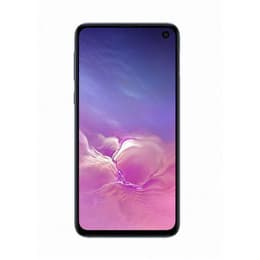
  • Display Technology and Clarity: The Galaxy S10e features a 5.8-inch Dynamic AMOLED display with a resolution of 1080 x 2280 pixels, resulting in a pixel density of 438 ppi. This technology provides deep blacks and vibrant colors. The iPhone SE (2022) utilizes a 4.7-inch Retina IPS LCD display with a resolution of 750 x 1334 pixels, offering a pixel density of 326 ppi.
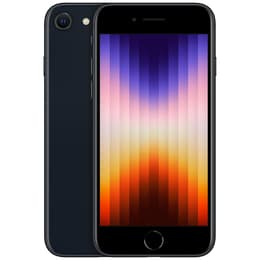
  • Brightness and Viewing Experience: The Galaxy S10e can reach a maximum brightness of 603 nits in manual mode, contributing to good outdoor visibility. The iPhone SE (2022) has a typical brightness of 625 nits, also providing adequate visibility in various lighting conditions. The Galaxy S10e's display features a modern, nearly bezel-less design with a punch-hole camera, offering a more expansive viewing area for its size. The iPhone SE (2022) retains a more traditional design with larger bezels and a physical home button, resulting in a smaller screen-to-body ratio.
  • Refresh Rate: Both devices feature a standard refresh rate, providing a smooth experience for typical smartphone interactions.

Resolution

1080 x 2280

750 x 1334

Screen type

Dynamic AMOLED

Retina IPS LCD

Audiovisual

For many users, the camera system is a primary consideration, and both the Galaxy S10e and iPhone SE (2022) offer distinct photographic capabilities.

  • Rear Camera Systems: The Galaxy S10e is equipped with a dual-camera setup on the rear, featuring a 12-megapixel wide-angle lens with a variable aperture and a 16-megapixel ultra-wide lens. This provides versatility for capturing different scenes. The iPhone SE (2022) has a single 12-megapixel wide-angle rear camera.
  • Photography Performance: The Galaxy S10e's variable aperture allows it to adapt to different lighting conditions, potentially enhancing low-light performance. The iPhone SE (2022) leverages its advanced internal processing for image enhancement, contributing to consistent photo quality in various everyday scenarios.
  • Video and Audio: Both devices are capable of recording video at 4K resolution at 60 frames per second. The iPhone SE (2022) includes optical image stabilization (OIS) and stereo sound recording for video. The Galaxy S10e features AKG-tuned stereo speakers with Dolby Atmos support, offering an immersive audio experience for media consumption. The iPhone SE (2022) also provides stereo speakers.

Main camera

12 megapixels

12 megapixels

Front camera

10 megapixels

7 megapixels

Miscellaneous

Beyond core performance and display, several practical features contribute to the overall user experience and daily convenience of these smartphones.

  • Connectivity and Ports: The iPhone SE (2022) supports 5G connectivity (sub-6 GHz), offering faster cellular data speeds where available. The Galaxy S10e supports 4G LTE networks. For wired connections, the Galaxy S10e uses a USB-C 3.1 port and retains a 3.5mm headphone jack. The iPhone SE (2022) uses a Lightning port and does not include a 3.5mm headphone jack. Both devices support Wi-Fi 6 and Bluetooth 5.0.
  • Biometric Security and Design: The Galaxy S10e features a side-mounted fingerprint sensor and supports face recognition for unlocking. The iPhone SE (2022) utilizes a front-mounted fingerprint sensor (Touch ID) integrated into its home button. In terms of physical dimensions, the Galaxy S10e measures 142.2 x 69.9 x 7.9 mm and weighs 150g. The iPhone SE (2022) is slightly more compact at 138.4 x 67.3 x 7.3 mm and weighs 144g.
  • Additional Features: The Galaxy S10e offers expandable storage via a microSD card, a feature not present on the iPhone SE (2022).

Weight

150 g

144 g

Screen size (in)

5.8

4.7

Network

4G

5G

SIM card

Physical SIM

Physical SIM + eSIM

Carrier compatibility

Unlocked

Unlocked

Connector

USB-C + Jack 3.5mm

Lightning

Users often praise the Samsung Galaxy S10e for its compact size, vibrant AMOLED display, and the inclusion of a 3.5mm headphone jack and expandable storage. Some common criticisms revolve around its older software support timeline compared to newer devices and its battery life, which some users find adequate for a full day but not exceptional under heavy usage. The iPhone SE (2022) is frequently lauded for its powerful internal components, ensuring smooth performance and a long software support window. Its compact form factor appeals to users who prefer a smaller device, and the Touch ID fingerprint sensor is a preferred feature for some. However, common criticisms include its dated design with large bezels, the use of an LCD display instead of OLED, and a single rear camera setup.

Users prioritizing a modern, expansive display with vibrant colors, expandable storage, and the flexibility of the Android ecosystem may find the Galaxy S10e well-suited to their needs. Its physical headphone jack also caters to those who prefer wired audio. Conversely, users who value long-term software updates, robust performance for demanding applications, and the integrated experience of iOS will likely lean towards the iPhone SE (2022). Its smaller size and familiar home button design also appeal to a specific user base. Both devices offer a quality-assured refurbished option, providing an eco-friendly alternative for consumers.


See all articles

Our recent comparisons