


Galaxy S20 FE Vs Xiaomi Redmi Note 13 Pro+

Galaxy S20 FE
Galaxy S20 FE
Starting at

Refurbished price:151.00

Versus €779.00 new

See options
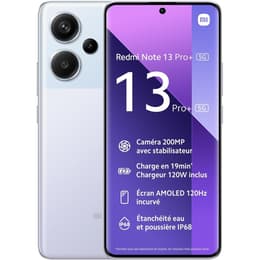
Xiaomi Redmi Note 13 Pro+
Starting at

Refurbished price:198.00

Versus €449.00 new

See options

Ratings

The Samsung Galaxy S20 FE (Fan Edition), released in October 2020, and the Xiaomi Redmi Note 13 Pro+, launched in January 2024, represent different generations in the smartphone landscape. While both devices offer a comprehensive Android experience, the Redmi Note 13 Pro+ benefits from more recent advancements in display technology, camera capabilities, and charging speeds, whereas the Galaxy S20 FE provides a robust set of features from its era.

Scores

Durability

When considering the long-term usability of these devices, their release timelines and software support play a significant role.

  • Release Timeline: The Galaxy S20 FE was released in late 2020, making it an older device compared to the Redmi Note 13 Pro+, which launched in early 2024. This age difference directly impacts the remaining period of official software and security updates.
  • Software Longevity: The Galaxy S20 FE typically received three major Android OS updates and four years of security updates, concluding its official support cycle around late 2024 or early 2025. The Redmi Note 13 Pro+, being a newer device, is expected to receive a longer period of software support, including major Android upgrades and security patches, extending its practical lifespan for users who prioritize the latest software features and security.
  • Physical Durability: Both devices feature IP68 ratings for dust and water resistance, indicating a high level of protection against environmental elements. The Redmi Note 13 Pro+ utilizes Corning Gorilla Glass Victus for screen protection, offering enhanced resistance to drops and scratches, while the Galaxy S20 FE uses Gorilla Glass 3.

Year of Release

2020

2023

Compatible with latest Update

No

Yes

OS

Android

Android

Foldable

No

No

Performance

The performance of a smartphone is crucial for daily tasks, app usage, and overall responsiveness.

  • Processing Power: The Redmi Note 13 Pro+ is equipped with a more recent processor, which translates to efficient handling of demanding applications, smoother multitasking, and improved performance in graphically intensive games. The Galaxy S20 FE, while still capable for everyday use, features a processor from 2020, which may show limitations with the most current and resource-heavy applications.
  • Memory and Storage: The Redmi Note 13 Pro+ offers configurations with up to 12GB or 16GB of RAM and faster UFS 3.1 storage, contributing to quicker app loading times and seamless transitions between tasks. The Galaxy S20 FE typically comes with 6GB or 8GB of RAM and UFS 3.1 storage, which was considered high-end at its release, but the Redmi Note 13 Pro+ provides more headroom for future applications.
  • Battery Endurance: The Redmi Note 13 Pro+ houses a 5000 mAh battery, generally providing extended usage throughout the day for most users. The Galaxy S20 FE has a 4500 mAh battery, which, depending on usage patterns and screen refresh rate settings, may require more frequent charging for heavy users.

Memory (GB)

6 GB

12 GB

Screen quality

The visual experience is a key aspect of smartphone interaction, and both devices offer distinct display characteristics.

  • Display Technology and Clarity: Both phones feature AMOLED displays, known for their deep blacks and vibrant colors. The Redmi Note 13 Pro+ boasts a 6.67-inch AMOLED display with a resolution of 1220 x 2712 pixels, resulting in a higher pixel density for sharper images and text. The Galaxy S20 FE has a 6.5-inch Super AMOLED display with a resolution of 1080 x 2400 pixels.
  • Brightness and Smoothness: The Redmi Note 13 Pro+ offers a peak brightness of 1800 nits, providing excellent visibility even in bright outdoor conditions. Both devices support a 120Hz refresh rate, which contributes to smoother scrolling and a more fluid visual experience.
  • Screen Protection: The Redmi Note 13 Pro+ is protected by Corning Gorilla Glass Victus, offering enhanced durability against drops and scratches. The Galaxy S20 FE features Gorilla Glass 3.

Resolution

1080 x 2400

1220 x 2712

Screen type

Super AMOLED

AMOLED

Audiovisual

For many users, the camera system is a primary consideration, and these phones offer different photographic strengths.

  • Rear Camera System: The Redmi Note 13 Pro+ features a high-resolution 200MP main camera with Optical Image Stabilization (OIS), an 8MP ultrawide lens, and a 2MP macro lens. This allows for highly detailed photos and improved low-light performance on the main sensor. The Galaxy S20 FE comes with a versatile triple camera setup: a 12MP main camera with OIS, a 12MP ultrawide, and an 8MP telephoto lens with 3x optical zoom.
  • Photography Performance: The Redmi Note 13 Pro+'s 200MP sensor excels in capturing fine details, and its OIS aids in reducing blur in various conditions. The Galaxy S20 FE is praised for its consistent color accuracy and effective scene optimization, with its telephoto lens offering genuine optical zoom for distant subjects.
  • Video Recording and Front Camera: Both devices are capable of recording 4K video. The Galaxy S20 FE supports 4K at 60fps on both its rear and 32MP front camera, with effective electronic image stabilization (EIS). The Redmi Note 13 Pro+ has a 16MP front camera and offers 4K video recording at 30fps.

Main camera

12 megapixels

200 megapixels

Front camera

32 megapixels

16 megapixels

Miscellaneous

Beyond core features, several practical elements contribute to the overall user experience.

  • Connectivity: Both smartphones support 5G connectivity, enabling faster mobile data speeds where available. They also include modern Wi-Fi standards and Bluetooth for wireless connections.
  • Ports and Sensors: Both devices feature a USB-C port for charging and data transfer, but neither includes a traditional 3.5mm headphone jack. For security, both utilize in-display fingerprint sensors. The Redmi Note 13 Pro+ also includes an infrared (IR) blaster, a feature not present on the Galaxy S20 FE, which allows it to function as a universal remote control.
  • Design and Build: The Redmi Note 13 Pro+ features a modern design with a curved display and options for a glass or eco-leather back, contributing to a distinct aesthetic. The Galaxy S20 FE has a flat display and a plastic back, which some users find less premium but potentially more durable against impacts. The Redmi Note 13 Pro+ is slightly heavier at around 204.5g compared to the Galaxy S20 FE's 190g.

Weight

190 g

204 g

Screen size (in)

6.5

6.67

Network

4G

5G

SIM card

Dual Physical SIM

Dual Physical SIM

Carrier compatibility

Unlocked

Unlocked

User feedback for the Samsung Galaxy S20 FE often highlights its balanced feature set, particularly praising its camera versatility with a dedicated telephoto lens and its vibrant display. Many users appreciated its overall performance for daily tasks and gaming at the time of its release. Common criticisms sometimes pointed to its plastic back material and the Exynos processor variant in some regions not matching the Snapdragon's performance.

The Xiaomi Redmi Note 13 Pro+ generally receives positive remarks for its high-resolution main camera, bright and sharp AMOLED display, and rapid charging capabilities. Users often commend its modern design and strong performance for a device in its category. Some discussions might revolve around the software experience, which can be a matter of personal preference.

Users prioritizing a dedicated optical telephoto zoom lens and a well-established software experience may find the Galaxy S20 FE well-suited to their needs. Conversely, those who value a higher-resolution main camera, a brighter and sharper display, faster charging, and a more contemporary design will likely lean towards the Redmi Note 13 Pro+. Both devices offer a quality-assured refurbished option, providing an eco-friendly alternative for consumers looking to make a sustainable choice while still enjoying advanced smartphone technology.


See all articles

Our recent comparisons







