

iPhone 14 Pro Vs Xiaomi Redmi Note 14 4G

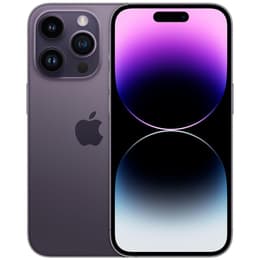
iPhone 14 Pro
iPhone 14 Pro
Starting at

Refurbished price:424.00

Versus €1,339.00 new

See options
Xiaomi Redmi Note 14 4G
Starting at

Refurbished price:162.00

Versus €229.99 new

See options

Ratings

The iPhone 14 Pro, released in September 2022, and the Xiaomi Redmi Note 14 4G, launched in late 2024/early 2025, represent distinct approaches to smartphone design and functionality. While the iPhone 14 Pro operates on Apple's iOS ecosystem, the Redmi Note 14 4G runs on Android with Xiaomi's HyperOS. Key differentiators lie in their performance capabilities, camera versatility, and long-term software support strategies.

Scores

Durability

The practical lifespan of a smartphone is influenced by its physical durability and the duration of software support it receives.

  • Release Timeline & OS Support: The iPhone 14 Pro, launched in September 2022, originally shipped with iOS 16 and is currently upgradable to iOS 26.3.1. Apple typically provides several years of major iOS updates, ensuring continued access to new features and security enhancements. The Xiaomi Redmi Note 14 4G, a newer device from late 2024/early 2025, launched with Android 14 and Xiaomi HyperOS. The global version is expected to receive four major Android OS upgrades, potentially reaching Android 18, and six years of security updates, extending its support until March 2031.
  • Physical Durability: The iPhone 14 Pro features a Ceramic Shield front cover and a surgical-grade stainless steel frame, contributing to its robust build. It also boasts an IP68 rating, indicating resistance to dust and submersion in water up to 6 meters for 30 minutes. The Redmi Note 14 4G utilizes Corning Gorilla Glass 5 for screen protection and has an IP54 rating, offering protection against dust and splashes of water from any direction. Its back panel is crafted from plastic.
  • Repairability & Longevity: While specific repairability scores vary, both devices are designed with components that can be serviced. The Redmi Note 14 4G's battery is designed to maintain over 80% of its original capacity after 1600 charge cycles over four years, suggesting a focus on long-term battery health.

Year of Release

2022

2025

OS

iOS

Android

Foldable

No

No

Performance

Performance in daily use is shaped by the underlying hardware and software optimization, impacting how smoothly applications run and how efficiently tasks are handled.

  • Processing Power: The iPhone 14 Pro is equipped with a powerful processor that enables smooth operation across demanding applications, intensive multitasking, and graphically rich games. Users can expect rapid app loading and seamless transitions. The Redmi Note 14 4G features a processor designed for reliable everyday performance, handling common tasks and casual gaming without significant delays.
  • Multitasking & Responsiveness: With its advanced processing capabilities and ample memory, the iPhone 14 Pro offers a highly responsive user experience, allowing for efficient multitasking and quick switching between applications. The Redmi Note 14 4G provides a smooth experience for typical daily usage, including browsing, social media, and light productivity tasks.
  • Storage Options: The iPhone 14 Pro is available with internal storage options ranging from 128GB up to 1TB, catering to users with extensive storage needs. The Redmi Note 14 4G offers 128GB or 256GB of internal storage, with the added flexibility of expandable storage via a microSD card in a hybrid slot.

Memory (GB)

6 GB

6 GB

Screen quality

The display is a primary interface for user interaction, and differences in technology, resolution, and brightness significantly affect the viewing experience.

  • Display Technology & Clarity: The iPhone 14 Pro features a 6.1-inch Super Retina XDR OLED display, offering deep blacks, vibrant colors, and sharp detail with a resolution of 2556x1179 pixels (460 ppi). The Redmi Note 14 4G comes with a larger 6.67-inch AMOLED display, providing a resolution of 1080 x 2400 pixels (~395 ppi), which delivers clear visuals for everyday content consumption.
  • Brightness & Smoothness: The iPhone 14 Pro's display can reach a typical maximum brightness of 1000 nits, with peak brightness up to 1600 nits for HDR content and an impressive 2000 nits for outdoor visibility. It also features ProMotion technology, offering an adaptive refresh rate from 1Hz to 120Hz for fluid scrolling and responsive interactions. The Redmi Note 14 4G's AMOLED display offers a peak brightness of 1800 nits, ensuring good visibility in bright outdoor conditions, and a 120Hz refresh rate for a smooth visual experience.
  • Unique Display Features: The iPhone 14 Pro introduced the Dynamic Island, a pill-shaped area that dynamically adapts to display alerts, notifications, and background activities. It also includes an Always-On display feature. The Redmi Note 14 4G's display includes TÜV Rheinland certifications for Low Blue Light, Flicker Free, and Circadian Friendly, aimed at reducing eye strain during extended use.

Resolution

1179 x 2556

1080x2400

Audiovisual

Camera capabilities are a significant factor for many users, with differences in sensor technology, lens configurations, and software processing impacting image and video quality.

  • Rear Camera System: The iPhone 14 Pro features a versatile triple-camera system, including a 48MP main sensor with sensor-shift optical image stabilization (OIS), a 12MP ultrawide lens, and a 12MP telephoto lens with 3x optical zoom and OIS. It also incorporates a LiDAR scanner for improved depth sensing. The Redmi Note 14 4G is equipped with a 108MP main camera, which uses pixel-binning technology to produce 12MP images, alongside 2MP macro and 2MP depth sensors. Notably, it does not include an ultrawide camera.
  • Photography Performance: The iPhone 14 Pro delivers detailed and vibrant photos across various lighting conditions, with improved low-light performance and advanced computational photography features. The Redmi Note 14 4G's main camera performs well in good lighting, capturing sharp images with decent detail, though colors can appear saturated. Its low-light performance and dynamic range are more limited.
  • Video & Audio Recording: The iPhone 14 Pro supports 4K video recording at up to 60 frames per second, including an enhanced Cinematic Mode that can record in 4K. The Redmi Note 14 4G records video at a maximum resolution of 1080p. For audio, the iPhone 14 Pro offers clear stereo sound with spatial audio support. The Redmi Note 14 4G also features stereo speakers with Dolby Atmos support, providing a decent audio experience, and retains a 3.5mm headphone jack.

Miscellaneous

Beyond core performance and display, practical features like connectivity, ports, and physical design contribute to the overall user experience.

  • Connectivity & Ports: The iPhone 14 Pro supports 5G cellular connectivity, Wi-Fi 6, and Bluetooth 5.3. It uses a Lightning port for charging and data transfer, and models sold in the US rely exclusively on eSIM. The Redmi Note 14 4G supports 4G LTE, Wi-Fi 5, and Bluetooth 5.3. It includes a USB-C port (with USB 2.0 speeds), a 3.5mm headphone jack, NFC, and an IR blaster.
  • Biometric Security & Sensors: The iPhone 14 Pro utilizes Face ID for secure facial recognition. It also includes a LiDAR scanner, accelerometer, gyroscope, proximity sensor, compass, and barometer. The Redmi Note 14 4G features an in-screen fingerprint sensor and AI Face Unlock for security. It also has a proximity sensor, ambient light sensor, accelerometer, electronic compass, and gyroscope.
  • Design & Handling: The iPhone 14 Pro has dimensions of 147.5 x 71.5 x 7.85 mm and weighs 206 grams, featuring a flat-edge design with a surgical-grade stainless steel frame. The Redmi Note 14 4G measures 163.25 x 76.55 x 8.16 mm and weighs 196.5 grams, with a plastic back and flat edges designed for a comfortable grip.

Weight

206 g

196 g

Screen size (in)

6.1

6.67

Network

5G

4G

SIM card

Physical SIM + eSIM

Physical SIM + eSIM

Carrier compatibility

Unlocked

Unlocked

User feedback for the iPhone 14 Pro frequently highlights its exceptional performance, vibrant display with the innovative Dynamic Island, and advanced camera capabilities as strong points. Some users have noted that while battery life is generally good, it might not always surpass previous Pro Max models in certain demanding scenarios. The Redmi Note 14 4G is often praised for its impressive battery life, bright AMOLED display, and reliable performance for daily tasks. Common criticisms include the absence of an ultrawide camera and limited low-light performance from its camera system.

Users prioritizing a compact device with top-tier processing power, a highly advanced camera system for both photos and videos, and a premium build quality may find the iPhone 14 Pro well-suited to their needs. Its robust software ecosystem and long-term update commitment are also significant considerations. Conversely, individuals seeking a device with extended battery life, a larger display, and the flexibility of expandable storage and a traditional headphone jack might lean towards the Redmi Note 14 4G. Its strong software support commitment for an Android device also makes it a compelling option for those looking for longevity without the highest upfront investment.

For those evaluating their options, considering quality-assured refurbished alternatives for either model can be an eco-friendly choice, offering a sustainable path to owning these devices.


See all articles

Our recent comparisons