

Galaxy S25 Ultra Vs Xiaomi 12T

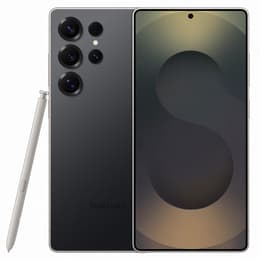
Galaxy S25 Ultra
Galaxy S25 Ultra
Starting at

Refurbished price:735.00

Versus €1,408.78 new

See options
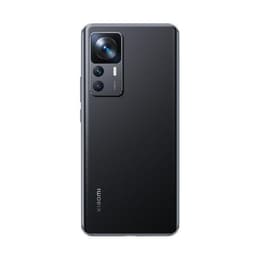
Xiaomi 12T
Xiaomi 12T
Starting at

Refurbished price:138.00

Versus €649.00 new

See options

Ratings

The Samsung Galaxy S25 Ultra, released in early 2025, represents a premium offering in the smartphone market, while the Xiaomi 12T, launched in late 2022, positioned itself as a strong contender in the upper-midrange segment. These devices, both running on the Android operating system, cater to different user expectations, primarily differing in their processing power, camera capabilities, and long-term software support. The Galaxy S25 Ultra integrates advanced features and a robust ecosystem, whereas the Xiaomi 12T focuses on delivering a balanced experience with rapid charging.

Scores

Durability

The expected practical lifespan of a smartphone is significantly influenced by its release timeline and the duration of its software support.

  • Release Timeline: The Galaxy S25 Ultra was released in February 2025, making it a current-generation device. In contrast, the Xiaomi 12T launched in October 2022, placing it several generations older. This age difference directly impacts how long each device will continue to receive official updates and security patches.
  • OS Support Duration: Samsung has committed to providing 7 years of operating system and security updates for the Galaxy S25 Ultra, ensuring extended software longevity well into the future. The Xiaomi 12T, having launched with Android 12, has already received a number of updates but will not match the extended support period of the newer Galaxy S25 Ultra.
  • Repairability and Build: The Galaxy S25 Ultra features a titanium frame and Gorilla Armor 2 glass, contributing to its overall durability and resistance to damage. The Xiaomi 12T utilizes Gorilla Glass 5 for its display and a plastic frame, which offers a good level of protection but may not be as robust as the premium materials found in the S25 Ultra.

Year of Release

2025

2022

Compatible with latest Update

Yes

Yes

OS

Android

Android

Foldable

No

No

Performance

Performance is a key differentiator, with the Galaxy S25 Ultra designed for demanding tasks and the Xiaomi 12T offering capable performance for everyday use.

  • Processing Power: The Galaxy S25 Ultra is equipped with a current-generation flagship processor, enabling it to handle intensive applications, complex multitasking, and advanced mobile gaming with smooth and consistent responsiveness. Users report that it maintains fluid performance even with numerous apps open. The Xiaomi 12T features a capable upper-midrange processor that delivers a smooth experience for daily tasks and most applications, though it may show limitations with the most graphically demanding games or heavy multitasking compared to the S25 Ultra.
  • Multitasking and Storage: The Galaxy S25 Ultra typically comes with 12GB of RAM in most regions, supporting seamless transitions between multiple applications and maintaining background processes efficiently. It offers storage options up to 1TB. The Xiaomi 12T is generally available with 8GB of RAM and up to 256GB of storage, which is sufficient for most users but provides less headroom for extensive multitasking or storing large media libraries.
  • Battery Behavior: Both devices house a 5000 mAh battery. The Galaxy S25 Ultra's battery is noted for providing long usage times, often lasting over a full day even with heavy use, attributed to its efficient processor and display technology. The Xiaomi 12T also offers a large battery capacity, and users generally report good battery life, often lasting a full day.

Memory (GB)

12 GB

8 GB

Screen quality

The visual experience on both devices is delivered through high-quality displays, though with notable differences in technology and capabilities.

  • Display Technology and Clarity: The Galaxy S25 Ultra features a 6.9-inch Dynamic LTPO AMOLED 2X display with a high resolution of 3120 x 1440 pixels, offering exceptional sharpness and vibrant colors. The Xiaomi 12T comes with a 6.67-inch AMOLED display with a resolution of 2712 x 1220 pixels, providing a clear and engaging viewing experience.
  • Brightness and Refresh Rate: The S25 Ultra's display boasts a peak brightness of 2600 nits, making it highly visible even in bright outdoor conditions, and features an adaptive 120Hz refresh rate for smooth scrolling and responsive interactions. The Xiaomi 12T offers a peak brightness of 900 nits in high-brightness mode and also supports a 120Hz refresh rate, contributing to a fluid visual experience.
  • Durability and Viewing Experience: The Galaxy S25 Ultra's screen is protected by Gorilla Armor 2, which also features an anti-glare coating for improved outdoor visibility. The Xiaomi 12T uses Gorilla Glass 5 for screen protection. Both displays offer deep blacks and strong contrast, characteristic of AMOLED technology, providing an immersive viewing experience for media consumption.

Resolution

1080 x 2340 pixels

1220 x 2712

Audiovisual

The camera systems on these smartphones offer distinct capabilities, catering to different photography needs and expectations.

  • Rear Camera System: The Galaxy S25 Ultra features a versatile quad-camera setup, including a 200MP main sensor, a 50MP ultrawide lens, a 10MP telephoto lens with 3x optical zoom, and a 50MP periscope telephoto lens with 5x optical zoom. This configuration allows for a wide range of photographic scenarios, from expansive landscapes to detailed distant subjects. The Xiaomi 12T is equipped with a triple-camera system, highlighted by a 108MP main sensor with optical image stabilization, an 8MP ultrawide lens, and a 2MP macro lens.
  • Photography Performance: The S25 Ultra is praised for its clear, steady shots, excellent dynamic range, and strong zoom capabilities, performing well across various lighting conditions. Its 50MP ultrawide sensor is an upgrade over previous models. The Xiaomi 12T's 108MP main camera captures vibrant and detailed images, especially in good lighting, and benefits from OIS. However, its secondary ultrawide and macro lenses are considered less capable compared to the S25 Ultra's more advanced setup.
  • Video and Front Camera: The Galaxy S25 Ultra supports video recording up to 8K at 30fps and features a 12MP front-facing camera. The Xiaomi 12T can record video up to 4K at 30fps and includes a 20MP front camera. Both devices offer good quality for video calls and selfies, though the S25 Ultra provides more advanced video recording options.

Front camera

8K@24/30fps

20 megapixels

Miscellaneous

Beyond core specifications, several practical elements contribute to the overall user experience of these devices.

  • Connectivity and Ports: The Galaxy S25 Ultra supports the latest Wi-Fi 7 standard, along with 5G connectivity, offering fast and reliable wireless performance. It features a USB-C port for charging and data transfer. The Xiaomi 12T supports Wi-Fi 6 and 5G, providing modern connectivity options, and also uses a USB-C port. Neither device includes a 3.5mm headphone jack.
  • Sensors and Biometrics: Both smartphones incorporate an in-display fingerprint sensor for secure unlocking. The Galaxy S25 Ultra also includes advanced facial recognition and the integrated S Pen stylus, which offers additional functionality for note-taking and navigation. The Xiaomi 12T provides face unlock as an alternative biometric option.
  • Build Materials and Dimensions: The Galaxy S25 Ultra is constructed with premium materials, including a titanium frame and Gorilla Armor 2 glass on both the front and back, contributing to its robust feel and IP68 water and dust resistance. It weighs 218g. The Xiaomi 12T features a glass front (Gorilla Glass 5) and back with a plastic frame, weighing 202g. While durable, it does not carry an official IP rating.

Weight

2 g

220 g

Screen size (in)

6.9

6.67

Network

5G

5G

SIM card

Physical SIM + eSIM

Dual Physical SIM

Carrier compatibility

Unlocked

Unlocked

Connector

USB-C

USB-C

The Samsung Galaxy S25 Ultra and the Xiaomi 12T cater to distinct user needs, reflecting their different market positions and release timelines. The Galaxy S25 Ultra, as a premium flagship released in 2025, is frequently praised for its exceptional display, powerful processing capabilities, and a highly versatile camera system with advanced zoom features. Users appreciate its long-term software support and the integrated S Pen, which enhances productivity. Some common observations include its substantial size and weight, and while its battery life is generally strong, some users note that its charging speed is not the fastest compared to certain rivals.

The Xiaomi 12T, launched in 2022, is often lauded for its vibrant AMOLED display, capable performance for daily tasks, and remarkably fast 120W wired charging. Its 108MP main camera is also a highlight for many users. However, some criticisms point to its secondary cameras being less impressive, the MIUI software experience not appealing to everyone, and the absence of wireless charging.

Users who prioritize cutting-edge performance, a highly advanced and versatile camera system with extensive zoom, a top-tier display with high brightness, and long-term software updates will find the Samsung Galaxy S25 Ultra well-suited to their needs. Its S Pen functionality also makes it ideal for those who frequently take notes or engage in creative tasks. Conversely, users seeking a device with a strong main camera, excellent display, and exceptionally fast wired charging for quick power-ups, without necessarily needing the absolute latest processor or advanced telephoto capabilities, may lean towards the Xiaomi 12T. Both devices offer compelling features, and considering a quality-assured refurbished option for either model can be an eco-friendly alternative to extend their lifecycle.


See all articles

Our recent comparisons