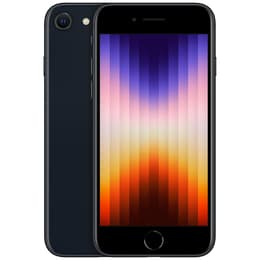


Galaxy S25 Vs iPhone SE (2022)

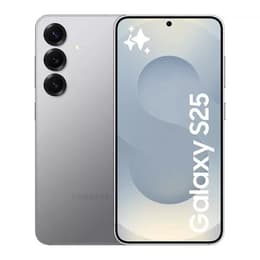
Galaxy S25
Galaxy S25
Starting at

Refurbished price:489.60

Versus €910.00 new

See options
iPhone SE (2022)
iPhone SE (2022)
Starting at

Refurbished price:127.00

Versus €549.00 new

See options

Ratings

The Samsung Galaxy S25, released in February 2025, and the Apple iPhone SE (2022), launched in March 2022, represent distinct approaches to smartphone design and functionality. While the Galaxy S25 offers a modern, feature-rich Android experience with a focus on advanced display and camera technology, the iPhone SE (2022) provides a compact, powerful iOS device with a classic design. The primary differences lie in their display types, camera systems, and overall form factors, catering to different user preferences.

Scores

Durability

The longevity of a smartphone is influenced by its physical resilience and ongoing software support.

  • Release Timeline and Software Support: The Galaxy S25, being a more recent release from February 2025, is expected to receive software updates for a longer duration compared to the iPhone SE (2022), which was released in March 2022. Apple typically provides iOS updates for 5-6 years from a device's release, while Samsung has committed to extended Android and security updates for its flagship devices.
  • Physical Durability: The Galaxy S25 features Gorilla Glass Victus 2 on both its front display and rear glass panel, offering enhanced scratch resistance and durability. The S25 Ultra model further incorporates Gorilla Armor 2, which provides even greater scratch resistance and anti-reflective properties. The iPhone SE (2022) uses a durable glass material on its front and back, described as the same type found on the back of the iPhone 13 series, and has an IP67 rating for dust and water resistance.
  • Practical Lifespan: Both devices are built to withstand daily use, with the Galaxy S25 benefiting from newer glass technology and the iPhone SE (2022) offering a robust build for its category. Users can expect several years of reliable operation from either device, with the Galaxy S25 potentially offering a slightly longer period of cutting-edge feature support due to its newer release.

Year of Release

2025

2022

OS

Android

iOS

Foldable

No

No

Performance

Performance is a key consideration, impacting how smoothly applications run and how efficiently the device handles demanding tasks.

  • Processing Capabilities: The Galaxy S25 is equipped with a current-generation processor, enabling smooth multitasking, rapid app loading, and efficient handling of graphics-intensive games. The iPhone SE (2022) features a powerful processor, which allows it to handle demanding applications and games with ease, offering a responsive user experience comparable to more premium devices from its release era.
  • System Responsiveness and Multitasking: Both phones offer a fluid user experience. The Galaxy S25's processor and ample RAM contribute to its ability to manage multiple applications simultaneously without slowdowns. The iPhone SE (2022), despite its more compact form factor, also provides a highly responsive interface, ensuring quick transitions between apps and smooth navigation.
  • Storage and Battery Behavior: The Galaxy S25 offers storage options including 128GB and 256GB, with higher options available for other models in the series. Its battery is designed to last a full day with mixed usage, supported by software optimizations. The iPhone SE (2022) comes with storage options of 64GB, 128GB, and 256GB. Its battery life, while improved over its predecessor, typically provides a full day of moderate use, though heavy usage may require more frequent charging.

Memory (GB)

12 GB

4 GB

Screen quality

The display is the primary interface for interaction, and its quality significantly impacts the user experience.

  • Display Technology and Resolution: The Galaxy S25 features a 6.2-inch Dynamic LTPO AMOLED 2X display with a resolution of 2340 x 1080 pixels, providing vibrant colors, deep blacks, and sharp details. The iPhone SE (2022) has a 4.7-inch Retina HD LCD display with a resolution of 1334x750 pixels, offering clear visuals and accurate color reproduction.
  • Brightness and Refresh Rate: The Galaxy S25 boasts a peak brightness of 2600 nits, ensuring excellent visibility even in bright outdoor conditions, and an adaptive refresh rate of up to 120Hz for smooth scrolling and animations. The iPhone SE (2022) has a standard 60Hz refresh rate and a lower peak brightness compared to the S25, which may affect outdoor visibility and the fluidity of motion on screen.
  • Viewing Experience: The larger, higher-resolution AMOLED display of the Galaxy S25 provides a more immersive viewing experience for media consumption and detailed tasks. The iPhone SE (2022)'s smaller LCD screen is well-suited for users who prefer a compact device that is easy to operate with one hand.

Resolution

1080x2340

750 x 1334

Screen type

Dynamic LTPO AMOLED 2X

Retina IPS LCD

Audiovisual

Camera capabilities are a significant factor for many users, influencing the quality of photos and videos captured.

  • Rear Camera System: The Galaxy S25 features a versatile triple-camera system on the rear, including a 50 MP wide-angle main camera, a 12 MP ultra-wide camera, and a 10 MP telephoto camera with 3x optical zoom. This setup allows for a wide range of photographic options, from expansive landscapes to detailed close-ups. The iPhone SE (2022) is equipped with a single 12-megapixel wide-angle rear camera with an f/1.8 aperture and optical image stabilization, capable of capturing detailed photos in good lighting conditions.
  • Photography Features and Performance: The Galaxy S25 benefits from advanced AI imaging features, including adaptive scene optimization, noise reduction, and enhanced low-light performance, contributing to sharp and vibrant images across various conditions. The iPhone SE (2022) utilizes its powerful processor to enhance image computation, offering features like Smart HDR 4, Deep Fusion, and Portrait mode for human subjects. However, it lacks a dedicated Night Mode and an ultra-wide lens.
  • Video Recording: Both phones are capable of recording high-quality video. The Galaxy S25 can record video at up to 8K resolution at 30 frames per second, and offers features like Super Steady video mode for stabilization. The iPhone SE (2022) supports 4K video recording at up to 60 frames per second with optical image stabilization.

Miscellaneous

Beyond core features, several practical elements contribute to the overall usability and convenience of a smartphone.

  • Connectivity and Ports: The Galaxy S25 offers modern connectivity options, including 5G and Wi-Fi 7, along with Bluetooth 5.4 and NFC for seamless payments and pairing. It features a USB-C port for charging and data transfer. The iPhone SE (2022) supports 5G (Sub-6), Wi-Fi 6, and Bluetooth 5.0, and uses a Lightning port for charging and data.
  • Biometric Security: The Galaxy S25 includes an ultrasonic in-screen fingerprint sensor for secure authentication. The iPhone SE (2022) retains the classic Touch ID fingerprint sensor integrated into its home button.
  • Design and Handling: The Galaxy S25 features a contemporary design with an aluminum body and glass back, offering a sleek profile. The iPhone SE (2022) maintains the familiar design of older iPhone models, including prominent bezels and a physical home button, making it a compact choice for users who prefer a smaller device.

Weight

162 g

144 g

Screen size (in)

6.2

4.7

Network

5G

5G

SIM card

Physical SIM + eSIM

Physical SIM + eSIM

Carrier compatibility

Unlocked

Unlocked

The Samsung Galaxy S25 and iPhone SE (2022) cater to different segments of the smartphone market, each with distinct strengths. Users often praise the Galaxy S25 for its advanced display, versatile camera system, and modern Android features, making it a strong contender for those seeking a cutting-edge experience. Some common criticisms might revolve around its incremental upgrades compared to its direct predecessor, or the potential for a higher initial investment.

Conversely, the iPhone SE (2022) is frequently lauded for its powerful performance, compact form factor, and the familiarity of its iOS ecosystem. Users appreciate its ability to handle demanding tasks despite its more traditional design. However, common concerns often include its smaller, lower-resolution LCD display, the absence of an ultra-wide camera, and battery life that, while improved, may not satisfy heavy users. The classic design, including the home button and larger bezels, is a point of preference, with some finding it dated and others appreciating its practicality.

Users prioritizing a large, vibrant display, a comprehensive multi-lens camera system, and the latest Android innovations may find the Galaxy S25 well-suited to their needs. Its modern design and advanced features are ideal for those who consume a lot of media or engage in mobile photography. On the other hand, users who value a compact device, robust performance for everyday tasks, and the consistent iOS experience, particularly those who prefer a physical home button, will likely lean towards the iPhone SE (2022). Both devices offer reliable performance and can be excellent choices, especially when considering quality-assured refurbished options as an eco-friendly alternative.


See all articles

Our recent comparisons