

Compare models

iPhone 12 Pro Vs iPhone XS

  • 1-year minimum warranty
  • Free delivery on all orders
  • Free 30-day returns
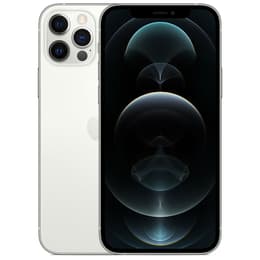
iPhone 12 Pro
Starting at

Refurbished price:256.00

Versus €1,039.00 new

See options
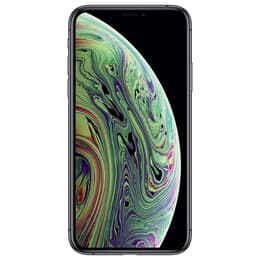
iPhone XS
Starting at

Refurbished price:127.00

Versus €489.00 new

See options

Differences at a glance

The iPhone 12 Pro, released in October 2020, and the iPhone XS, launched in September 2018, represent two distinct generations within Apple's smartphone lineup. While both devices operate on the iOS platform and offer a premium user experience, the iPhone 12 Pro introduces a refreshed design, enhanced camera capabilities, and next-generation connectivity, setting it apart from its predecessor.

Available Models

Colour

Storage (GB)

Scores

Durability

The age difference between these two models significantly impacts their expected lifespan and ongoing software compatibility.

  • Release Timeline: The iPhone 12 Pro was released two years after the iPhone XS, giving it a natural advantage in terms of its lifecycle.
  • Software Longevity: The iPhone 12 Pro is expected to receive major iOS updates for a longer period, likely until around 2028-2030, ensuring compatibility with the latest applications and features. In contrast, the iPhone XS received its final major iOS update with iOS 18 in September 2025, though security updates are anticipated through late 2026.
  • Physical Resilience: The iPhone 12 Pro features a Ceramic Shield front cover, designed to offer improved drop protection compared to the standard glass on the iPhone XS. Both models carry an IP68 rating for dust and water resistance, but the iPhone 12 Pro is rated for submersion up to 6 meters for 30 minutes, while the iPhone XS is rated for 2 meters for the same duration.

Year of Release

2020

2018

Compatible with latest Update

Yes

Yes

OS

iOS

iOS

Foldable

No

No

Performance

Everyday responsiveness and the ability to handle demanding tasks differ between these two generations due to advancements in internal hardware.

  • System Responsiveness: The iPhone 12 Pro, equipped with a newer processor and 6GB of RAM, generally offers faster app loading times and smoother multitasking compared to the iPhone XS, which has 4GB of RAM. Users will notice the iPhone 12 Pro feels more fluid when switching between multiple applications or running graphically intensive games.
  • Processing Capabilities: While the iPhone XS's processor remains capable for daily tasks like browsing, social media, and light gaming, the iPhone 12 Pro's more advanced internal components provide a noticeable performance boost for more intensive applications, video editing, and future software demands.
  • Storage Options: The iPhone 12 Pro starts with a base storage of 128GB, offering more space out of the box, while the iPhone XS began at 64GB. Both models were available with up to 512GB of storage.

Screen quality

Both smartphones utilize OLED technology for vibrant visuals, but the viewing experience has evolved between the two models.

  • Display Technology and Size: Both devices feature OLED displays, providing deep blacks and high contrast. The iPhone 12 Pro has a 6.1-inch Super Retina XDR OLED display, offering a slightly larger viewing area than the iPhone XS's 5.8-inch Super Retina OLED screen.
  • Brightness and Clarity: The iPhone 12 Pro offers higher peak brightness levels, reaching 800 nits typical and 1200 nits for HDR content, making it more visible in bright outdoor conditions compared to the iPhone XS's 625 nits typical brightness. Both displays offer high resolution, with the iPhone 12 Pro at 2532x1170 pixels and the iPhone XS at 2436x1125 pixels, resulting in similar pixel densities for sharp text and images.
  • Refresh Rate: Both the iPhone 12 Pro and iPhone XS feature a standard 60Hz refresh rate, providing a consistent visual experience for everyday use.

Resolution

1170 x 2532

1125 x 2436

Screen type

Super Retina XDR OLED

Super Retina OLED

Audiovisual

The camera systems on these devices offer different capabilities, particularly in versatility and advanced features.

  • Rear Camera System: The iPhone 12 Pro features a triple 12MP camera system, including Wide, Ultra Wide, and Telephoto lenses, along with a LiDAR scanner for improved low-light focusing and augmented reality applications. The iPhone XS has a dual 12MP camera setup with Wide and Telephoto lenses.
  • Photography Performance: The iPhone 12 Pro offers significant improvements in low-light photography with Night mode and Deep Fusion, and enhanced image processing with Smart HDR 3. While the iPhone XS also features Smart HDR, its low-light performance is less advanced. The addition of an Ultra Wide lens on the 12 Pro provides more creative shooting options.
  • Video Recording and Audio: The iPhone 12 Pro supports HDR video recording with Dolby Vision up to 60 frames per second, offering a more professional video capture experience. Both phones record 4K video, but the 12 Pro's capabilities are more advanced. Both devices feature stereo speakers for media consumption.

Main camera

12 megapixels

12 megapixels

Front camera

12 megapixels

7 megapixels

Miscellaneous

Practical differences in connectivity, physical design, and additional features can influence the daily user experience.

  • Connectivity: A key difference is the iPhone 12 Pro's support for 5G cellular networks, offering potentially faster download and upload speeds in areas with 5G coverage. The iPhone XS is limited to 4G LTE. Both support modern Wi-Fi standards and Bluetooth 5.0.
  • Design and Handling: The iPhone 12 Pro introduced a flat-edged design with a stainless steel frame, providing a more modern aesthetic and a secure grip. The iPhone XS features a more traditional rounded-edge design, which some users find more comfortable to hold. The iPhone 12 Pro also introduced MagSafe, a magnetic system for attaching accessories and chargers.
  • Weight and Dimensions: The iPhone 12 Pro is slightly larger and heavier at 146.7 x 71.5 x 7.4 mm and 189g, compared to the iPhone XS at 143.6 x 70.9 x 7.7 mm and 177g. Both devices rely on Face ID for biometric authentication.

Weight

187 g

177 g

Screen size (in)

6.1

5.8

Network

5G

4G

SIM card

Physical SIM + eSIM

Physical SIM + eSIM

Carrier compatibility

Unlocked

Unlocked

Connector

Lightning

Lightning

What the community thinks

User feedback indicates that the iPhone XS remains a capable device, often praised for its compact size and ergonomic design, fitting comfortably in hand and pocket. However, some long-term users note that its battery life and processing speed can show limitations with the latest software. Early criticisms for the iPhone XS included issues with charging, weak network reception, and an aggressive camera smoothening effect, though some of these were addressed with software updates.

The iPhone 12 Pro is frequently lauded for its versatile camera system, noticeable speed improvements, and the addition of 5G connectivity. While some users found its flat-edged design less comfortable than previous models, the performance gains and new features are generally considered a worthwhile trade-off.

Users prioritizing a compact form factor and a comfortable, rounded grip for everyday tasks like messaging and browsing may find the iPhone XS well-suited to their needs. Those who require a more powerful device for advanced photography, video creation, demanding applications, or future-proof connectivity with 5G will likely lean towards the iPhone 12 Pro. Both devices offer a robust iOS experience, and choosing a quality-assured refurbished option for either model presents an eco-friendly alternative to extend the life of these electronics.