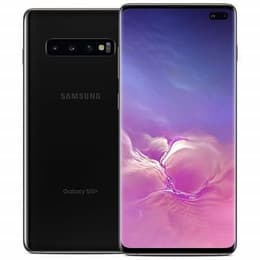
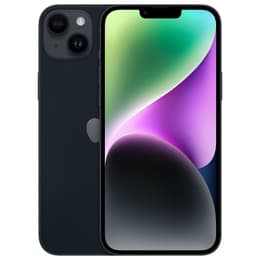


Galaxy S10+ Vs iPhone 14 Plus

Galaxy S10+
Galaxy S10+
Starting at

Refurbished price:135.00

Versus €1,009.00 new

See options
iPhone 14 Plus
iPhone 14 Plus
Starting at

Refurbished price:317.00

Versus €879.00 new

See options

Ratings

The Samsung Galaxy S10 Plus, released in March 2019, and the iPhone 14 Plus, launched in October 2022, represent different generations of flagship smartphones from their respective manufacturers. While both devices offer large displays and capable camera systems, the iPhone 14 Plus benefits from a more recent release, bringing advancements in processing power, software longevity, and specific camera enhancements. The Galaxy S10 Plus, running on Android, and the iPhone 14 Plus, operating on iOS, offer distinct user experiences rooted in their respective ecosystems.

Scores

Durability

When considering the practical lifespan of these devices, their release timelines and software support are key differentiators.

  • Release Timeline: The Galaxy S10 Plus was introduced in March 2019, making it a device from an earlier generation. The iPhone 14 Plus, released in October 2022, is a much newer model.
  • OS Support Duration: The Galaxy S10 Plus received its last major Android operating system update with Android 12, reaching its end-of-life for significant software upgrades. In contrast, the iPhone 14 Plus launched with iOS 16 and is expected to receive several more years of major iOS updates, offering extended software longevity.
  • Repairability and Durability: Both devices feature IP68 ratings for water and dust resistance, indicating a similar level of protection against environmental elements. The iPhone 14 Plus incorporates Ceramic Shield on its front, which is designed for enhanced drop performance, while the Galaxy S10 Plus uses Corning Gorilla Glass 6 on the front.

Year of Release

2019

2022

Compatible with latest Update

No

Yes

OS

Android

iOS

Foldable

No

No

Performance

The performance capabilities of these two smartphones reflect the advancements in mobile technology over several years.

  • Processing Power: The iPhone 14 Plus is equipped with a modern-generation processor, enabling it to handle demanding applications, complex multitasking, and graphics-intensive games with notable smoothness and responsiveness. The Galaxy S10 Plus, while powerful for its release era, features an older processor that capably manages everyday tasks and gaming, though it may show limitations with the most intensive current applications compared to newer hardware.
  • System Responsiveness: Users of the iPhone 14 Plus can expect a highly fluid and consistent experience across the operating system and applications, benefiting from its optimized hardware and software integration. The Galaxy S10 Plus provides a smooth user interface for its generation, with its performance being robust for typical daily usage.
  • Memory and Storage: The iPhone 14 Plus comes with 6GB of RAM, which is sufficient for efficient app switching and background processes. The Galaxy S10 Plus offered configurations with 8GB or 12GB of RAM, providing ample memory for multitasking. Both devices offer various internal storage options, but the Galaxy S10 Plus also includes a microSD card slot for expandable storage, a feature not present on the iPhone 14 Plus.

Memory (GB)

8 GB

6 GB

Screen quality

Both devices offer vibrant displays, but there are distinctions in their technology and characteristics.

  • Display Technology and Size: The iPhone 14 Plus features a 6.7-inch Super Retina XDR OLED display, providing deep blacks and vibrant colors across a larger viewing area. The Galaxy S10 Plus has a 6.4-inch Dynamic AMOLED display, also known for its rich colors and contrast.
  • Resolution and Clarity: The Galaxy S10 Plus offers a resolution of 3040 x 1440 pixels, resulting in a pixel density of 522 PPI, which delivers sharp and detailed visuals. The iPhone 14 Plus provides a resolution of 2778 x 1284 pixels at 458 PPI, offering excellent clarity for text and images.
  • Brightness and Refresh Rate: The iPhone 14 Plus can reach a typical maximum brightness of 800 nits and a peak HDR brightness of 1200 nits, ensuring good visibility in various lighting conditions. Both the Galaxy S10 Plus and the iPhone 14 Plus feature a standard 60Hz refresh rate, which provides a smooth experience for everyday interactions, though it does not offer the enhanced fluidity of higher refresh rate displays found in some other devices.

Resolution

1440 x 3040

1284 x 2778

Screen type

Dynamic AMOLED

Super Retina XDR OLED

Audiovisual

The camera systems on both phones are designed to capture quality images and videos, with the iPhone 14 Plus benefiting from more recent advancements.

  • Rear Camera System: The Galaxy S10 Plus features a versatile triple-camera setup, including a main wide-angle, a telephoto, and an ultrawide lens, offering flexibility for different shooting scenarios. The iPhone 14 Plus has a dual-camera system, comprising a main wide-angle lens with sensor-shift optical image stabilization and an ultrawide lens.
  • Photography Performance: The iPhone 14 Plus includes a larger main sensor and the Photonic Engine, which significantly improves low-light performance and overall image quality, capturing more detail and better color accuracy in challenging conditions. The Galaxy S10 Plus delivers strong results in well-lit environments, and a software update introduced a dedicated night mode to enhance its low-light capabilities.
  • Video Recording and Audio: Both devices are capable of recording 4K video. The iPhone 14 Plus offers advanced video features like Cinematic mode and Action mode, providing creative control and enhanced stabilization. The Galaxy S10 Plus also supports 4K video recording, including from its front camera. For audio, the Galaxy S10 Plus includes a 3.5mm headphone jack, which is absent on the iPhone 14 Plus.

Main camera

12 megapixels

12 megapixels

Front camera

10 megapixels

12 megapixels

Miscellaneous

Beyond core features, several practical elements contribute to the overall user experience of these smartphones.

  • Connectivity and Ports: The iPhone 14 Plus supports 5G connectivity, offering faster mobile data speeds where available, along with Wi-Fi 6 and Bluetooth 5.3. It uses a Lightning port for charging and data transfer. The Galaxy S10 Plus supports 4G LTE, Wi-Fi 6, and Bluetooth 5.0, and features a USB-C port, alongside a traditional 3.5mm headphone jack.
  • Biometric Security: The iPhone 14 Plus relies on Face ID for secure facial recognition. The Galaxy S10 Plus offers an ultrasonic in-display fingerprint sensor and 2D face unlock.
  • Design and Handling: The iPhone 14 Plus has a 6.7-inch display and weighs 203 grams, featuring a Ceramic Shield front and an aluminum frame. The Galaxy S10 Plus, with its 6.4-inch display, weighs 175 grams and uses Gorilla Glass 6 on the front and Gorilla Glass 5 on the back, with an aluminum frame. The iPhone 14 Plus, in some regions, has transitioned to eSIM-only, removing the physical SIM card tray.

Weight

175 g

150 g

Screen size (in)

6.4

6.7

Network

4G

5G

SIM card

Physical SIM

eSIM

Carrier compatibility

Unlocked

Unlocked

Connector

USB-C + Jack 3.5mm

Lightning

User feedback for the iPhone 14 Plus frequently highlights its large display and impressive battery life as significant advantages, making it a practical choice for users who prioritize screen real estate and extended usage without frequent charging. Some common criticisms revolve around its 60Hz display refresh rate and the use of a processor also found in the previous generation, leading some to perceive it as a less substantial upgrade compared to Pro models. However, many users find its overall performance and camera capabilities to be more than adequate for daily needs.

The Galaxy S10 Plus, upon its release, was praised for its class-leading display, powerful performance for an Android device of its time, and a versatile camera system. Users appreciated its design and the inclusion of features like a headphone jack and expandable storage. Criticisms sometimes pointed to its low-light photography before software updates and the in-display fingerprint sensor's reliability for some users.

Users prioritizing a device with the latest software support for many years to come, a highly responsive operating system, and advanced video capabilities, particularly those who value a large display and exceptional battery longevity, may find the iPhone 14 Plus well-suited to their needs. Conversely, individuals who prefer the Android ecosystem, value a traditional headphone jack, expandable storage, and an in-display fingerprint sensor, and are comfortable with an older device that still performs well for general use, might lean towards the Galaxy S10 Plus. Both devices are available as quality-assured refurbished options, providing an eco-friendly alternative for consumers.

See all articles

Our recent comparisons






