

iPhone 12 mini Vs Xiaomi 14

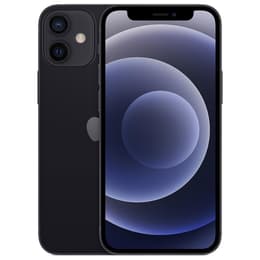
iPhone 12 mini
iPhone 12 mini
Starting at

Refurbished price:157.00

Versus €689.00 new

See options
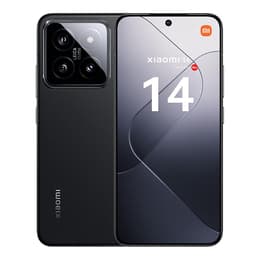
Xiaomi 14
Xiaomi 14
Starting at

Refurbished price:384.00

Versus €1,099.00 new

See options

Ratings

The iPhone 12 Mini, released in November 2020, and the Xiaomi 14, launched globally in February 2024, represent distinct approaches to smartphone design and functionality. While the iPhone 12 Mini prioritizes a highly compact form factor within the iOS ecosystem, the Xiaomi 14 offers a modern flagship experience with advanced features running on Android with Xiaomi's HyperOS. These devices cater to different user preferences, with the iPhone 12 Mini appealing to those seeking a small, pocketable device, and the Xiaomi 14 targeting users who desire cutting-edge technology in a still relatively manageable size.

Scores

Durability

The practical lifespan and ongoing support for these two smartphones differ significantly due to their release timelines and respective operating system policies.

  • Release Timeline: The iPhone 12 Mini was released in November 2020, making it several years older than the Xiaomi 14, which saw its global launch in February 2024. This age difference directly impacts the remaining period of software support.
  • Software Longevity: Apple generally provides iOS updates for 5-6 years from a device's release. The Xiaomi 14, being a newer Android flagship, is expected to receive 4 years of Android OS updates and 5 years of security updates, offering a longer guaranteed support window from its launch date.
  • Repairability: The iPhone 12 Mini received a repairability score of 6 out of 10 from iFixit, noting that display and battery replacements are well-prioritized, but the glass back is fragile and impractical to replace separately. The Xiaomi 14 has a higher reported repairability score of 8.0 out of 10, with accessible components, though adhesive is used for the back cover and battery.
  • Durability Features: Both devices offer robust protection. The iPhone 12 Mini features a Ceramic Shield front cover and is rated IP68 for water and dust resistance. The Xiaomi 14 also boasts an IP68 rating for dust and water resistance and uses Gorilla Glass Victus 2 for screen protection.

Year of Release

2020

2023

Compatible with latest Update

Yes

Yes

OS

iOS

Android

Foldable

No

No

Performance

The performance capabilities of the iPhone 12 Mini and Xiaomi 14 reflect the advancements in mobile technology over their respective release periods.

  • Processing Power: The iPhone 12 Mini is equipped with a capable processor that handles everyday applications and multitasking smoothly, providing a responsive user experience within the iOS ecosystem. The Xiaomi 14, featuring a much newer generation processor, delivers significantly enhanced speed and efficiency, allowing for exceptionally smooth operation with demanding applications, intensive gaming, and complex multitasking without noticeable slowdowns or excessive heat generation.
  • Multitasking and Storage: The iPhone 12 Mini comes with 4GB of RAM and storage options up to 256GB, which is sufficient for typical smartphone usage. The Xiaomi 14 offers more substantial RAM configurations, starting from 8GB and going up to 16GB, paired with faster storage technology (UFS 4.0) and options up to 1TB, providing greater headroom for extensive multitasking and storing large files.
  • Battery Life and Charging: The iPhone 12 Mini, with its smaller battery capacity, often requires more frequent charging for users with moderate to heavy usage, with some users reporting it may not last a full day. It supports up to 20W wired charging and 12W MagSafe wireless charging. The Xiaomi 14 features a larger battery, generally providing a full day of use, and supports very fast 90W wired charging, 50W wireless charging, and 10W reverse wireless charging, allowing for rapid power replenishment.

Memory (GB)

4 GB

16 GB

Screen quality

Both devices feature high-quality displays, but the Xiaomi 14 incorporates more recent advancements in screen technology.

  • Display Technology and Size: The iPhone 12 Mini features a 5.4-inch Super Retina XDR OLED display, known for its deep blacks and vibrant colors, in a very compact form factor. The Xiaomi 14 sports a larger 6.36-inch LTPO AMOLED display, offering a more expansive viewing area while maintaining a relatively compact overall size for a modern flagship.
  • Resolution and Clarity: The iPhone 12 Mini has a resolution of 2340x1080 pixels at 476 pixels per inch (ppi). The Xiaomi 14 offers a resolution of 2670x1200 pixels with a pixel density of 460 ppi, providing sharp and clear visuals across its larger screen.
  • Brightness and Smoothness: The iPhone 12 Mini reaches a typical brightness of 625 nits and a peak HDR brightness of 1200 nits, with a standard 60Hz refresh rate. The Xiaomi 14 significantly surpasses this with a High Brightness Mode (HBM) of 1000-1400 nits and a peak brightness of 3000 nits, ensuring excellent visibility even in bright outdoor conditions. It also features a dynamic refresh rate of 1-120Hz, providing a noticeably smoother scrolling and animation experience.

Resolution

1080 x 2340

1200 x 2670

Screen type

Super Retina XDR OLED

LTPO OLED

Audiovisual

The camera systems of the iPhone 12 Mini and Xiaomi 14 reflect different generations of mobile photography capabilities, with the Xiaomi 14 offering more advanced hardware and features.

  • Camera Hardware: The iPhone 12 Mini features a dual 12MP camera system, including a wide-angle lens with an f/1.6 aperture and an ultra-wide-angle lens with an f/2.4 aperture. The Xiaomi 14 boasts a more versatile triple 50MP camera setup, co-engineered with Leica, comprising a main sensor with a large f/1.6 aperture, an ultra-wide lens, and a telephoto lens capable of 3.2x optical zoom.
  • Photography Performance: Both phones are capable of capturing detailed images in good lighting. The iPhone 12 Mini includes Night mode for improved low-light performance. The Xiaomi 14, with its larger sensor (Light Fusion 900), wider aperture, and advanced image processing from Leica, generally excels in low-light conditions, producing brighter and more detailed photos with reduced noise. Its telephoto lens also allows for high-quality zoomed-in shots and macro photography.
  • Video Recording and Front Camera: The iPhone 12 Mini supports HDR video recording with Dolby Vision up to 4K at 30 frames per second (fps) and has a 12MP front camera. The Xiaomi 14 offers higher-resolution video recording capabilities, including 8K at 24 fps and 4K at 60 fps, along with a 32MP front camera for selfies and video calls.

Main camera

12 megapixels

50 megapixels

Front camera

12 megapixels

32 megapixels

Miscellaneous

Beyond core specifications, several practical elements differentiate the user experience between these two devices.

  • Connectivity: Both the iPhone 12 Mini and Xiaomi 14 support 5G connectivity. However, the Xiaomi 14 features newer Wi-Fi standards (Wi-Fi 6/802.11ax) and Bluetooth 5.4, offering potentially faster and more stable wireless connections compared to the iPhone 12 Mini's Wi-Fi 6 and Bluetooth 5.0.
  • Ports and Biometrics: The iPhone 12 Mini utilizes Apple's proprietary Lightning port and relies on Face ID for secure authentication. The Xiaomi 14 adopts the more universal USB-C port and incorporates an under-display optical fingerprint sensor in addition to face recognition.
  • Physical Characteristics: The iPhone 12 Mini is notably compact and lightweight, measuring 131.5 x 64.2 x 7.4 mm and weighing 135g, making it ideal for one-handed use and easy pocketability. The Xiaomi 14, while still considered a relatively compact flagship, is larger and heavier at 152.8 x 71.5 x 8.2 mm and 193g.
  • Build Materials: The iPhone 12 Mini features a Ceramic Shield front, a glass back, and an aluminum frame. The Xiaomi 14 uses Gorilla Glass Victus 2 on the front, a glass back, and an aluminum alloy frame, with some variants offering a leather finish.

Weight

135 g

188 g

Screen size (in)

5.4

6.36

Network

5G

5G

SIM card

Physical SIM + eSIM

Dual Physical SIM

Carrier compatibility

Unlocked

Unlocked

User feedback for the iPhone 12 Mini often highlights its exceptionally compact size and comfortable one-handed usability as major advantages. Many appreciate having a powerful iOS device in a small form factor. However, a frequent criticism revolves around its battery life, which some users find insufficient for a full day of heavy use. The Xiaomi 14, on the other hand, receives praise for its advanced camera system, vibrant and smooth display, and overall strong performance. Users also frequently commend its fast charging capabilities. Some common concerns include the presence of pre-installed software (bloatware) and occasional software glitches, though many note that ads can be disabled.

Users prioritizing an extremely compact and lightweight device for easy one-handed operation and who are already invested in the Apple ecosystem may find the iPhone 12 Mini well-suited to their needs, especially if their usage is moderate or they have convenient access to charging. Conversely, individuals seeking a modern Android flagship with a powerful camera, a high-refresh-rate display, and rapid charging capabilities will likely lean towards the Xiaomi 14. Its larger, yet still manageable, screen and superior processing power make it a strong contender for those who engage in more demanding tasks or consume a lot of media. Both devices, whether new or as a quality-assured refurbished option, offer distinct advantages depending on individual priorities.


See all articles

Our recent comparisons