

Galaxy Z Fold4 Vs iPhone 14 Pro Max

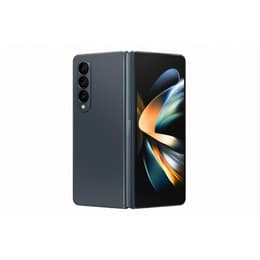
Galaxy Z Fold4
Galaxy Z Fold4
Starting at

Refurbished price:433.00

Versus €1,889.00 new

See options
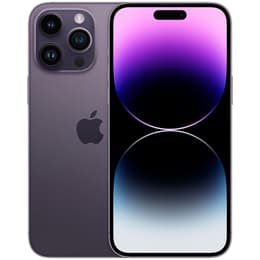
iPhone 14 Pro Max
iPhone 14 Pro Max
Starting at

Refurbished price:446.00

Versus €1,489.00 new

See options

Ratings

The Samsung Galaxy Z Fold4 and the iPhone 14 Pro Max, both released in late 2022, represent distinct approaches to high-end smartphone design. The Galaxy Z Fold4 is a foldable Android device that transforms from a traditional smartphone into a tablet-like experience, while the iPhone 14 Pro Max is a conventional slab-style smartphone running iOS. These devices cater to different user preferences, primarily differing in their form factor and operating systems.

Scores

Durability

When considering the practical lifespan of these devices, several factors come into play, including software support and physical durability.

  • Software Longevity: The Galaxy Z Fold4 launched with Android 12L and is eligible for four major Android OS updates and five years of security updates, extending its support until around 2027 for security patches. The iPhone 14 Pro Max, running iOS, typically receives software updates for five to six years from its release, potentially offering a slightly longer period of major OS updates.
  • Physical Durability: The iPhone 14 Pro Max features a Ceramic Shield front cover and an IP68 rating for dust and water resistance, allowing submersion up to 6 meters for 30 minutes. The Galaxy Z Fold4, with its foldable design, has an IPX8 water resistance rating, meaning it can withstand submersion in up to 1.5 meters of freshwater for 30 minutes, but it is not officially dust-resistant. Its construction includes an Armor Aluminum frame and Gorilla Glass Victus+ on the cover screen and back.
  • Expected Practical Lifespan: Both devices are built with premium materials and are designed for extended use. The Z Fold4's folding mechanism introduces a unique point of potential wear, while the iPhone 14 Pro Max's traditional design offers a more rigid structure. Users prioritizing the absolute longest software update cycle might find the iPhone 14 Pro Max slightly advantageous, though both offer substantial support.

Year of Release

2022

2022

Compatible with latest Update

Yes

Yes

OS

Android

iOS

Foldable

Yes

No

Performance

Both the Galaxy Z Fold4 and the iPhone 14 Pro Max deliver high-level performance suitable for demanding tasks, though their underlying architectures differ.

  • Processing Power: The Galaxy Z Fold4 is equipped with a powerful processor that handles intensive applications and multitasking smoothly, ensuring a responsive user experience even with multiple apps open across its large display. The iPhone 14 Pro Max features a current-generation processor designed for efficient performance, providing fluid navigation, rapid app loading, and strong capabilities for graphics-intensive games and video editing.
  • Multitasking and Responsiveness: The Galaxy Z Fold4 excels in multitasking due to its foldable screen, allowing users to run several applications simultaneously in a tablet-like layout, supported by its ample RAM. The iPhone 14 Pro Max offers a highly optimized iOS experience, where apps launch quickly and transitions are smooth, providing a consistently responsive feel for everyday use and demanding applications.
  • Storage Options: The Galaxy Z Fold4 is available with 256GB, 512GB, or 1TB of internal storage. The iPhone 14 Pro Max offers a wider range of storage configurations, including 128GB, 256GB, 512GB, and 1TB. Neither device supports expandable storage via microSD cards.

Memory (GB)

12 GB

6 GB

Screen quality

The display experience on these two devices is a primary differentiator, with the Galaxy Z Fold4 offering a unique foldable screen and the iPhone 14 Pro Max providing a large, high-quality traditional display.

  • Display Technology and Size: The Galaxy Z Fold4 features a 7.6-inch foldable Dynamic AMOLED 2X main display and a 6.2-inch Dynamic AMOLED 2X cover display, both offering vibrant colors and deep blacks. The iPhone 14 Pro Max has a 6.7-inch Super Retina XDR OLED display, known for its color accuracy and contrast.
  • Resolution and Brightness: The Z Fold4's main screen has a resolution of 2176 x 1812 pixels (373 ppi), while its cover screen is 2316 x 904 pixels (401 ppi). The iPhone 14 Pro Max offers a resolution of 2796 x 1290 pixels (460 ppi). Both devices feature high peak brightness levels, with the iPhone 14 Pro Max reaching up to 2000 nits outdoors, making it highly visible in bright conditions. The Z Fold4's main screen can reach 1200 nits peak brightness.
  • Refresh Rate and Smoothness: Both displays on the Galaxy Z Fold4 and the iPhone 14 Pro Max support an adaptive refresh rate of up to 120Hz, providing smooth scrolling and responsive interactions. The iPhone 14 Pro Max's ProMotion technology can scale down to 1Hz for static content, contributing to power efficiency.

Resolution

1812 x 2176

1290 x 2796

Screen type

Foldable Dynamic AMOLED 2X

LTPO Super Retina XDR OLED

Audiovisual

Both devices offer advanced camera systems capable of capturing high-quality photos and videos, though with some differences in their approach and features.

  • Rear Camera Systems: The Galaxy Z Fold4 features a triple rear camera setup, including a 50MP wide-angle main camera, a 12MP ultra-wide camera, and a 10MP telephoto camera with 3x optical zoom. The iPhone 14 Pro Max also has a triple rear camera system, consisting of a 48MP main camera, a 12MP ultra-wide lens, and a 12MP telephoto lens with 3x optical zoom. The iPhone's 48MP main sensor utilizes pixel binning to produce 12MP photos with enhanced detail, but can also capture full 48MP ProRAW images.
  • Photography Performance: The Z Fold4's camera system is noted for its balanced performance, with improvements in low-light photography due to a larger pixel size and brighter sensor on the main camera. The iPhone 14 Pro Max is recognized for its strong low-light capabilities and detailed image capture, supported by features like Photonic Engine and Deep Fusion.
  • Video Recording and Audio: Both devices are capable of high-resolution video recording. The Galaxy Z Fold4 can record up to 8K video at 24fps. The iPhone 14 Pro Max offers 4K video recording at various frame rates, including cinematic mode up to 4K HDR at 30fps and an Action mode for stabilized video. Both provide quality audio recording and stereo speaker output for media consumption.

Main camera

50 megapixels

48 megapixels

Front camera

4 megapixels

12 megapixels

Miscellaneous

Beyond core performance and display, several practical elements distinguish these two high-end smartphones.

  • Connectivity and Ports: Both devices support 5G connectivity and modern Wi-Fi standards. The Galaxy Z Fold4 features Wi-Fi 6E and Bluetooth 5.2, along with a USB-C port for charging and data transfer. The iPhone 14 Pro Max includes Wi-Fi 6 and Bluetooth 5.3, utilizing a Lightning port.
  • Biometrics and Sensors: The Galaxy Z Fold4 incorporates a side-mounted fingerprint sensor for secure unlocking. The iPhone 14 Pro Max relies on Face ID for facial recognition. Both devices include a range of sensors such as accelerometers, gyroscopes, and ambient light sensors.
  • Design and Handling: The Galaxy Z Fold4's defining characteristic is its foldable design, allowing it to be a compact smartphone when folded (155.1 x 67.1 x 14.2-15.8 mm) and expand into a larger tablet-like device when unfolded (155.1 x 130.1 x 6.3 mm). It weighs 263 grams. The iPhone 14 Pro Max is a larger, traditional smartphone with dimensions of 160.7 x 77.6 x 7.85 mm and a weight of 240 grams. The Z Fold4 also supports S Pen input (sold separately).

Weight

263 g

120 g

Screen size (in)

7.6

6.7

Network

5G

5G

SIM card

Dual Physical SIM + eSIM

Physical SIM + eSIM

Carrier compatibility

Unlocked

Unlocked

The Samsung Galaxy Z Fold4 and the iPhone 14 Pro Max cater to different user needs, primarily distinguished by their form factor and operating systems. Users often praise the Galaxy Z Fold4 for its innovative foldable design, which offers a large, immersive screen for productivity and media consumption, effectively combining a phone and a tablet into one device. Its multitasking capabilities, allowing multiple apps to run simultaneously on the main display, are frequently highlighted as a significant advantage. Some common criticisms, however, include its bulkier folded form factor and the visible crease on the main display.

The iPhone 14 Pro Max is consistently lauded for its robust performance, exceptional camera system, and the seamless integration of the iOS ecosystem. Users appreciate its long battery life and the high quality of its display. Criticisms sometimes point to its larger size and weight for one-handed use, and the lack of significant design changes compared to previous generations.

Users prioritizing a versatile device that can transform from a standard smartphone to a large-screen tablet for enhanced productivity and media viewing may find the Galaxy Z Fold4 well-suited to their needs. Conversely, users who value a consistently refined user experience, a top-tier camera in a traditional smartphone form, and a long-standing software ecosystem will likely lean towards the iPhone 14 Pro Max. Both devices represent premium options in the smartphone market, and considering a quality-assured refurbished option for either can be a sustainable choice.

See all articles

Our recent comparisons